


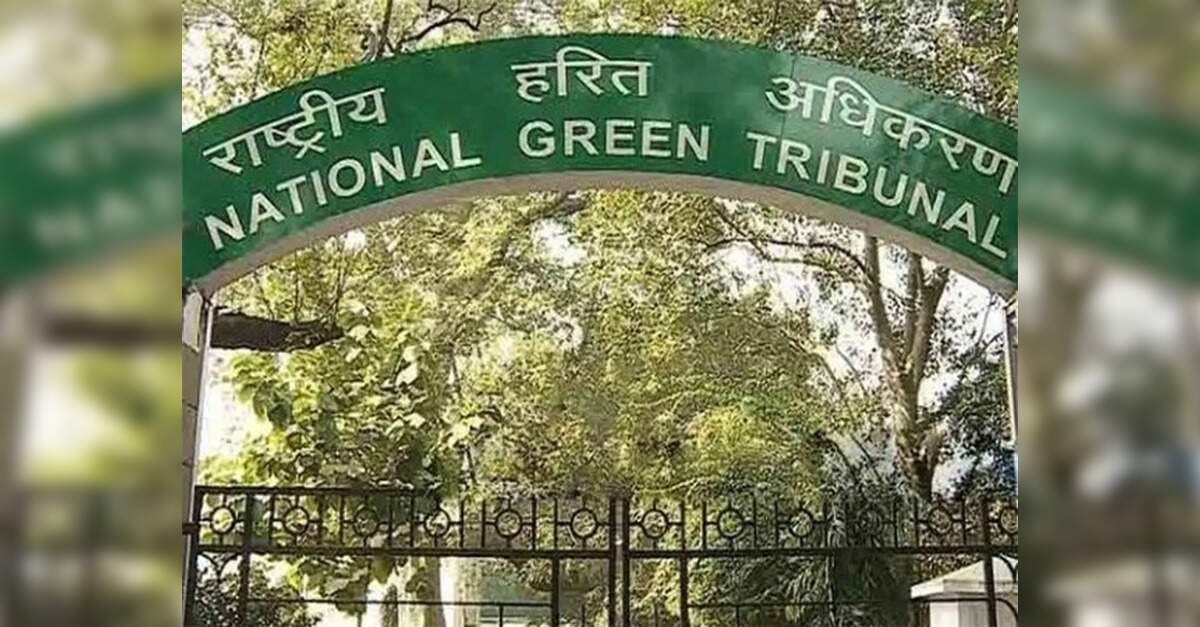
New Delhi, A parliamentary committee has pushed the National Green Tribunal (NGT) to “more proactively” use its suo motu powers on critical environmental concerns such as felling of trees for the construction of highways, illegal sand mining and air pollution in the national capital.
The committee has also recommended “stronger follow-up” by the tribunal and the Environment Ministry through regular action-taken reports, effective use of joint committees, clear fixing of responsibility and better ways to ensure that NGT orders are implemented promptly.
The department-related parliamentary standing committee on law and personnel tabled its report on ‘Review of Functioning of Tribunal System in the Country’ in both Houses earlier this month.
The committee emphasised the need for the tribunal to use its suo motu (of its own) powers “more proactively” in relation to “critical environmental concerns” such as severe air pollution in Delhi and the Indo-Gangetic plain, illegal sand mining on riverbanks, river pollution, highway tree-felling and loss of indigenous roadside plantations, unregulated high-rise construction in metropolitan cities, pollution and ecological risks in northeastern states, and environmentally sensitive mining.
On strengthening compliance with the green panel’s orders, the parliamentary committee felt that compliance with the tribunal’s orders by the concerned authorities should be monitored more closely.
Established in 2010, the NGT is a specialised body for the effective and expeditious disposal of cases related to environmental protection, conservation of forests and natural resources.
The tribunal has flexible procedures that enable it to handle complex environmental issues efficiently.
The committee noted that the NGT plays a significant role in ensuring timely environmental justice, reducing the burden on higher courts and improving access to justice through simplified processes, use of technology and time-bound resolution of cases.
