






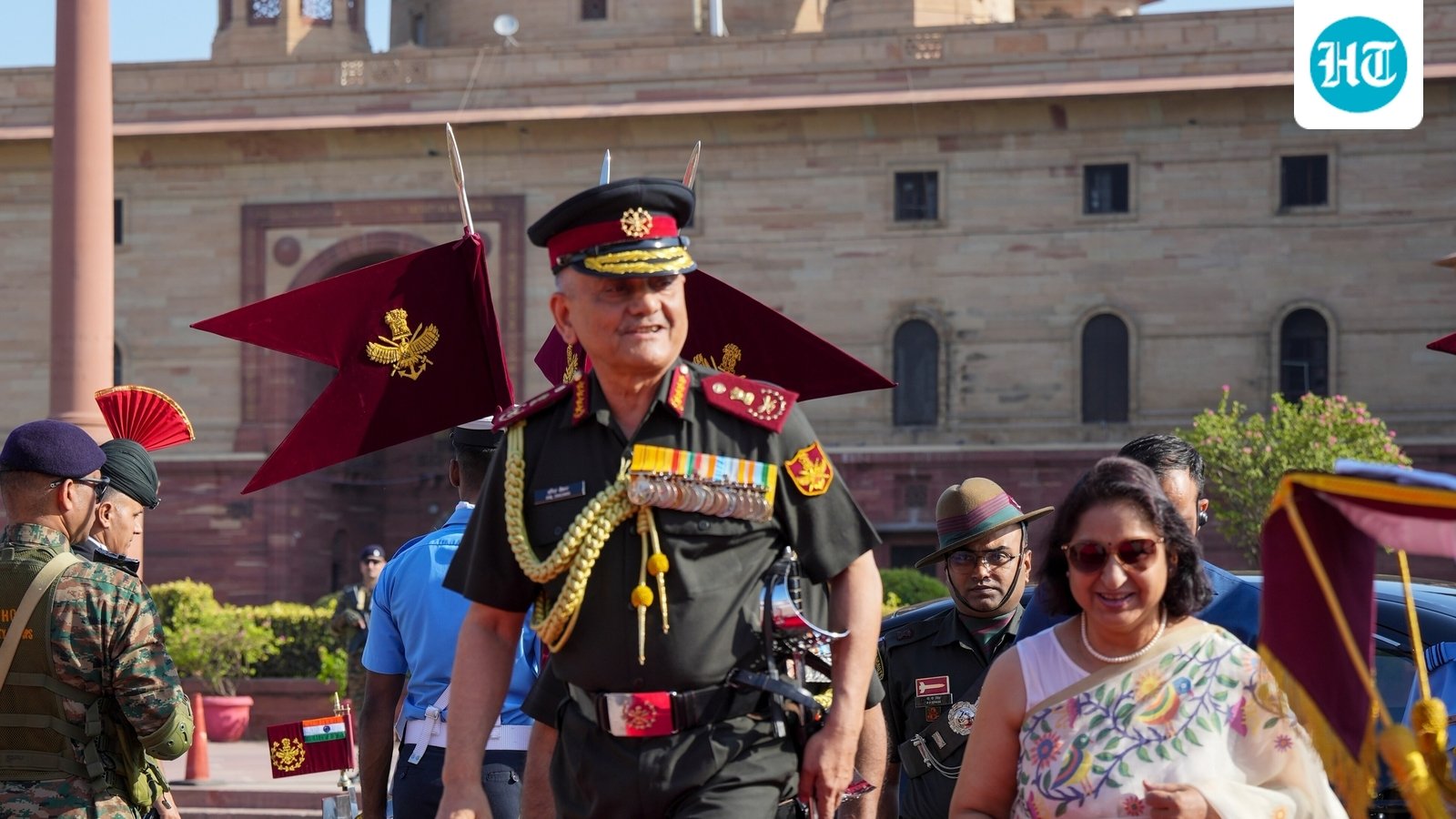
Pakistan had requested a ceasefire on the morning of May 10 last year during Operation Sindoor, but India deliberately delayed its response as it had “not even executed half” of their planned strikes, former Chief of Defence Staff (CDS) General Anil Chauhan has said.

Speaking at ThePrint’s Off The Cuff event, Gen Chauhan said Pakistan contacted India through the Director General of Military Operations (DGMO) hotline that morning. New Delhi, however, deliberately kept Islamabad waiting till the afternoon.
“The biggest surprise to me was on 10 May, when Pakistan picked up the phone and said they wanted to talk. This was because, on 9 May, the kind of rhetoric emerging from their side was that they would sort India out in 48 hours. Within about eight hours, they picked up the phone. We had not even executed half of our plans,” General Chauhan recalled the conflict.
The former CDS said India was determined to achieve its military objectives before considering a ceasefire, with additional waves of strikes already planned to demonstrate that no military installation inside Pakistan was beyond the reach of the Indian Armed Forces.
Why Pakistan asked for a ceasefire
General Chauhan said Pakistan’s decision to seek a ceasefire stemmed from a belief that its strikes on Indian targets had achieved their intended effect. He said Indian operations were still in progress when Pakistan initiated contact through the DGMO hotline.
“I think the reason why they picked up the phone around 9 or 9.30 on the morning of 10 May was because of the air power,” he said.
General Chauhan said the IAF struck key Pakistani airbases, including Sargodha and Noor Khan, in the early hours of 10 May, severely disrupting Pakistan Air Force operations.
“A couple of these airfields were hit around midnight, 4 or 5 in the morning,” he added, noting that with airstrips gone, they could no longer generate sorties.
According to the ex-CDS, Pakistan realised that its ability to sustain air operations was rapidly diminishing. He said that the Pakistani military planners believed that the attacks they had launched between 1 am and about 9 am had inflicted significant damage on India.
“They thought they would have done enough damage, and now it was better to talk. Otherwise, it would go beyond that,” General Chauhan said.
What happened during Operation Sindoor?
Operation Sindoor was initiated as India’s response to the Pahalgam terror attack on April 22 last year, when at least 26 tourists, of which 25 were Indian, were gunned down in one of the worst terror attacks in the Kashmir valley.
India accused The Resistance Front, an offshoot of Pakistan-based terror group Laskhar-e-Taiba, of the attack. While TRF and Pakistan denied the claim, India proceeded to carry out military strikes across Pakistan and Pakistan-occupied Kashmir.
During the tri-forces operation, the Indian Army, Navy and Air Force carried out strikes over nine terror camps in the region. The military operation led to a four-day standoff between India and Pakistan, triggering blackouts and air raid sirens along the LoC and International Border.
A ceasefire understanding was reached between New Delhi and Islamabad on May 10, 2025.


