


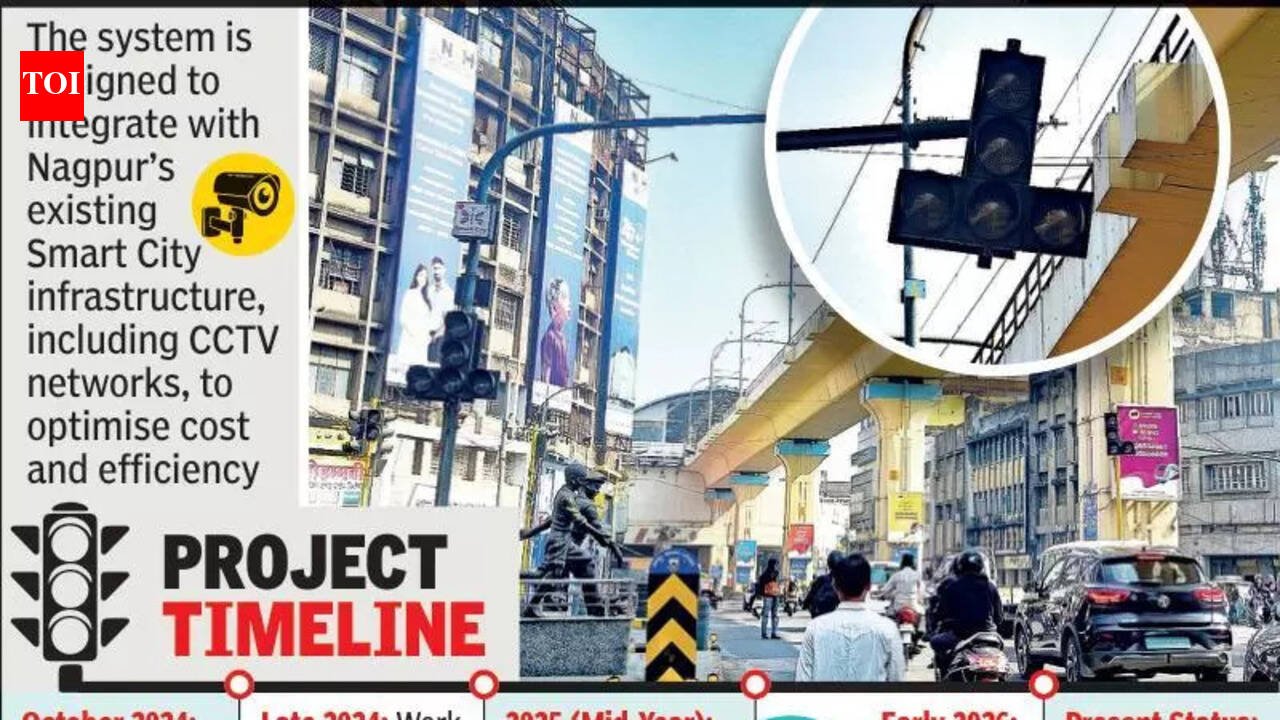
Nagpur: Touted as a game-changer that would cut travel time by up to 48% and boost average vehicle speeds by as much as 62%, Nagpur’s ambitious Integrated Intelligent Traffic Management System (IITMS) now seems to be veering off track. Executing agency Keltron is unlikely to meet the February 14 deadline to convert the city’s conventional traffic signals into an AI-driven adaptive system.The state govt funded project promises to replace traditional timer-based signals with artificial intelligence-powered adaptive lights that adjust in real time based on vehicle flow. The system is designed to integrate with Nagpur’s existing Smart City infrastructure, including CCTV networks, to optimise cost and efficiency. Sensor-based signals are expected to prioritise emergency vehicles, ease peak-hour congestion, and even simulate traffic disruptions such as accidents or protests to generate instant corrective strategies.However, the ground reality paints a stark contrast. Of the 171 junctions identified under the project, IITMS infrastructure is installed at only 39 locations, and merely 10 are fully functional. Senior civic officials confirmed that the delay is under review. Additional municipal commissioner Vaishnavi B said NMC has sought a written explanation from Keltron. NMC’s electrical department has demanded a revised schedule and detailed action plan. “The request for extension, if any, will be considered only after reviewing their reply,” said executive engineer Rajendra Rathore.The delay is particularly glaring given the head start provided to the contractor. Forty cantilever signal poles were already pre-installed at key intersections — eight by NMC’s electrical department and 32 by Smart City authorities. With the basic infrastructure in place, digitisation at these junctions could have been completed swiftly. Instead, even these ready sites remain incomplete.Keltron, acting as the project’s master integrator, has been entrusted with the responsibility for designing, installing, and maintaining the system for five years. The project was slated for completion within 15 months. Officials now point to an absence of a structured execution plan and acute labour shortages at the contractor’s end. Sources also claim portions of the work were sub-let to a local agency with a questionable track record, raising concerns over quality control and supervision.Ironically, the traffic management centre (TMC) — the command hub that will operate the AI system — is nearly ready, highlighting the mismatch between back-end preparedness and on-field execution. The NMC has so far imposed a Rs10 lakh penalty for delays, but progress remains sluggish.


