



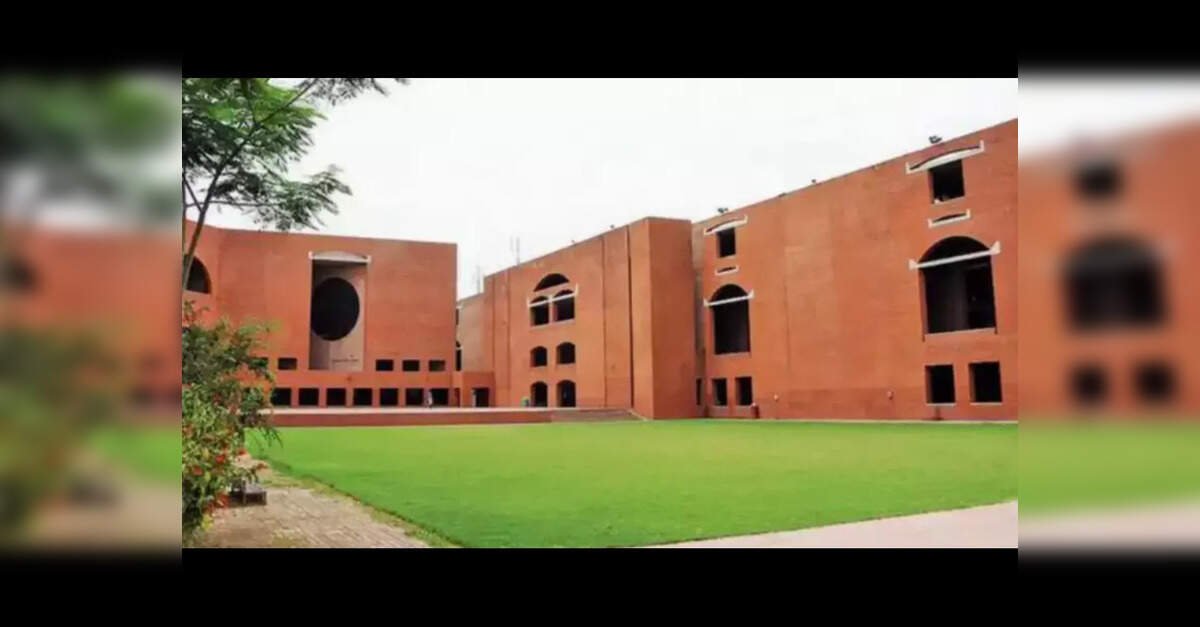
India’s top management institutes are reporting a clear shift in MBA preferences, with one-year programmes for experienced professionals gaining momentum. As industry demand tilts towards mid-career talent capable of navigating AI-led disruption and complex business environments, Indian Institutes of Management (IIMs) say the accelerated format is fast moving from a niche offering to a mainstream leadership pathway.
Fastest-growing segment in management education
According to Prof Bharat Bhasker, Director of Indian Institute of Management Ahmedabad, the one-year MBA is emerging as one of the fastest-growing categories in higher education.
“The one year MBA is one of the fastest growing higher education programme categories in India,” said Prof Bhasker, pointing to a structural shift driven by industry demand for middle and senior-level talent.
Traditionally, India’s management education ecosystem has been dominated by two-year MBA programmes designed largely for fresh graduates, unlike global markets where work experience is often a prerequisite. However, with rapid advancements in information and communication technologies, organisations are increasingly seeking professionals who can take on leadership and decision-making roles from day one.
Prof Bhasker noted that this demand is likely to accelerate further, with more institutions expected to expand or introduce one-year MBA offerings in the coming years.
Next big thing in executive education
Prof Alok Kumar Rai, Director of Indian Institute of Management Calcutta, described the one-year MBA as a natural evolution of management education. “I believe this is going to be the next big thing in management education,” said Prof Rai.
He emphasised that management education is fundamentally a skill-enhancing discipline, best suited for professionals who already possess domain expertise. Unlike traditional programmes that build foundational knowledge, one-year MBAs allow institutions to focus directly on application, strategic thinking, and real-world problem-solving.
Explaining the structure, Prof Rai noted that these programmes are intensive and immersive, often spanning 11–12 months with multiple academic terms compressed into a tight schedule. This enables participants to maximise learning in a shorter duration, while also reducing the opportunity cost associated with stepping away from the workforce.
He added that the format not only enhances decision-making capabilities but also allows professionals to gain an additional year of work experience advantage, strengthening their career trajectory.
Corporate participation sees mixed trends
On corporate engagement, Prof Bhasker pointed to a growing trend of sponsored candidates, as organisations look to retain and upskill talent in a competitive market.
“The trend started with public sector undertakings… now even large corporates are inclined towards sponsoring candidates,” he said, highlighting a shift towards structured talent development pipelines.
However, Prof Rai offered a nuanced view, noting that at Indian Institute of Management Calcutta, corporate sponsorship remains limited, with the institute maintaining a strict, merit-based admissions process.
He emphasised that admissions are conducted through a transparent and uniform selection procedure, rather than cohort-based corporate enrolments, underscoring the importance of individual merit over institutional tie-ups.
This divergence suggests that while industry demand for executive education is rising, institutional strategies for corporate integration continue to differ.
Programmes adapt to AI and digital transformation
As business environments evolve rapidly, IIMs say one-year MBA programmes are continuously updating to remain relevant.
Prof Bhasker outlined a three-fold approach to programme evolution:
- Intake: Increasing emphasis on candidates familiar with emerging technologies and industry trends.
- Curriculum: Regular updates every three to four years, incorporating areas such as AI, digital transformation, and new-age business models.
- Delivery: Integration of learning management systems (LMS) and AI-enabled tools, many of which became mainstream during the pandemic.
“These programmes need to keep up with industry trends,” he said, adding that continuous engagement with recruiters and alumni helps ensure alignment with real-world requirements.
Prof Rai noted that such programmes are inherently dynamic and high-end, with both curriculum design and peer learning environments ensuring exposure to contemporary business challenges and evolving management practices.
Inside IIM Bangalore’s accelerated MBA model
At Indian Institute of Management Bangalore, the one-year Executive Post Graduate Programme in Management (EPGP) offers a snapshot of how these programmes are structured and delivered.
The institute recently inducted 75 participants for the 2026–27 batch, with an average age of 29 years and average work experience of 6.8 years. Women account for 28% of the cohort, while the average GMAT score stands at 704.
The batch reflects academic and professional diversity, with participants coming from sectors such as manufacturing, IT products and services, banking and finance, and energy, though engineering graduates form the majority.
As per a statement shared by the institute, Programme Chairperson Prof Amar Sapra described the EPGP as an accelerated MBA, where “two years of learning are packed into one year”. He encouraged students to adopt a balanced approach, combining academic rigour with peer learning, networking, and participation in extracurricular activities.
He also highlighted the importance of cross-cohort engagement, noting that students have opportunities to interact with a wider pool of over 1,500 learners across programmes, reinforcing the role of networks in management education.
Rethinking ROI beyond salary
IIM leaders emphasised that the return on investment (ROI) of a one-year MBA must be viewed beyond immediate salary outcomes.
Prof Bhasker described an MBA as a “life skill”, where the real returns lie in enhanced perspective, leadership readiness, and long-term career acceleration.
He pointed to outcomes such as:
- Improved decision-making and agility
- Access to strong alumni networks
- Ability to create organisational and societal impact
Prof Rai reinforced this perspective, highlighting the advantage of time saved and early seniority, noting that the format provides a compelling value proposition for experienced professionals.
Focus on transformation and leadership
Beyond academic rigour, IIMs continue to emphasise personal and professional transformation as a core outcome of one-year MBA programmes.
At the recent EPGP inauguration at Indian Institute of Management Bangalore, industry leaders highlighted the importance of:
- Unlearning and openness to new perspectives
- Building authentic, non-transactional relationships
- Prioritising experiential learning over academic metrics
Participants were encouraged to approach the programme with humility and adaptability, recognising that success in complex business environments depends on the ability to collaborate, contribute, and continuously evolve.
The bigger picture
Insights from Indian Institute of Management Ahmedabad and Indian Institute of Management Calcutta point to a clear structural shift in India’s management education landscape.
The one-year MBA is moving from a niche executive offering to a mainstream pathway for experienced professionals seeking leadership roles. With technology disruption, evolving hiring needs, and increasing demand for agile, decision-ready talent, the format is expected to witness sustained growth.
As industries compress timelines and expand expectations, the one-year MBA is emerging as India’s most strategic shortcut to leadership.


