



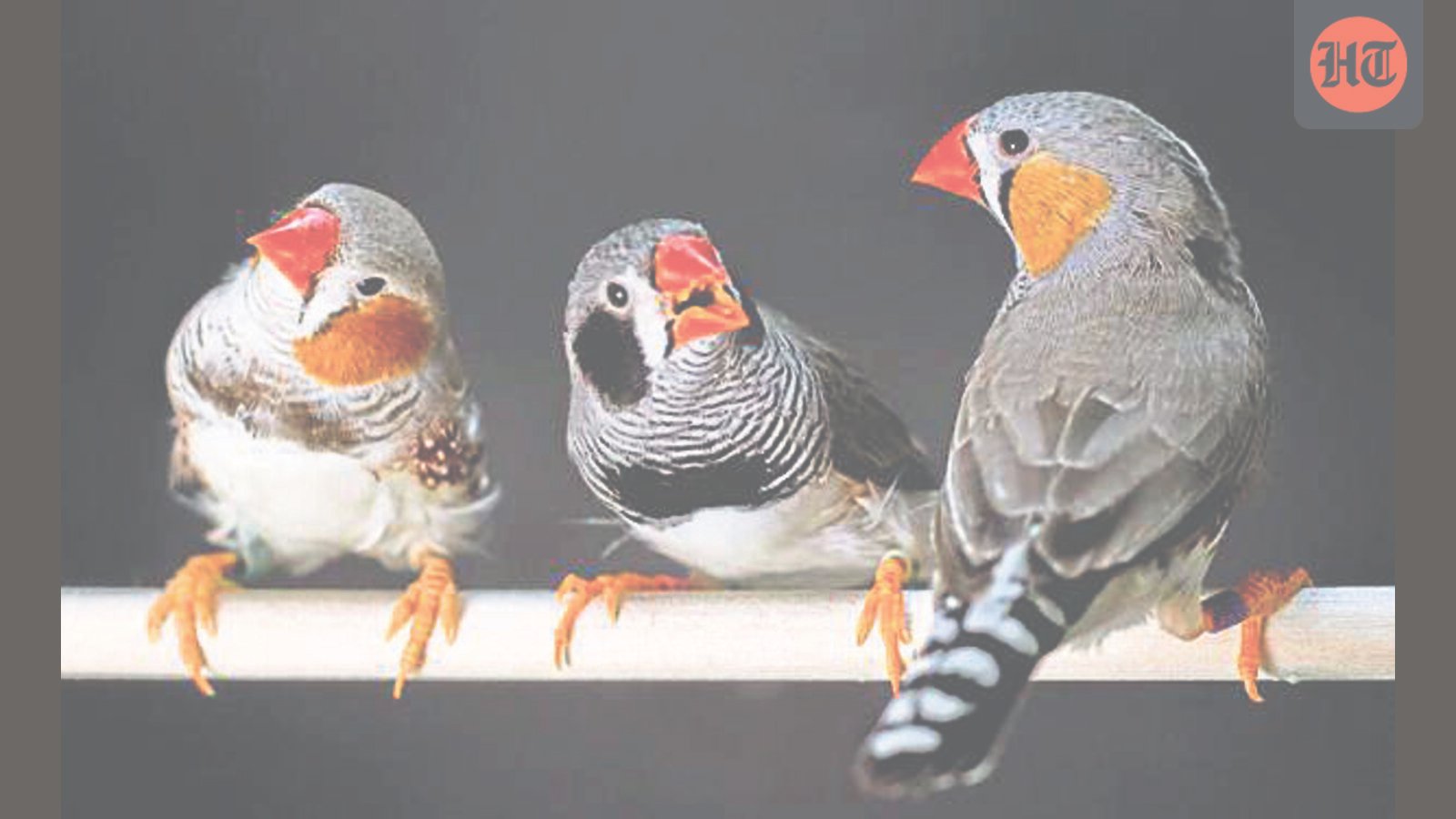
Over 150 years ago, Charles Darwin wrote, with some astonishment, that a range of animals appeared to have “nearly the same taste for the beautiful as we have”.
He was talking about plumes, feathers and, yes, sound too.
Now, a paper published in the journal Science, in March, confirms that humans do indeed share a range of acoustic preferences with other animals.
The paper is the result of a study by Logan S James, an animal communications research associate at University of Texas, Austin, alongside researchers from the universities of Melbourne, Auckland, Montreal, and Yale.
To test Darwin’s idea, James and the team built a gamified online experiment played by over 4,000 participants. The task was simple: As mating calls were presented in pairs (each pair from the same species of frog, bird, cricket, fruitfly, singing mouse, etc), participants had to pick the one they liked more.
Researchers already knew which sound the species preferred, based on previous studies. Now, across the dataset, James’s study found that humans tended to agree with the species in question, choosing the same variant of a mating call as the animals did about 54% of the time.
For instance, among tungara frogs, females prefer a more elaborate mating call, with added flourishes from acoustic whines and chucks. Humans picked such versions over simpler ones too. Across species, both animals and humans also appeared to prefer calls with acoustic flourishes such as trills, clicks and chucks.
“We had suspected there would be agreements in some cases. But we did not expect there to be an overall affect,” James says. “It is somewhat peculiar that we respond like this, given that these signals are not meant for us.”
Why do we respond as the animals do? That will be part of what James studies next, along with how animals react to the sounds of other animals.
For now, one theory is that, despite the enormous diversity of life on Earth, there might be certain similarities in how various species process certain sensory information — because of similarities in the basic building blocks (perhaps the circuitry or cells or both, among other factors) that make up these systems.
“As a result of these similarities, we may share fundamental perceptual or sensory biases… and therefore notice, process or share attraction to certain sounds, smells and colours,” notes James, who is also a postdoctoral fellow at McGill University, Canada.
The gamified online survey was built and hosted by the citizen-science platform Music Lab (themusiclab.org), run by Yale and University of Auckland. Those interested can still play it online.
Meanwhile, isn’t it intriguing to think that, when a bird starts trilling in a forest, more than one species across the ecosystem could be pausing to listen?


