


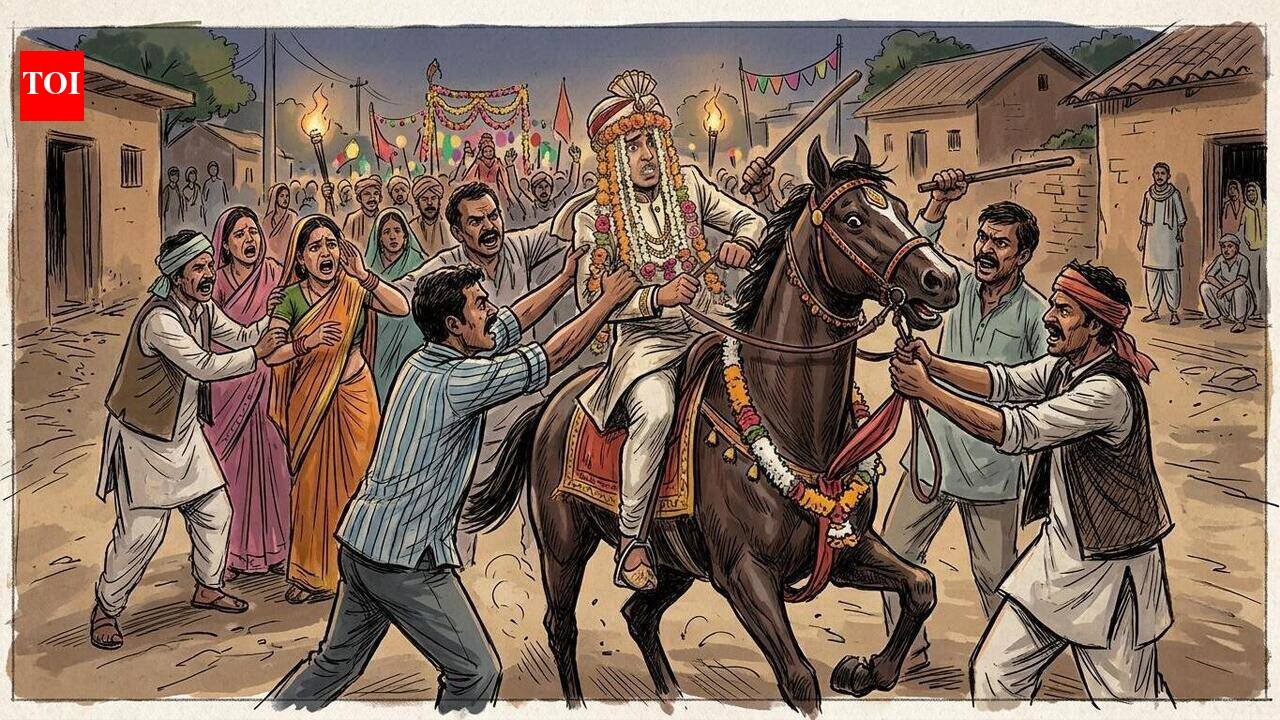
Ahmedabad: A groom’s ceremonial ride on a mare has once again triggered a caste dispute in Gujarat, but with a notable difference. This time, the confrontation was between two OBC communities. The 21-year-old groom belonging to the Patni (Devipujak) community was allegedly dragged off the mare by members of the Thakor community and assaulted during his wedding procession, police said.The episode suggests that assertions of social superiority can operate even between communities that are both classified as OBCs, said experts.The groom, Kaushik Patni, had completed a pre-wedding procession in Patan city before returning to his native Hajipur village, where another procession was organised as per community traditions, the FIR stated. Family members allege that the procession crossed the Thakor locality after the groom briefly dismounted near a temple in accordance with local custom. Once the procession reached the Patni locality, Kaushik remounted the mare to resume the celebrations.Police said the altercation occurred around 9.30pm when Ramuji Thakor allegedly entered the procession, pulled the groom off the mare by his suit, and tore his clothes. The FIR alleges that Sanjayji Thakor and Mehulji Thakor assaulted the groom’s uncle, Prakash Patni, while female relatives who intervened, including Nita Patni and the groom’s mother Kamu Patni, were also attacked.The complainant further alleged that Rahulji Thakor and Kaushikji Thakor joined the assault, used caste-based slurs against the Patni community, and objected to the wedding procession passing through the area. The accused allegedly threatened the family with severe consequences if any community member rode a mare again. The groom also reported losing a gold chain during the scuffle.Patan police have registered a case under relevant provisions for assault, criminal intimidation, rioting, and using caste-based slurs based on the complaint.“The Patan incident involves two OBC communities, illustrating, how caste- or community-based assertions of social status are not confined to the traditional upper caste-Dalit divide. These informal social hierarchies often persist despite constitutional equality,” said human rights activist Kaushik Parmar.
