


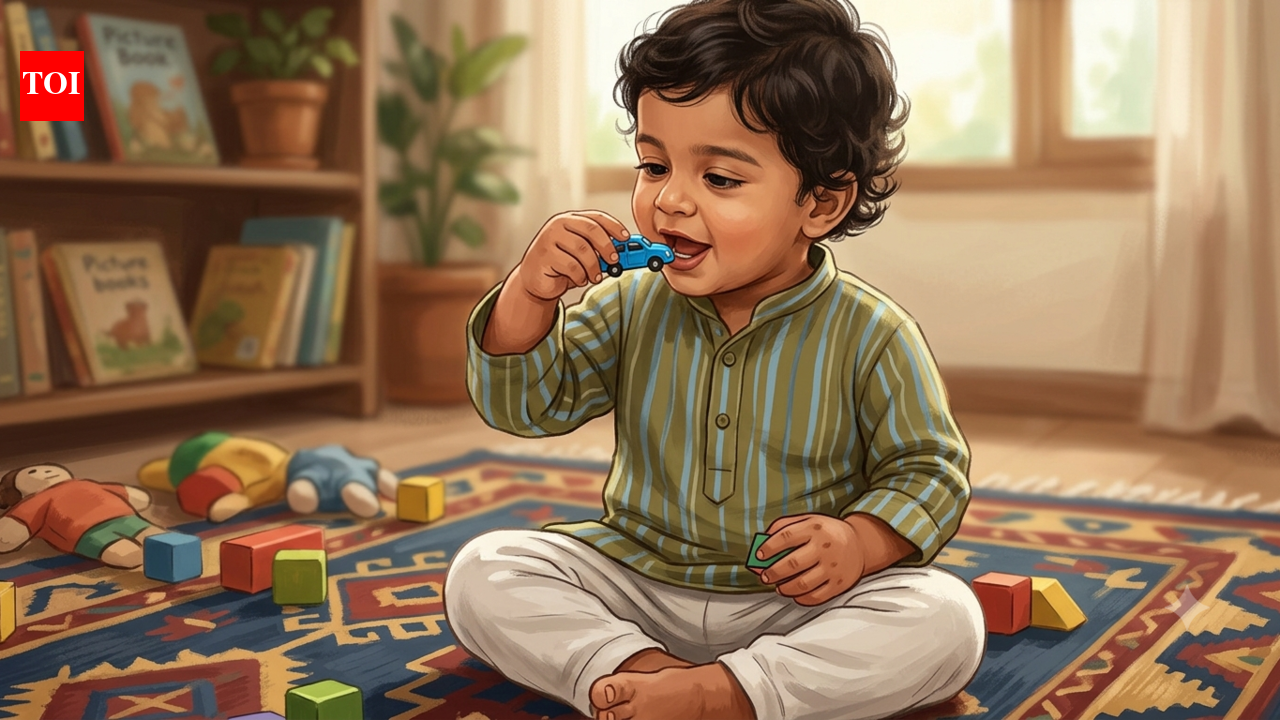
Bengaluru: What initially appeared to be a persistent cough turned out to be a medical emergency for a two-year-old boy in the city. After nearly two weeks of fever, breathlessness and multiple hospital visits, doctors discovered that the toddler had accidentally inhaled a peanut shell while eating. The shell had lodged in his airway and was removed through a delicate bronchoscopic procedure.Doctors say such cases of accidental aspiration — when food or another object enters the airway instead of the food pipe — remain a significant concern among toddlers, who are particularly vulnerable because of their developmental stage.“Children aged under three explore their surroundings by putting objects in their mouths, and their coordination of chewing and swallowing is still developing, making them more prone to accidentally inhaling foreign bodies,” said Dr Hiremath Sagar, senior consultant, paediatric medicine, Narayana Health. Commonly aspirated objects include peanuts, seeds, popcorn, grapes, beads, coins, buttons, pen caps, button batteries, and small toys.The challenge, doctors say, is that symptoms are often mistaken for a common cold or viral infection, delaying diagnosis. “If the foreign body is large, the child develops immediate choking or respiratory distress, prompting parents to seek emergency care,” said Dr Vivek Gundappa, clinical lead, interventional pulmonology, Fortis Hospital, Yeshwantpur, who treated the child. “However, smaller organic particles such as peanut fragments can travel deeper into the lungs without causing significant breathing difficulty initially. Over time, mucus accumulates behind the blockage, becomes infected, and the child develops symptoms related to the infection. This can delay diagnosis.”Dr Sudharshan KS, consultant pulmonologist, TriLife Hospital, said the complications depend on the size and location of the object. A complete blockage of the airway requires immediate emergency treatment, while smaller objects lodged deeper in the lungs can lead to recurrent infections, lung collapse, or empyema if not detected early. In some prolonged cases, surgery may be required to remove the damaged portion of the lung, highlighting the importance of timely diagnosis and bronchoscopic removal.Doctors advise parents to seek medical attention if a child develops persistent coughing, choking or breathing difficulty soon after eating or playing with a small object, even if the symptoms appear mild.Prevention techniquesPrevention, they say, is equally important. “Toddlers should always be supervised while eating, particularly when they are given nuts, seeds or other small food items,” said Dr Rashmi Jeenakeri, paediatric neonatologist at Apollo Hospitals, Seshadripuram. “They should also not be left unattended with small objects, as they naturally tend to put things into their mouths and noses.”If a child starts choking, parents should remain calm. “If the child is conscious and coughing effectively, encourage the coughing as the object may come out on its own,” Dr Rashmi said. “Five back blows between the shoulder blades while leaning the child forward may also help. If necessary, abdominal thrusts can be performed.”She advised against attempting a blind finger sweep unless the object is clearly visible, as this may push it deeper into the airway. Even if a child appears to recover after a choking episode, doctors recommend prompt medical evaluation to rule out any foreign body remaining lodged in the airway.Signs Of Foreign Object AspirationPersistent coughingChoking while eating or playingNoisy, difficult breathing or wheezingBluish lips or faceFever or cough that doesn’t improve after days
