


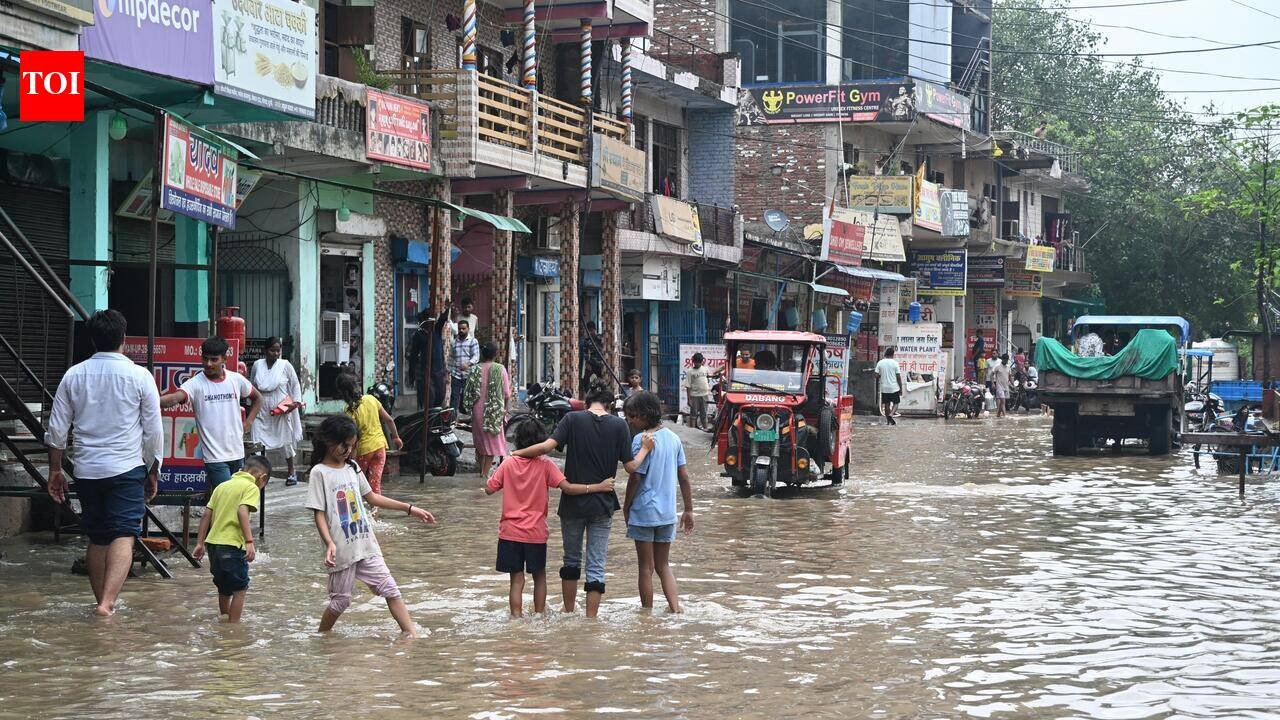
Noida: Desilting and cleaning of around 146km of drains has been completed, a senior district official said on Friday, even as large parts of Noida was flooded after two days of heavy rain.On Thursday, several key roads went under water bringing peak-hour traffic to a crawl. In a few sectors, rainwater entered residential houses. In industrial areas like Ecotech III, daily working in factories was disrupted as rainwater damaged finished products. Many residents blamed inadequate cleaning of drains for the monsoon mayhem.The pre-monsoon exercise is aimed at ensuring smooth stormwater flow and preventing flooding of roads. Chief development officer Bhal Chandra Tripathi, however, said not all drains can be cleaned every year. Maintenance is carried out based on a technical schedule determined by each drain’s carrying capacity. “Drains with a discharge capacity of up to 5 cubic feet per second (cusecs) are cleaned once every two years while those capable of carrying between 5 and 15 cusecs are cleaned every three years. Larger drains with capacity exceeding 15 cusecs are cleaned once every five years,” he said.The schedule ensures efficient use of resources while keeping the drainage network functional, he added. The irrigation department, which manages a network of 50 major drains spanning about 321km, completed the cleaning of 13 drains as per the schedule by the end of June.“Those 13 drains have been cleaned. The remaining drains have been allotted to Noida Authority, Greater Noida Industrial Development Authority and Yamuna Expressway Industrial Development Authority,” he said.Tripathi said the other civic bodies have begun cleaning the drains but a report on how much work has been completed is pending.Meanwhile, officials from the irrigation department, urban local bodies and members of the Ganga Committee also assessed the progress of drain cleaning and discussed measures to strengthen flood management during the monsoon.During the review, members of the Ganga Committee recommended that all drains be cleaned annually to further improve flood preparedness and minimise waterlogging.
