


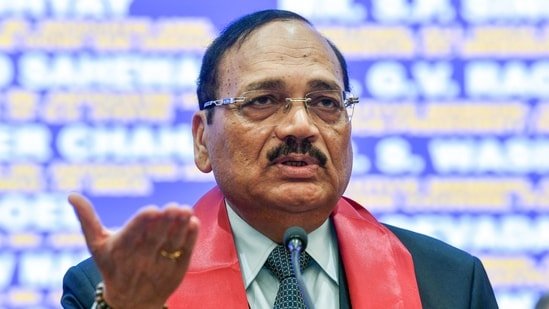
Chief Justice of India (CJI) Surya Kant on Friday said that no petition seeking the Supreme Court’s intervention into the alleged police excesses during the July 20 crackdown on student protesters in the national capital had been filed, criticising what he described as “reckless” reports suggesting that the court had refused to list such a matter.
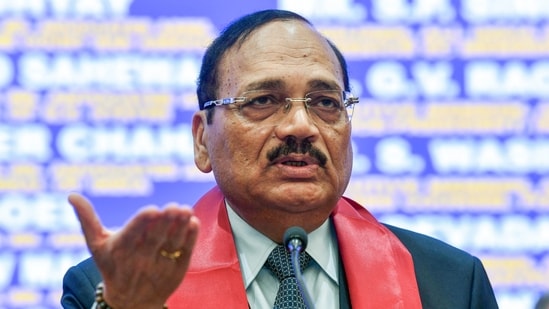
The issue surfaced before a bench headed by the CJI when senior advocate Shoeb Alam mentioned an unrelated matter arising out of a Bombay High Court judgment and sought an urgent hearing.
Referring to the controversy surrounding reports that the Supreme Court had declined to hear a plea over the July 20 police action, the CJI said the registry had verified the records and found that no writ petition had been instituted. “It has happened recently that nothing was filed and the matter was mentioned before us…I checked from the registry, and not a single page has been filed in the Supreme Court,” the CJI said.
He added that what had reached the court was only a representation. “It was one representation…sent by that Mishra or someone. How can I treat the representation as a writ petition? And people start recklessly reporting this,” said the CJI, presiding over a bench also comprising justices Joymalya Bagchi and V Mohana.
Expressing concern over the reportage, the CJI said: “In the last two days, a completely false statement was made that a matter was filed, and the media is absolutely free from all responsibility, recklessly falsely reporting that the Chief Justice refused to list the matter. Till morning 10, not a single page had been filed.”
Also read: New edu secretary, PM’s selfie-video, Wangchuk ends fast: Overnight developments amid CJP protest
The observations came two days after the Supreme Court declined to entertain an oral request by advocate Narendra Mishra to take suo motu cognisance of the alleged police brutality during the July 20 Parliament march.
At the hearing on Wednesday, Mishra referred to a letter petition addressed to the CJI and urged the court to examine videos allegedly showing police personnel assaulting protesters.
The bench declined the request, with the CJI telling the lawyer not to “waste” the court’s time. “We are not interested in videos; we don’t have time to watch,” the bench had observed while refusing an urgent listing.
Also read: Who is Naresh Pal Gangwar? New education secretary appointed amid CJP protest
Later the same day, the Delhi High Court directed authorities to preserve CCTV footage, videography and other records relating to the police action, while seeking responses from the Centre and the Delhi Police on petitions challenging the crackdown. The matter is scheduled to be heard on September 11.
The CJI’s remarks on Friday came even as activist Sonam Wangchuk ended his 26-day hunger strike after receiving assurances from the Centre. A delegation of the Cockroach Janata Party (CJP), which has been spearheading the agitation over alleged examination paper leaks and education reforms, was scheduled to hold talks with Union ministers later on Friday. Protest organisers said the agitation would continue despite Wangchuk ending his fast.
Track live updates of CJP protest here
The CJP called the July 20 Parliament march after weeks of protests and a hunger strike at Jantar Mantar. Thousands of demonstrators attempted to march towards Parliament demanding the resignation of Union education minister Dharmendra Pradhan over alleged examination paper leaks and reforms in the examination system.
As protesters attempted to breach multiple layers of barricades in central Delhi, police used tear gas and baton-charged to disperse the crowd. Videos circulating on social media appeared to show several protesters being beaten, while the Delhi Police maintained that force became necessary after demonstrators turned violent and resorted to stone-pelting.
Wangchuk called off his fast after Union ministers JP Nadda and Jitendra Singh conveyed the Centre’s assurances, including that no legal action would be initiated against peaceful protesters and that issues relating to examination reforms and accountability would be discussed. CJP leaders maintained that the movement will continue until their broader demands, including the resignation of the education minister, are addressed.
