





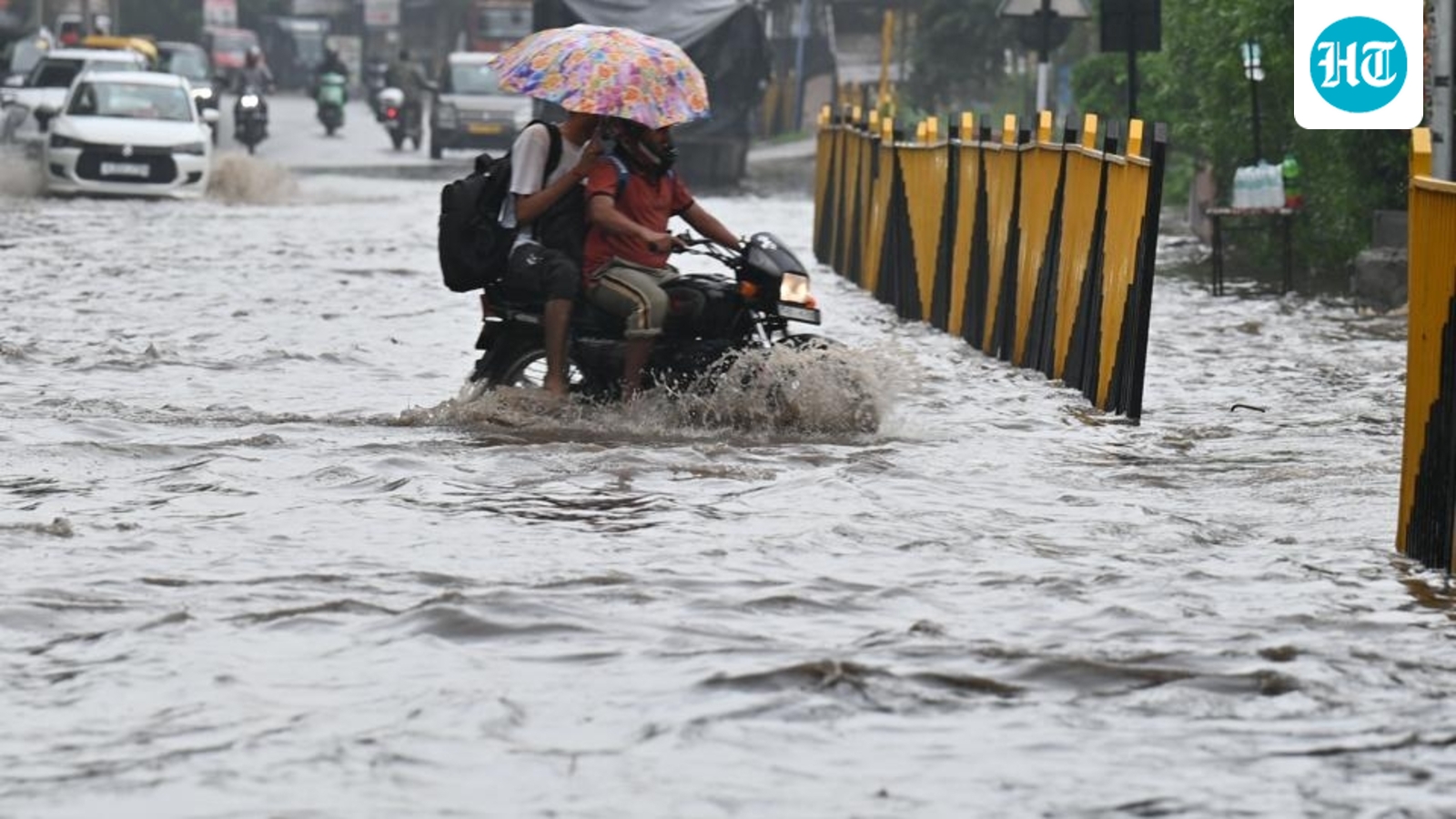
Every year, visuals of waterlogging in Haryana’s Gurugram ironically flood social media. Working professionals and residents share clips showing how rain brings the city to its knees, choking traffic and disrupting daily life.

This year is no different. Images and videos from across the city show people wading through waterlogged streets and vehicles struggling to navigate flooded roads.
Decoding why it floods every year in Gurugram
To understand why a modern hub succumbs to rainfall every year, MG Devasahayam, former Chief Administrator of the Haryana Urban Development Authority (HUDA), broke down the structural failures rooted in the city’s early planning.
He noted that the initial vision for Gurugram in the 1980s violated basic town-planning principles, citing a Tamil proverb that says, “If the first thing is wrong, everything is wrong.”
Devasahayam said urban development must align with the natural terrain and its carrying capacity. He explained that the region was suited only for “low-rise, low-density” development, but was instead built as a “high-rise, high-density” real estate model.
He also pointed out the absence of natural drainage, noting that unlike historical cities built along rivers, Gurugram had no natural water sources or adequate drainage network.
Also Read | Delhi to get more rain, thunderstorms on Sunday; IMD issues yellow alert
Scale of disruption
Heavy downpours systematically paralyse mobility and daily operations across the city:
Commercial roads: Stretches such as Golf Course Road and the Delhi-Gurugram Expressway near Cyber Hub suffer from waterlogging.
Major intersections and service lanes: IFFCO Chowk and Sohna Road also face acute waterlogging.
Daily life affected: Inundation forces corporate offices to mandate work-from-home (WFH) policies sometimes and prompts schools to suspend physical classes.
Also Read | IMD warns of heavy rain today in several states as monsoon stays active; red alert in parts of Delhi
What the residents say
Ayush (name changed for privacy protection), who moved to Gurugram in 2025 for a new job, shared how his expectations clashed with reality:
“Honestly, I thought moving to Gurugram meant stepping into the future. I am from West UP. Back home we get heavy monsoons too, but the roads clear out without much delay,” he said.
“Here? I paid high rent, and when I went to the office via my two-wheeler, I spent two hours stranded in a puddle right outside my PG. My friends back home were asking if I needed a boat to get to the office!” he also said.
“Nobody warned me that ‘monsoon prep’ in Gurugram means packing extra trousers and hoping I reach back to my PG before 10 pm, even though I left at 7 from office (which usually takes 15 minutes),” Ayush said.


