






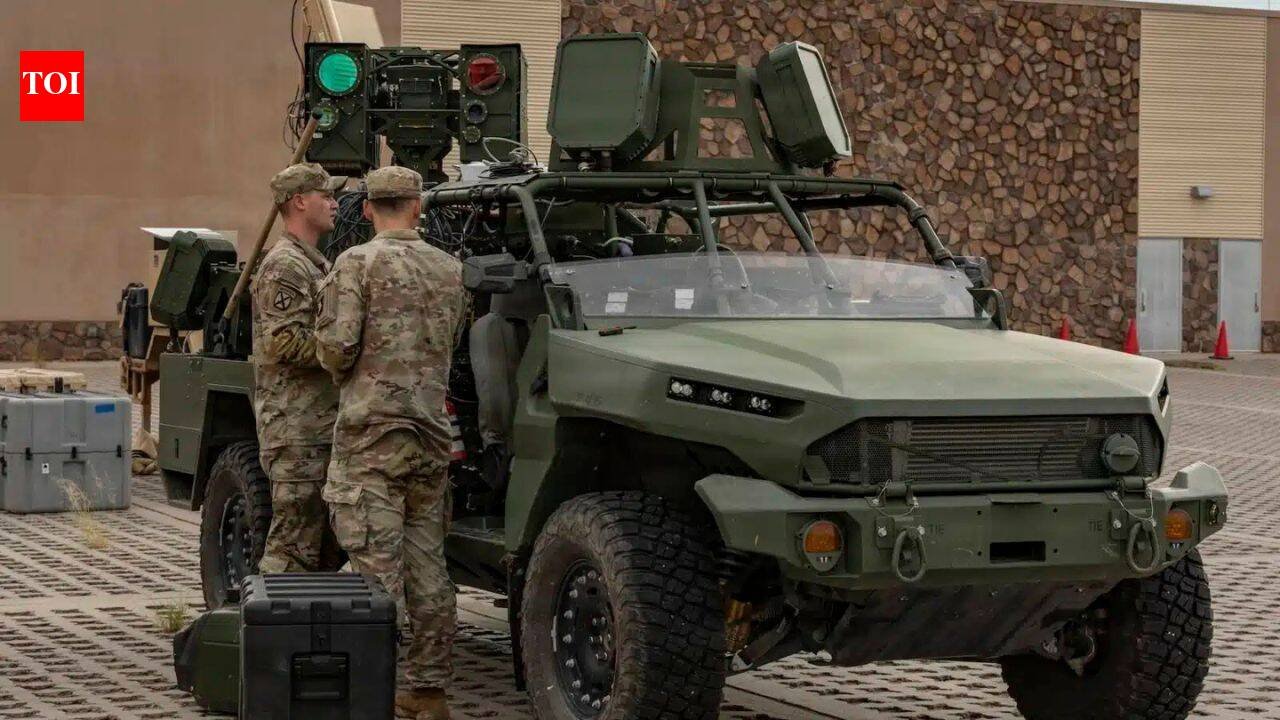
The United States has selected four advanced laser and high powered microwave weapon systems for operational testing as Washington seeks to strengthen its defences against the growing threat posed by drones to military installations and critical infrastructure.According to the US Department of War, the systems will be evaluated under a directed energy pilot programme led by Joint Interagency Task Force 401, which is tasked with developing and coordinating counter drone capabilities for homeland defence.The move marks a shift towards testing directed energy weapons in operational environments rather than relying solely on conventional interceptors.The four systems selected for the pilot programme include AeroVironment’s Palletised High Energy Laser, Epirus’ Leonidas High Powered Microwave system, Kord’s Firefly High Energy Laser and Boeing’s Compact Laser Weapon System.The systems represent two major forms of directed energy technology being explored by the US military to counter unmanned aerial systems.How laser and microwave weapons workHigh energy laser weapons use concentrated electromagnetic energy to engage drones. The beam is focused on a specific part of the aircraft, delivering enough heat to damage critical components and potentially destroy the target.The US Army has described directed energy as offering a potentially lower cost per shot and a deeper magazine than conventional kinetic interceptors.Lasers also operate at the speed of light and do not require conventional ammunition, but their effectiveness depends on maintaining the beam on the target and can be affected by atmospheric conditions and other factors.High powered microwave(HPM) weapons work differently, using electromagnetic energy to interact with a drone’s electronics. The US Office of Naval Research says HPM systems are designed to cause damage or temporary disruption to electronic systems, while their broader beams can allow multiple electronic targets to be engaged simultaneously.The US Army has tested HPM systems specifically designed to disrupt, disable or destroy multiple unmanned aircraft, making them a complementary layer alongside lasers and conventional counter drone weapons.


