



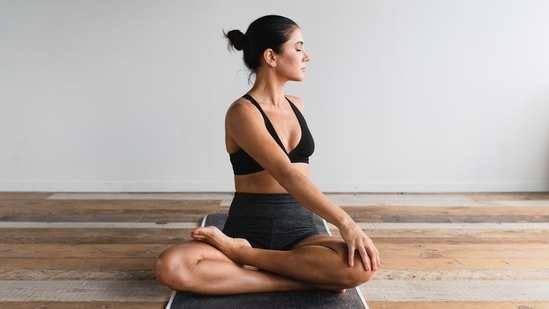
Many people delay starting yoga because they think they need a mat, a studio, special clothes, or one quiet hour. But yoga does not have to begin that way. It can begin in regular clothes, in a small space, beside your bed, or on a chair at work. Yoga is not just a workout. It combines movement, breath, awareness, and relaxation. The point is not to perform perfectly, but to use simple practice as a daily tool to move better, breathe better, and settle the mind. In an interview with HT Lifestyle, Naveen Sharma, yoga expert at Yoga Circle by Cult, shared a guide to yoga that doesn’t require any fancy equipment.
Also read | 8 subtle yet unexpected shifts practicing Yoga can bring into your life
1. Seated breathing
Sit on a chair with both feet on the floor. Keep the spine tall and shoulders relaxed. Take five slow breaths. Do not force the breath. Just notice it and let the body settle.
2. Neck and shoulder release
Sit or stand tall. Roll the shoulders slowly five times forward and five times backwards. Then gently turn the head right and left. Keep the movement small and comfortable.
3. Chair-supported half forward fold
Stand behind a chair and place both hands on the backrest. Step the feet slightly back, bend the knees a little, and lengthen the spine. Keep the neck relaxed. Do not round the back or force the head down.
4. Seated twist
Sit tall on a chair with both feet grounded. Place the right hand on the left thigh and the left hand behind you. Gently turn from the upper back. Do not force the neck. Repeat on the other side.
5. Stillness
Sit comfortably, close your eyes if that feels safe, and take five slow breaths. Let the face, jaw, and shoulders soften.
Naveen Sharma said, “This routine can take 5 to 7 minutes. Move slowly and breathe normally. If there is sharp pain, dizziness, numbness, or discomfort that increases, stop and seek professional advice. Yoga begins when you pause, breathe, and move with awareness, not when you buy the perfect mat.”
Note to readers: This article is for informational purposes only and not a substitute for professional medical advice. Always seek the advice of your doctor with any questions about a medical condition.


