



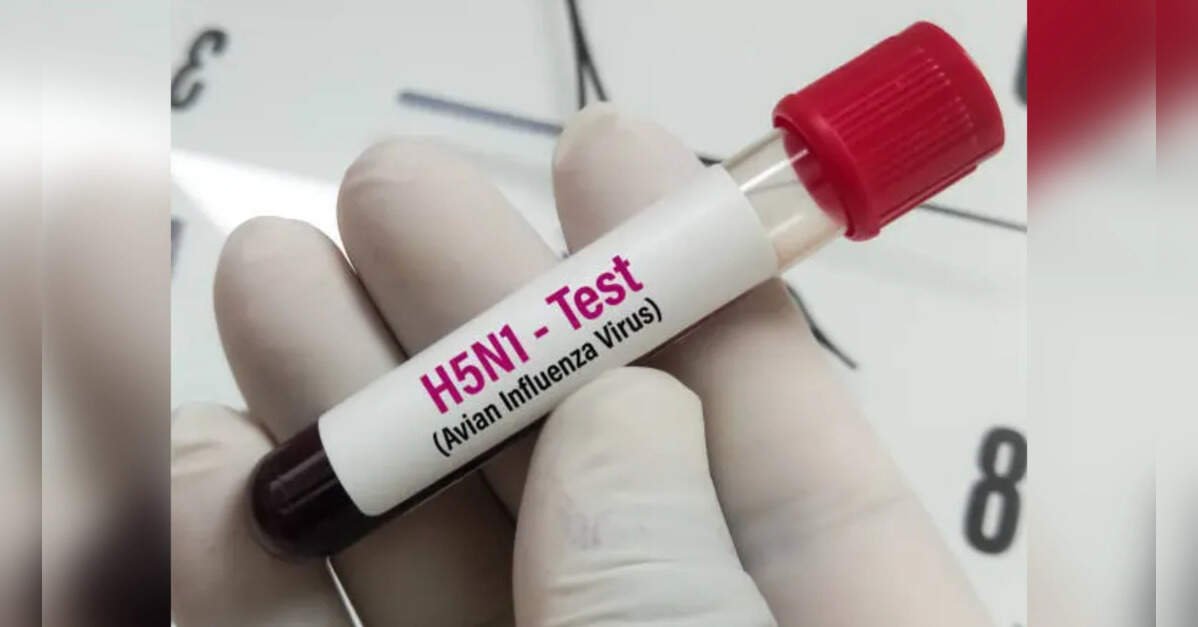
New Delhi: The recent culling of over 150,000 chickens after an outbreak of H5N1 avian influenza or bird flu in Maharashtra’s Navapur has once again triggered concerns regarding the possibility of human transmission.
In light of the outbreak, Dr. Rajeev Bahl, Director General of the Indian Council of Medical Research (ICMR), asserted that the National Centre for Disease Control (NCDC) and the ICMR are closely monitoring the spread of H5N1 avian influenza in the state.
“The National Centre for Disease Control (NCDC), Indian Council of Medical Research (ICMR), Department of Animal Husbandry and Dairying (DAHD) and Indian Agricultural Research Institute (ICAR) are closely monitoring the H5N1 avain influenza, till now no human transmission cases have been reported,” said Dr Bahl.
Human infection with highly pathogenic avian influenza (HPAI) H5N1 is known to cause severe respiratory illness and carries a high mortality rate, as more than half of the nearly 1,000 reported cases worldwide have proved to be fatal. Experts emphasise that while the virus is lethal, there is currently no specific treatment or vaccine available for human use.
However, despite the global impact, India has recorded only two confirmed human cases to date. Scientists assert that sustained human-to-human transmission of H5N1 remains extremely rare. Hence, this biological limitation has, so far, prevented the virus from evolving into a large-scale human disaster or a global pandemic.
According to Dr. Ishwar Gilada, Secretary General of the Public Health Organisation (India), pandemic preparedness must evolve into a broader “emergency preparedness” framework. Dr. Gilada asserted that this strategy should encompass both man-made and natural catastrophes, including heatwaves and wildfires, which are currently demonstrating the severe impacts of global warming.
“There is no second thought on pandemic preparedness that is required at the global, national, state and local level all over the world. Pandemic preparedness should even go beyond and become emergency preparedness that encompasses all the man-made and natural catastrophes too, which includes heat waves, wildfires that have currently showing its worst-ever impacts of global warming. Tracking the viruses and other microbes, genome sequencing, knowledge sharing, Research & Development to find vaccines, treatments/cures, prevention guidelines if and when there is outbreak are crucial steps that should have continuity,” said Dr Gilada.
Addressing the spread of the H5N1 virus, Dr. Gilada noted that there is currently no evidence of sustained human-to-human transmission of the virus. Citing WHO data, Dr. Gilada mentioned that approximately 939 human cases of H5N1 and 464 deaths have occurred worldwide from 2003 to date.
The PHO Secretary General explained that there is no need for panic over the virus.
“There is no cause for panic. The media must exercise restraint and present scientific developments with balance, context, and factual scrutiny. Any attempts at fear-based narratives or commercial exploitation through exaggerated claims should be critically examined and exposed,” added Dr Gilada.


