


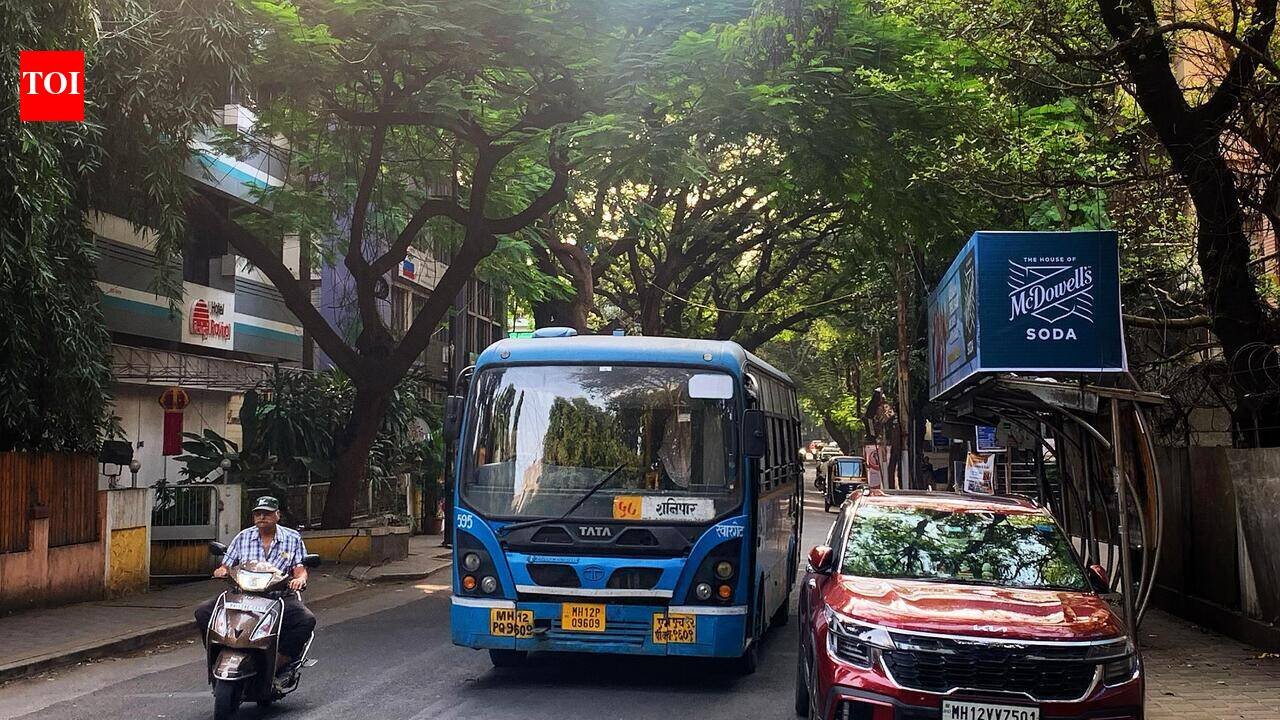
Pune: PMPML commuters are unlikely to face another fare hike anytime soon despite the transport utility continuing to incur operational losses, CMD Mahesh Awhad said on Wednesday.He stressed that the losses in FY 2025-26 were lower than those in the previous financial year.Awhad’s remarks come ahead of a special general body meeting of the Pune Municipal Corporation (PMC) on Friday to consider disbursing Rs 474.1 crore to PMPML towards its operational losses for FY 2025-26.Speaking to TOI, Awhad said the transport body’s immediate focus would be on boosting non-fare revenue rather than increasing the ticket price.“Public transport agencies across the world, barring Hong Kong, operate at a loss. PMPML revised fares only last year, and there is no question of another hike now. The meeting on Monday remained inconclusive and will resume on Friday. PMPML functions with financial support from the PMC and PCMC, which are expected to compensate for operational losses. This is not a grant but reimbursement for losses,” he said.According to Awhad, PMPML’s operational losses reduced to Rs 818 crore in FY 2025-26 from Rs 885 crore in the previous financial year.“A significant portion of our expenditure goes towards salaries and wages. Fuel costs, whether for diesel, electricity or CNG, have risen sharply. While increasing ridership is one way to improve revenue, the present fleet of around 1,960 buses is inadequate for a rapidly expanding Pune. We require nearly 6,000 additional buses to meet demand. Even if around 2,000 new buses are added by the end of the year, the shortfall will remain. That is why non-fare revenue has become essential,” he said.To diversify its revenue streams, PMPML plans to commercially develop land reserved for the transport utility.“There are 32 land parcels reserved for PMPML within the PMC limits. Since these are privately owned, the civic body will first have to acquire them. In the first phase, we plan to develop 24 parcels, subject to approvals. The projects will include bus depots, terminals and stations, with buses operating from the ground floor while the upper floors are leased to private establishments. The Bengaluru model has shown that this can generate substantial revenue, and we expect PMC’s support for speedy land acquisition,” Awhad said.He also outlined plans to monetise bus shelters through public-private partnerships (PPP).“Pune has around 9,000 bus stops, but only about 1,500 have shelters. We plan to redevelop them in phases under a PPP model. In the first phase, 200 locations will be taken up, with private firms leasing and maintaining the shelters for 15 years. Over the next five years, we aim to provide shelters at all bus stops through this model, creating a steady revenue stream,” he said.Commuters and transport activists, however, remained unconvinced, saying passengers were more concerned about service quality than long-term monetisation plans.“PMPML has been discussing such proposals for years. What commuters want is reliable public transport. If buses are clean, punctual and frequent, ridership will automatically increase,” said Sanjay Shitole, an activist with PMP Pravasi Manch and a regular commuter.Commuter Sudhir Kamble echoed the sentiment.“Passengers are not interested in ambitious plans that never move beyond paper. PMPML had even spoken about launching a cab service in 2021-22, but nothing happened. Saying the city needs 6,000 more buses does not solve today’s problems. The bigger question is what the state govt is doing to bridge this gap,” he said.
