


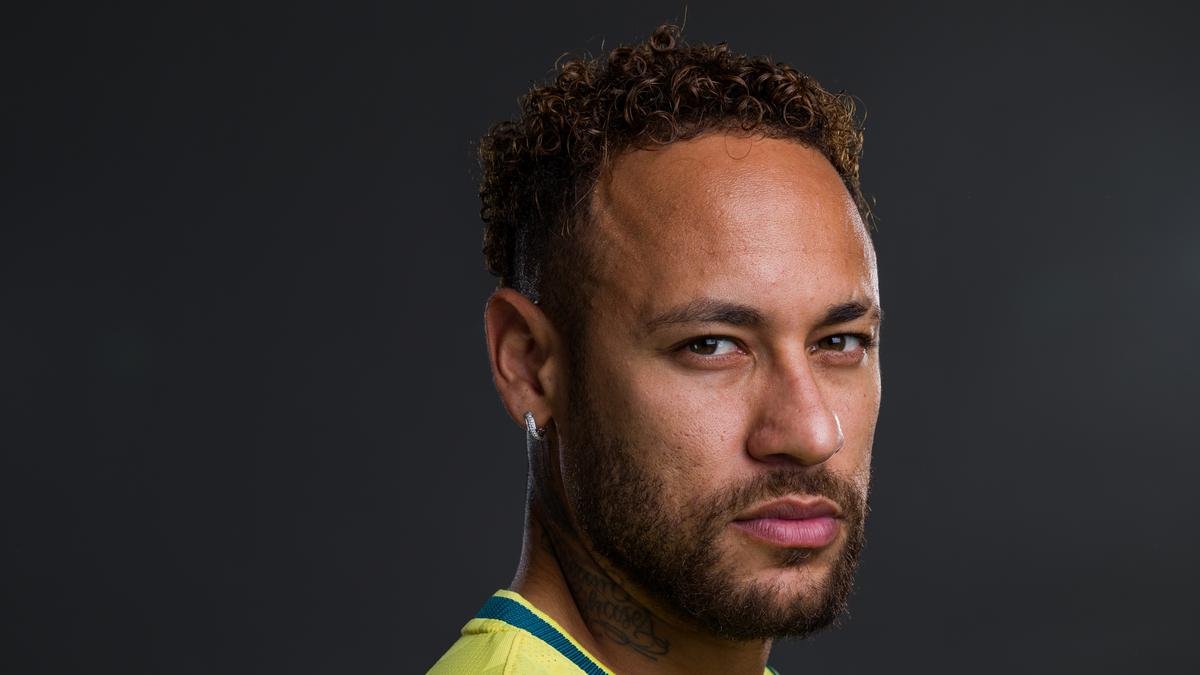
It is difficult to be a Brazilian footballer. It is more difficult to be a talented Brazilian footballer.
After the legendary Pele fired the South American nation to three World Cup triumphs in four editions (from 1958 to 1970), playing a leading role in at least two of those, every potentially great player who wears the Selecao shirt has been asked just one existential question — can you win the World Cup?
Romario in 1994 and Ronaldo in 2002 answered this emphatically, leading Brazil to its fourth and fifth titles respectively. Ronaldinho (in 2006) and Kaka (in 2006 and 2010) were put through the wringer, but could not add to the collection of World Cup trophies.
King in Waiting
From then on, the burden of resurrecting Brazil has been Neymar’s. Ever since he broke out as a prodigious 17-year-old at Santos and captured the imagination of his country, he has been Brazil’s ‘King in Waiting’.
There were four trophy-filled seasons at Barcelona, and then the record €222 million move to Paris Saint-Germain that liberated him from Lionel Messi’s colossal shadow at the Catalan giant.
But circumstances back in Brazil have been such that Neymar is yet to be coronated. In the time since that magical night in Japan in 2002, when Ronaldo buried the ghosts of the 1998 final loss to France by leading his side to a 2-0 win over Germany, Brazil has reached just one semifinal — at home in 2014.
That was the first of Neymar’s three appearances at the quadrennial extravaganza. He played admirably until the quarterfinals but a lower-back injury ended his tournament, and he watched helplessly on television the 7-1 humiliation that eventual champion Germany dished out.
In 2018, Belgium’s golden generation proved too good for Brazil as it crashed out in the quarters. In the 2022 last-eight clash versus Croatia, Neymar started and finished a brilliant move from midfield to put Brazil ahead in extra-time, only for his teammates to exhibit a severe lack of game awareness and ultimately lose on penalties.
For the maverick footballer, who is now 34, the North American sojourn will in all probability be the last chance saloon — a fourth attempt at claiming the elusive title.
Valiant in defeat: In the 2022 last-eight clash against Croatia, Neymar started and finished a brilliant move from midfield, but it wasn’t enough.
| Photo Credit:
Getty Images
Neymar, however, has to come to terms with the altered reality of him no longer being the leading man. Zinedine Zidane was also 34 when he led France to the final in 2006. Messi is 38 and Cristiano Ronaldo 41, and both are still synonymous with their outfits.
Neymar, though, is no longer central to his country’s identity. He is still Brazil’s biggest star, scorer of a record 79 goals (two more than Pele), but is neither the fulcrum nor the conductor who was once at the centre of every signature move on the field.
In fact, there was a real danger of Carlo Ancelotti — the first foreign coach in Brazil’s history, brought in to instil a culture of collectivism and tactical discipline — side-stepping him altogether, for Neymar had featured in just four fixtures after the 2022 World Cup.
His last outing for the national team was in October 2023, a World Cup qualification tie against Uruguay during which he ruptured the anterior cruciate ligament and meniscus in his left knee and was out of action for a year.
He made a comeback in October 2024, only to injure his hamstring and spend more time out. Al Hilal, the Saudi Arabian club he joined in August 2023, terminated his contract in January 2025, and Neymar returned to Santos.
Flashes of his old self
The spell at his boyhood club has been mixed, with only flashes of his old self visible. There have been multiple spells on the sidelines; in 2026, he has only competed in eight matches. Leading into the World Cup he has again been waylaid by a calf injury.
The question now is how much of the old Neymar remains and what facets Ancelotti can tap into. At his pomp, Neymar was a flamboyant footballer and a glorious combination of pace, precision and trickery.
His close control and dribbling skills were such that the ball appeared glued to his feet, and such was the velocity he could gather in his first three-four steps that most opponents struggled to keep up.
Now that he is well into the third decade of his life, speed is no longer his ally. He is not as sharp as before. But set-piece delivery is still part of his muscle memory.
Considering that he would have had more rest than his Europe-based teammates, he can be a real threat if called upon to play short cameos, especially at the business end.
Neymar’s popularity among his peers was also a factor in his selection. For long, Ancelotti maintained that he would only pick those who were fully fit. But here, there appears to be an ever-so-slight departure as Ancelotti himself pointed to the “affection the group has for him [Neymar]” and how he can help “create a better atmosphere”.
The Italian, who has coached high-profile clubs such as Real Madrid, Bayern Munich, Paris Saint-Germain and Chelsea, is among the best man-managers around and known to prioritise harmonious dressing rooms.
Pragmatic in his approach, Ancelotti has mostly shaped tactics according to the personnel at hand. At the same time, he has not allowed individual egos to disturb the shared ethos of his teams. “He has the same role, the same obligation as the other 25,” he said about Neymar. “He might play; he might not; he might be on the bench and come on.”
In South America, footballers cater to heightened demands. With the best players from the continent almost always leaving for greener pastures in Europe, there is an expectation from the fans for them to do well in national colours.
Soft power: Neymar’s popularity among his peers was a factor in his selection, with head coach Carlo Ancelotti highlighting the “affection the group has for him”.
| Photo Credit:
Getty Images
Messi might have had one of the greatest careers at Barcelona, but the whole of the Argentine population fully warmed up to him only in the aftermath of the 2022 success in Qatar.
It has been no different for Neymar. He helped Brazil win the 2013 Confederations Cup and clinch its first Olympic gold in football at Rio 2016. Both were at home but they still did not endear him to the public completely.
Failure and scrutiny
With every failure at the World Cup and Copa America, the scrutiny grew. Minor acts of petulance were overblown; every breath was analysed; every step was scrutinised; something as simple as a haircut was also not spared. In the battle of perception, he mostly lost.
“Those who have been with me through it all know that it was difficult, it was hard,” Neymar said about his latest selection. “But after hearing my name on the list, [it felt like] all the sacrifices and all the effort was worth it. We’re in this together as Brazil heads for a sixth World Cup title.”
The big question is: can a Brazilian ensemble deliver what a solo Neymar couldn’t?
