



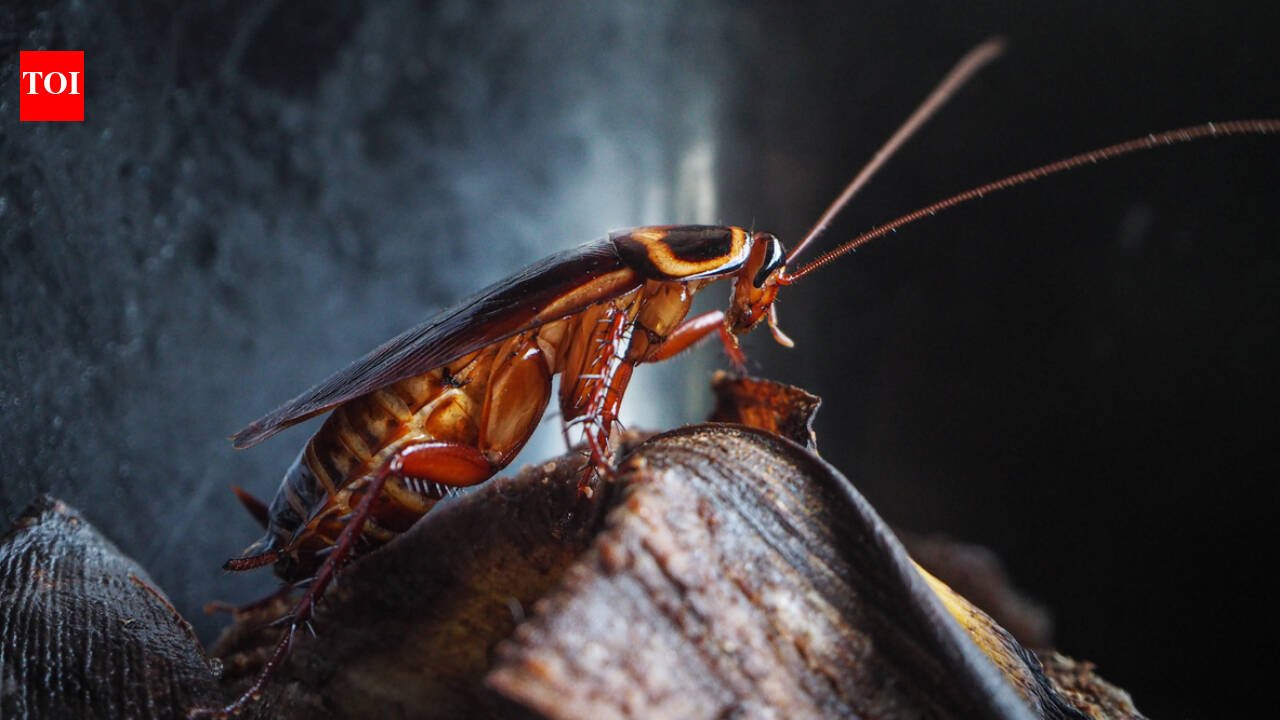
why cockroach traps fail, how German cockroaches find their colony, how cockroach pheromones work, why cockroaches gather in groups, newborn cockroaches learn colony smell, cockroach feces used to identify colony members, using pheromones to control cockroach infestationsCockroaches may be among the least welcome visitors to houses, restaurants and hospitals, but their survival skills are surprisingly sophisticated. In new research, scientists say German cockroaches don’t only like to huddle in dark, warm places: newborns seem to learn the signature smell of their colony soon after they are born and use chemical cues in feces to find out where they belong. According to a news report by Phys Org, the discovery may also help explain why conventional traps and insecticidal baits can sometimes have trouble controlling infestations. It also suggests that cockroaches may have a better capacity for social learning and memory than previously believed.
Newborn cockroaches learn the smell of their colony
Cockroaches that had eaten the feces of their aggregation showed a strong preference for the particular pheromone that aggregation was producing.
Newborn German cockroaches, called neonates, are born without a gut microbiome. They obtain microbes and nutrients by eating feces from a communal pile in the colony’s aggregation. According to the report, researchers tested whether this exposure to feces early in their lives also affects how newborn cockroaches recognize their own group-mates. The scientists compared neonates that had ingested feces from their colony and had been exposed to its fecal odors with newborns that had not engaged in coprophagy, and were therefore microbiologically naïve. The results showed a dramatic difference. Cockroaches that had eaten the feces of their aggregation showed a strong preference for the particular pheromone that aggregation was producing. Conversely, naïve neonates showed a much wider range of responses to different fecal odors. Thus, feces consumption does more than to establish a microbiome in newborn cockroaches. It may also give them an early chemical introduction to their social group.
Chemical visa to the colony
It is mentioned that pheromones are important for bringing individuals together in aggregations of cockroaches. This chemical information can act as a sort of social ID system that allows cockroaches to find and stick with members of their group. The fecal pile that is shared by newborns seems to be especially important. It provides nutrients and microbes and at the same time exposes them to the chemical signature of their colony. Once the odor preference is established, the young roaches have little reason to leave the aggregation. This behavior may have important implications for pest control, because traps and bait stations often rely on cockroaches leaving their harborage and contacting the control products.
Can pheromones improve trap efficiency?
The researchers say the finding may eventually lead to better ways to control infestations of German cockroaches.
The researchers say the finding may eventually lead to better ways to control infestations of German cockroaches. One possibility is to develop aggregation pheromones that are able to attract cockroaches from the entire population instead of signals specific to individual colonies. The use of such pheromones in traps or insecticidal baits might attract more cockroaches to control products. This method can be especially helpful in places where infestations are difficult to eradicate, including homes, restaurants and hospitals. The findings also point to why understanding cockroach behavior may be just as important as developing new insecticides. If chemical signals can affect where cockroaches congregate and which individuals they recognize, then manipulating those signals could be a new weapon in pest control.
Cockroaches might be more social than you think
It also questions the conventional concept of cockroaches as relatively primitive, loosely structured insects. Cockroaches are often described as subsocial because they live in groups but do not have the highly coordinated societies of bees, ants, wasps and termites. However, the capacity of German cockroach newborns to learn and remember the chemical signature of their aggregation indicates a more complex kind of social behavior. The mechanism is also strange. Ants, bees, and other social insects use body odors to identify nestmates, but German cockroaches apparently use chemical cues from feces.This is a unique evolutionary solution for building social connections, the researchers say. Cockroaches learn the odor of their birthplace early in life, allowing them to recognize their group and remain connected to the aggregation.The findings reveal that an insect often dismissed as a mere pest has surprisingly sophisticated skills for learning, remembering and navigating its social world — and that same behavior could eventually give scientists a new way to outsmart it.Images Courtesy: istock


