



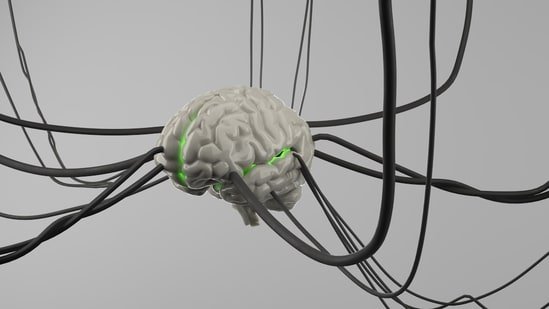
In today’s fast-paced life, stress, anxiety, and overthinking are always there like uninvited guests. Most people opt for therapies to treat them. But did you know that the brain can handle these issues on its own? Our brain can rewire itself every day. Dr Prashant Katakol, with over 33 years of experience in neuroscience, shared an insight on brain rewiring in an Instagram post dated April 15, 2026, that everyone should know.
Also read | Stressed and anxious? Doctor shares 12 habits to manage it naturally
Brain rewiring system
Dr Prashant said, “Your brain is rewiring itself right now. Every thought you repeat, every habit you practice, every pattern you feed, your brain is registering all of it and strengthening those exact neural pathways.” This is called neuroplasticity, and it works in both directions.
Our brain works as a network, not isolated parts. Thinking, feeling, and moving all emerge from connected networks firing together.
He further highlighted that most people unknowingly train their brains to stay in a state of chronic stress. Overthinking has now become a social media trend, and people are hyping it. It is linked to a personality type. However, the science behind this state of mind is completely different.
Dr Kakatol highlighted that overthinking is not a personality flaw. It is an overactive default mode network that activates when you dwell on yourself, the past, or the future.
Constant scrolling, multitasking, excessive workload, and mental noise keep the default mode network overactive. This default mode is the brain’s self-referential network. When poorly regulated, it drives overthinking, rumination, and anxiety.
Yoga Sutras
Dr Kakatol highlighted that Patanjali described this mechanism 2,000 years ago in the Yoga Sutras: “Yogas chitta vritti nirodhah” (Yoga is the stilling of the fluctuations of the mind). He further mentioned that neuroscience now confirms this is not a metaphor. It is biology.
Meditation, breathwork, and yogic practice have been shown to reduce default mode network hyperactivity, lower cortisol levels, and physically reshape the structure of the prefrontal cortex over time.
Dr Prashant said, “You are always training your brain. The question is not whether it is being trained. The question is what you are training it for. Stress or stillness. The choice is yours. And it begins with the very next thing you give your attention to.”
Note to readers: This article is for informational purposes only and not a substitute for professional medical advice. It is based on user-generated content from social media. HT.com has not independently verified the claims and does not endorse them.


