



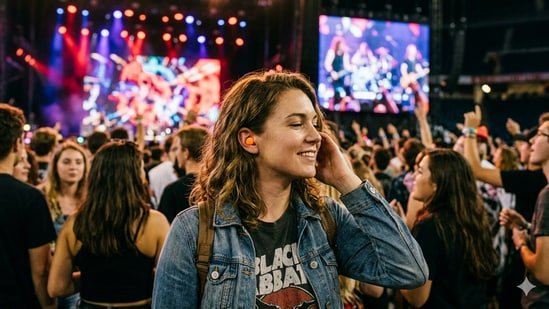
You’ve probably been told to wear earplugs at concerts—but most people brush it off, assuming it’s just about avoiding temporary ringing or discomfort. In reality, that advice carries far more weight than it seems. Protecting your ears from loud music isn’t just about preventing hearing loss; it could also play a crucial role in safeguarding your brain from long-term cognitive decline, including dementia.
Also Read | Can Bluetooth earphones cause brain tumours? Neurosurgeon explains whether Bluetooth radiation is harmful
Dr Rupa Juthani, a US-based neurosurgeon specialising in pituitary and skull base tumour surgery as well as Gamma Knife radiosurgery, is shedding light on why wearing earplugs at concerts is essential – not just for protecting your hearing, but also for safeguarding your brain against cognitive decline. In an Instagram video shared on March 22, she explains that hearing loss is the leading modifiable risk factor for dementia, and even short-term exposure to loud sounds can damage the delicate nerves within the ear.
Effects of exposure to loud sounds
According to Dr Juthani, even short-term exposure to loud volumes can cause permanent damage to the delicate nerves in the ear. That means the ringing or muffled hearing you notice after a concert isn’t just a temporary annoyance – it’s actually an early warning sign of nerve injury.
She explains what is actually happening inside your ears, “When sound exceeds ~85 dB, it starts mechanically stressing the hair cells in your cochlea. The first response is a Temporary Threshold Shift, which means hearing dims, tinnitus (ringing) kicks in, and it typically clears within 16 to 48 hours. But even short exposures like this can lead to permanent hearing loss. All it takes is minutes in a loud environment to trigger this event.”
The neurosurgeon points to research showing that even what seem like temporary effects of loud noise exposure can lead to rapid – and irreversible – damage to hearing nerve function.
She explains, “Kujawa & Liberman (J Neurosci, 2009) showed even those ‘recoverable’ exposures cause permanent, rapid loss of hearing nerve function leading to hidden hearing loss. With repeated exposures, those temporary shifts become permanent. Hair cells die. And more alarming, they cannot regrow.”
How is this linked to your brain?
Dr Juthani emphasises that hearing loss is the single largest modifiable risk factor for dementia beginning in midlife, making early prevention and protection all the more crucial.
She explains, “The Lancet Commission on Dementia (2020 and 2024) identified hearing loss as the single largest modifiable dementia risk factor from midlife. A meta-analysis of 1.5M people found dementia risk rises 16 percent for every 10 dB of hearing loss.”
The importance of ear plugs during concerts
The neurosurgeon points out that concerts often reach 100 to 110 decibels – levels high enough to accelerate damage to the hearing nerves and increase the risk of hearing loss. That’s why wearing earplugs isn’t optional; it’s essential. Simple foam earplugs are inexpensive and widely available, and there are even discreet, stylish options now – leaving little reason not to protect your hearing.
Dr Juthani emphasises, “Concerts routinely hit 100 to 110 dB. Simple foam earplugs cost $1. Fashion-conscious wearers can invest in decorative ones. Musicians use earplugs that preserve sound quality while cutting the damage. The importance of hearing is why I focus on hearing-preserving treatments for brain tumours affecting the hearing nerve (acoustic neuromas). Because protecting hearing is protecting your brain.”
Simply wearing earplugs at a concert can bring sound exposure down to safer levels – protecting not just your hearing, but your brain as well. Dr Juthani stresses that if you notice any signs of hearing problems, it’s important to consult an ENT specialist and address them early. Safeguarding your hearing isn’t just about your ears – it plays a crucial role in protecting your long-term brain health.
Note to readers: This article is for informational purposes only and not a substitute for professional medical advice. It is based on user-generated content from social media. HT.com has not independently verified the claims and does not endorse them.


