



Last Updated:
These powerful families continue to exert significant influence over Nepal’s political and economic landscape
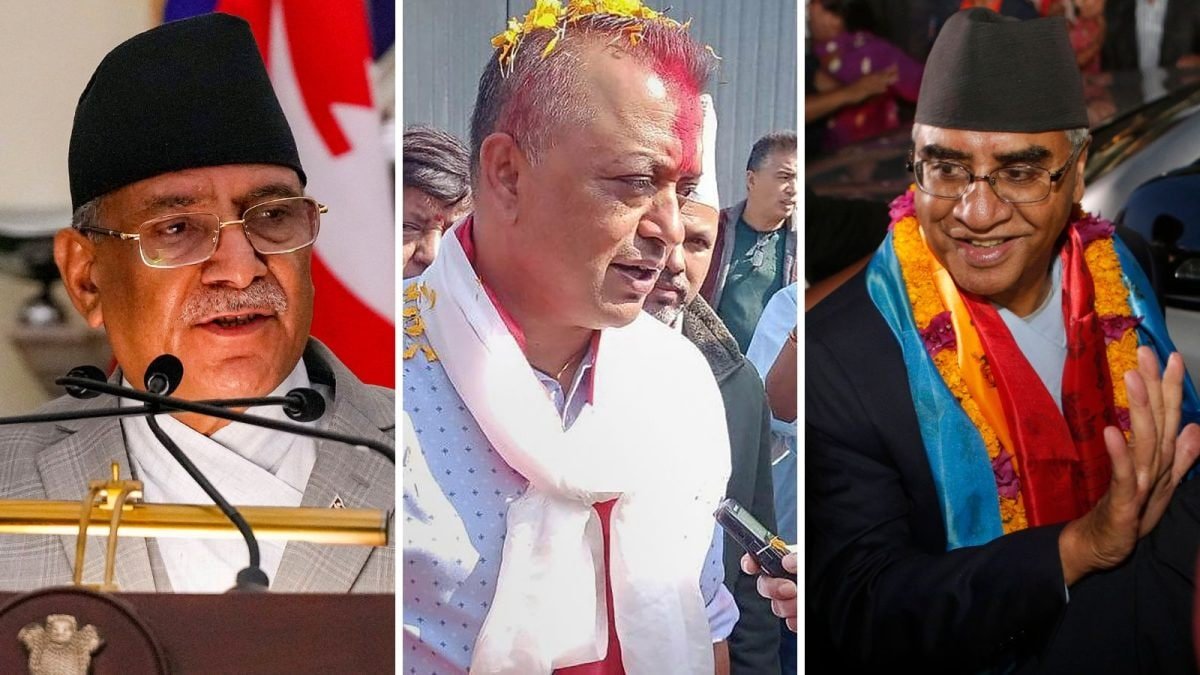
(From left) Pushpa Kamal Dahal (Prachanda), Gagan Thapa and Sher Bahadur Deuba. (AP File)
While Nepal transitioned from a monarchy to a federal democratic republic in 2008, several powerful families continue to exert significant influence over its political and economic landscape. This influence often stems from historical dynastic roots or decades-long dominance in political parties.
With Nepal set to hold the House of Representatives elections on March 5, the first since last year’s deadly Gen-Z protests that toppled the K P Sharma Oli-led coalition government, a look at the key families.
DOMINANT POLITICAL DYNASTIES
Several “political clans” have controlled specific constituencies and high-ranking government positions for generations:
Koirala Family: One of the oldest and most powerful dynasties within the Nepali Congress (NC). The family has produced four Prime Ministers — Matrika Prasad, B.P., Girija Prasad, and Sushil Koirala. Current prominent figures include Dr. Shashanka Koirala and Dr. Shekhar Koirala, both of whom maintain strong influence in their respective constituencies.
Deuba-Rana Family: A major force in the Nepali Congress led by former Prime Minister Sher Bahadur Deuba. His wife, Arzu Rana Deuba, is a high-ranking politician and former Foreign Minister.
ALSO READ | Nepal Votes Tomorrow: Parties To Contenders For PM Post In First Poll After Gen-Z Protests Explained
Dahal Family: Central to the Communist Party of Nepal (Maoist Centre), led by three-time former Prime Minister Pushpa Kamal Dahal (Prachanda). His family members, such as daughter-in-law Bina Magar, have also held significant political seats.
Thapa (KC) Family: A senior family in the Nepali Congress, represented by veteran leader Arjun Narasingha KC and his son-in-law Gagan Thapa, who is the party’s General Secretary and a prime ministerial candidate for 2026.
HISTORICAL RULING FAMILIES
Historically, power in Nepal was concentrated among four noble families of the Chhetri caste, who dominated the royal court and military for centuries:
Shah Dynasty: The royal house that ruled Nepal from its unification in 1768 until 2008. Former King Gyanendra Shah remains a private citizen in Kathmandu, though pro-monarchy movements occasionally rally for the family’s return.
Rana Dynasty: This family held hereditary control of the Prime Minister’s office from 1846 to 1951, reducing the Shah kings to figureheads. While no longer ruling, the family remains part of Nepal’s social and economic elite.
Thapa, Pande, and Basnyat Families: These aristocratic clans served as the primary military and administrative elites (Kazis) of the Gorkha Kingdom, frequently contesting for central power before the rise of the Ranas.

ECONOMIC POWERHOUSES
Beyond politics, certain families control the nation’s largest business conglomerates:
Chaudhary Family: Led by Binod Chaudhary, Nepal’s first billionaire and head of the Chaudhary Group (CG). The family’s influence extends into hospitality, finance, and consumer goods (most notably the Wai Wai noodle brand).
Shah and Rana Business Interests: Former royal family members, including Gyanendra Shah, maintain vast investments in major sectors such as hotels (Soaltee Hotel), tobacco, and tea plantations.
March 04, 2026, 19:57 IST
Read More


