



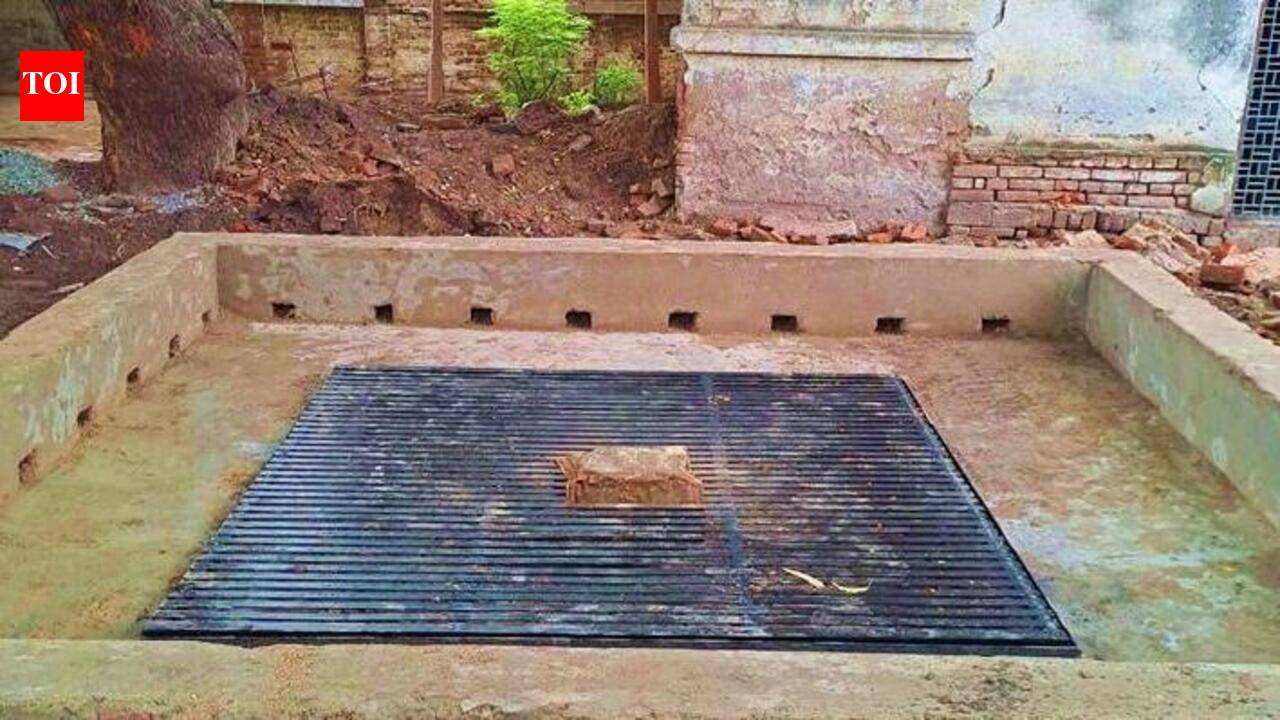
Prayagraj: For North Central Railway, a monsoon shower is no longer just water that runs off railway roofs, yards and other surfaces. Across its three divisions, the railway is increasingly giving rainwater a second journey — from rooftops to recharge pits, old wells and even dry borewells, allowing the water to seep underground and replenish groundwater.The basic idea is simple: collect the rain, filter it and return it to the ground. Water from rooftops and other suitable areas is channelled through pipes to recharge pits, soak pits, existing wells and borewells. After filtration, the water gradually percolates into the soil, with the ground itself acting as a natural filtering layer as it moves underground.The scale of the initiative is visible across Agra, Prayagraj and Jhansi divisions. As of Sept 18, 2026, NCR completed 124 rainwater-harvesting installations — 38 in Agra Division, 41 in Prayagraj Division and 45 in Jhansi Division.Jhansi Division has adopted different solutions according to local conditions. Installations have been taken up at Mahoba, Paman, Malasa, Ata, Bhua, Mustra, Chirgaon, Parichha, Jhansi and Gwalior, among other locations. At Mahoba, rooftop rainwater is channelled into an existing old well, allowing it to gradually percolate into the surrounding soil. At Paman, a dry borewell is being used for groundwater recharge, while Jal Tara and soak-pit systems have been adopted at places such as Malasa and Ata. At Jhansi, recharge systems have been provided at railway colonies, the BTC AC Loco Shed and other premises, while Gwalior has also adopted recharge-pit-based systems, said CPRO, NCR, Shivam Sharma.In Prayagraj Division, the 41 installations cover locations including Prayagraj, Kanpur, Etawah, Firozabad, Hathras, Dadri, Dankaur, Chunar, Lusa and Khairahi. Rainwater collected from railway buildings and other suitable surfaces is guided through pipes and filtration arrangements before being allowed to percolate into the soil, said the official.The division is also reusing existing deep bores and borewell structures wherever feasible. Rainwater is passed through suitable filtration or first-flush arrangements before being directed into these structures, turning idle railway assets into useful links to the groundwater below and reducing the need to construct new recharge structures.“Across NCR, rainwater harvesting is not being treated as a one-size-fits-all structure. The solution varies from old wells and dry borewells to soak pits and dedicated recharge systems, depending on the location,” said Sharma.The objective, however, remains the same: capture rainfall where it falls, reduce runoff and retain more water within railway premises, he added.Continuous steps have been taken by Shri Naresh Pal Singh, General Manager, North Central Railway, towards environmental protection.Intensive monitoring on Deep Water Recharging and Rain Water Harvesting has been done by the General Manager and monthly review meetings have been held.Efforts for Rain Water Harvesting will be further intensified.
