



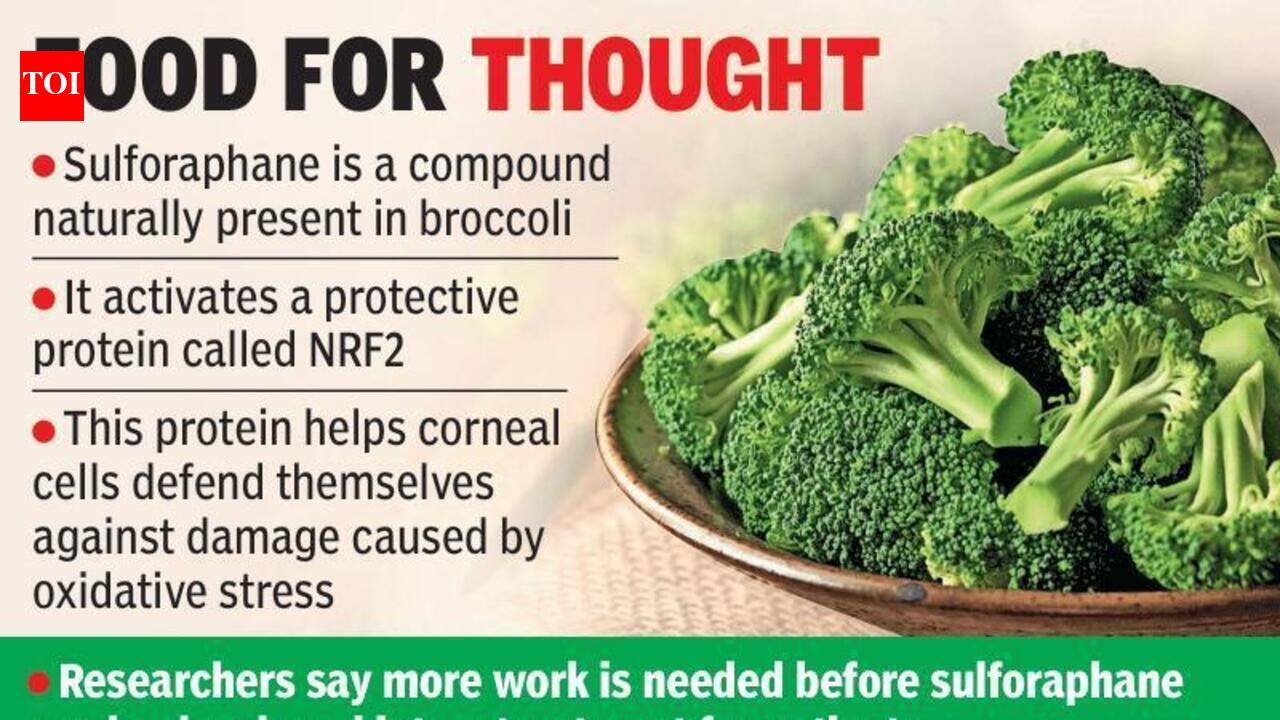
Hyderabad: A natural compound found in broccoli could one day help treat keratoconus, an eye disease that causes the cornea to thin and bulge outward, according to a new study by researchers at the LV Prasad Eye Institute (LVPEI) and NYU Grossman School of Medicine.The researchers found that sulforaphane, a compound naturally present in broccoli and other cruciferous vegetables such as cabbage and cauliflower, activates a protective protein called NRF2. This helps corneal cells defend themselves against damage caused by oxidative stress.
Research on broccoli
While the findings are encouraging, the researchers stressed that much more work is needed before sulforaphane can be developed into a treatment for patients.Keratoconus is a progressive eye disease that primarily affects teenagers and young adults. In this condition, the normally round cornea—the clear front surface of the eye—gradually becomes thinner and bulges into a cone-like shape, leading to blurred and distorted vision. In severe cases, patients may require a corneal transplant.The study, published in the Investigative Ophthalmology & Visual Science (IOVS) journal, analysed tear samples from 57 people with keratoconus and 34 healthy individuals. Researchers found significantly higher levels of oxidative stress markers in patients with keratoconus, reinforcing the theory that weakened antioxidant defence plays a key role in the disease.The researchers also observed that 87.8% of patients had keratoconus in both eyes, and the condition was more common in males than females.“We wanted to understand why the disease develops,” said Vivek Singh, lead scientist at the Centre for Ocular Regeneration and Engineering (CORE), LVPEI.“Every cell in the body naturally produces unstable molecules called reactive oxygen species (ROS). In small amounts, these molecules are normal and even beneficial. However, when their levels become too high, they damage cells through a process known as oxidative stress. Normally, the body protects itself using antioxidants, and one of the key proteins regulating this defence system is NRF2,” he explained.The researchers also found that corneal cells from people with keratoconus had lower levels of NRF2 than healthy cells, making them more vulnerable to damage.“When we treated these cells with sulforaphane in the laboratory, NRF2 became active, cellular damage was reduced, and the cells remained healthier and survived better. However, when we blocked this protein in healthy cells, they began showing changes similar to those seen in keratoconus,” said Dr Rashmi Deshmukh, consultant at LVPEI.The researchers noted that keratoconus is influenced by multiple factors, including frequent eye rubbing, allergies, genetic predisposition, and consanguinity.“Understanding how the disease develops is the first step toward creating better treatments. We are also developing animal models and studying tear-based biomarkers to better understand the disease and improve future care for patients,” Singh added.


