



Everyone knows scientists are in the business of “discovering” things. But what exactly do they do? When I was growing up in a small village in Kerala, there were no scientists around to ask this question. Even now, my friends ask me this question, half joking, half curious. I often laugh it off and change the topic.
A better description of what scientists do is that they create knowledge. We are all consumers of knowledge. A farmer needs to know when to sow and reap, a vegetable vendor needs to know how to perform basic arithmetic, and an engineer needs to know how to design a bridge that can withstand the required load. Usually, we gain this knowledge from books, teachers, the internet, etc.
However, we don’t have very good answers to many important questions that concern us: What are the reasons for the increased human-animal conflicts? Why do we have many more extreme weather events, such as floods, heat waves, and landslides? Why are we seeing frequent outbreaks of rare viral diseases?
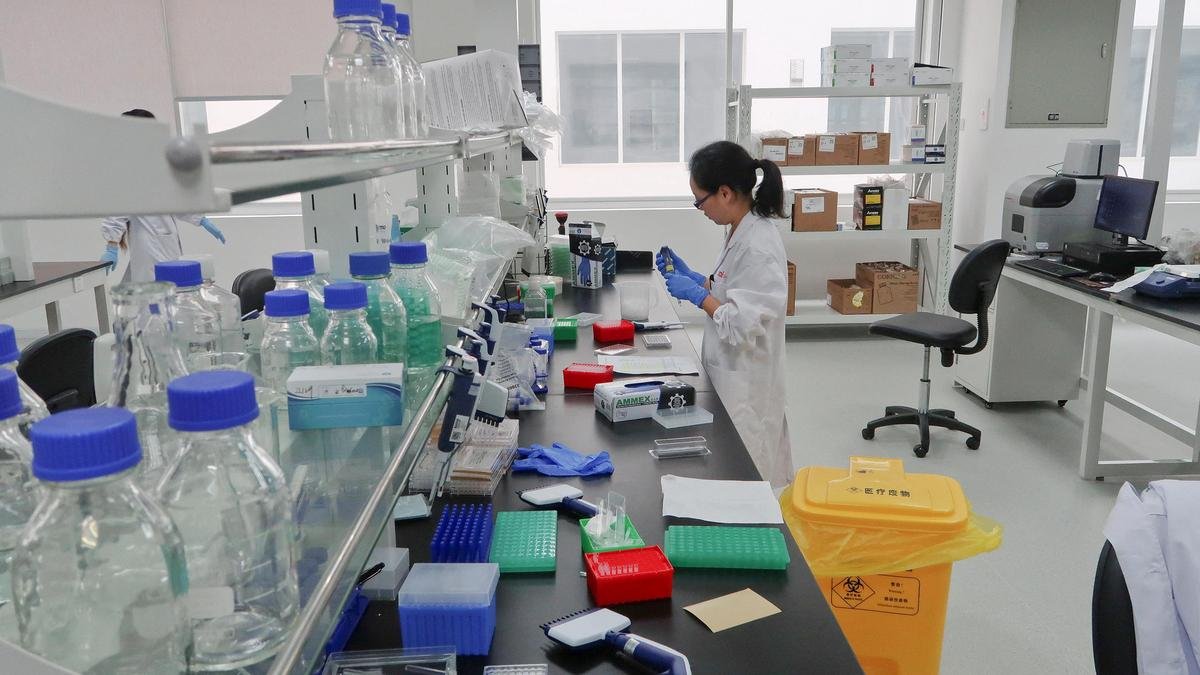
Representative picture.
| Photo Credit:
KARUNAKARAN M
Why do science?
The scientific method is the best way we have today for creating knowledge. It relies on observation, experiments, and logical reasoning to understand natural phenomena. It also involves examining the accuracy of our knowledge based on evidence. To some extent, we all practice the scientific method in our daily lives. Farmers identify the right times to sow, weed and reap by observing seasons that get repeated every year. Chefs experiment with ingredients and proportions before perfecting their fish curry recipe. We use logical reasoning to conclude that it rained last night when we see everything wet in the morning. If someone says that their magic medicine will cure diabetes, we ask for evidence for this claim – at least we should.
Since science aims to explain only natural phenomena, it’s important to find its explanations in the natural world itself. The scientist J.B.S. Haldane had famously said, “When I set up an experiment, I assume that no god, angel, or devil is going to interfere with its course.” It was very difficult for our ancestors to understand natural phenomena such as lightning and thunderstorms. So they imagined them to be due to supernatural reasons, such as the fury of the gods. But such explanations were not useful because it was still impossible to predict when and where they would occur.
Science aims to discover the physical laws that govern natural phenomena. For example, Isaac Newton discovered that the force that is responsible for the fall of an apple is the same one that causes planets to move around the sun. This resulted in his theory of gravity. The second important aspect of the scientific method is its adherence to evidence. If any observations contradict the theory, the theory has to be revised or discarded.
By following this method, science helped us to understand the world around us to a great extent. The understanding that many diseases are caused by bacteria and viruses led to the development of medicines and vaccines. Thanks to the vaccines, diseases such as polio are practically eradicated from the world. Scientific discoveries also led to modern technology. It is very difficult for us to imagine a world without electricity, motor vehicles, and telephones. The impact of science on our lives has been profound.
A girl student working in the laboratory in the Government Higher Secondary School at Chrompet, Madras in 1979.
| Photo Credit:
The Hindu Archives
Being a scientist
How does one become a scientist? The one essential quality for becoming a good scientist is curiosity. The quest for knowledge is driven by curiosity and wonder. These are innate qualities of children. But as we get older, we ask fewer and fewer questions. Scientists need to maintain these childlike qualities. They also need to admit their ignorance. It is usually difficult for an adult to say “I don’t know”. But scientists need to get used to this. At the same time, scientists are also very troubled by their ignorance. So they feel the pressure to learn, to find out the truth.
But that’s not enough. To create new knowledge, one has to have a good understanding of what is already known. As Newton said, “If I have seen further, it is by standing on the shoulders of giants.” Of course, no one can learn everything that is known. That’s why our education has the structure of a pyramid. We all know something about many things. We know a little bit of science, a little bit of history, a little bit of literature, etc. But eventually, we are expected to know many things about something. That’s why, when we go to college and university, we specialise in one subject and learn it in depth.
Scientists also need to be imaginative. It takes imagination to connect the motion of planets with the falling of an apple. Good scientists are as creative as good artists. At the same time, scientists also need to be sceptics: they need to question their own ideas. The ultimate success of an idea in science depends on how well it can explain natural phenomena.
Prospective scientists need to master the techniques of research. This includes learning to ask the right kind of questions, to perform experiments and observations carefully, to draw conclusions from data without being biased, to critically evaluate evidence, and so on. This is usually done by working with senior scientists. Many universities and research institutes have such doctoral programmes where students work with senior scientists towards a doctoral degree. But of course, contrary to what many people think, research is not something that ends when one gets a doctorate.
The ‘eureka’ moments that profoundly change the course of science are rare in the life of most researchers. Even accomplished scientists such as Subrahmanyan Chandrasekhar have spoken out in support of modest pursuits: “Who amongst us can hope, even in imagination, to scale Everest and reach its summit (…) But there is nothing mean or lowly in standing in the valley below and awaiting the sun to rise over Kinchinjunga.”
Representative picture.
| Photo Credit:
Freepik
Many big questions in modern science are beyond the scope of any individual scientist to answer. The Human Genome Project, which aimed to map all the genetic details of humans, involved scientists from seven countries and took 15 years to complete. Similarly, I am part of an international collaboration of over 3,000 scientists from around the world who use large observatories in the US, Europe, and Japan (and one coming up in India) to observe the universe using small ripples in spacetime called gravitational waves. These scientists, who come from different backgrounds and have different personal beliefs, are able to work together because they follow the rules of scientific discovery: the scientific method. All of them are contributing small bricks to the large edifice of knowledge.
So who can become a scientist? I’m reminded of the animated film Ratatouille, which narrates the story of a rat that becomes an extraordinary chef. The rat was simply inspired by the philosophy of a famed Parisian chef, that “anyone can cook.” At the very end of the film, the deeper meaning of this idea is revealed: “Not everyone can become a great artist, but a great artist can come from anywhere.”
P. Ajith is an astrophysicist at the International Centre for Theoretical Sciences, Bengaluru.
Published – February 28, 2026 07:00 am IST


