


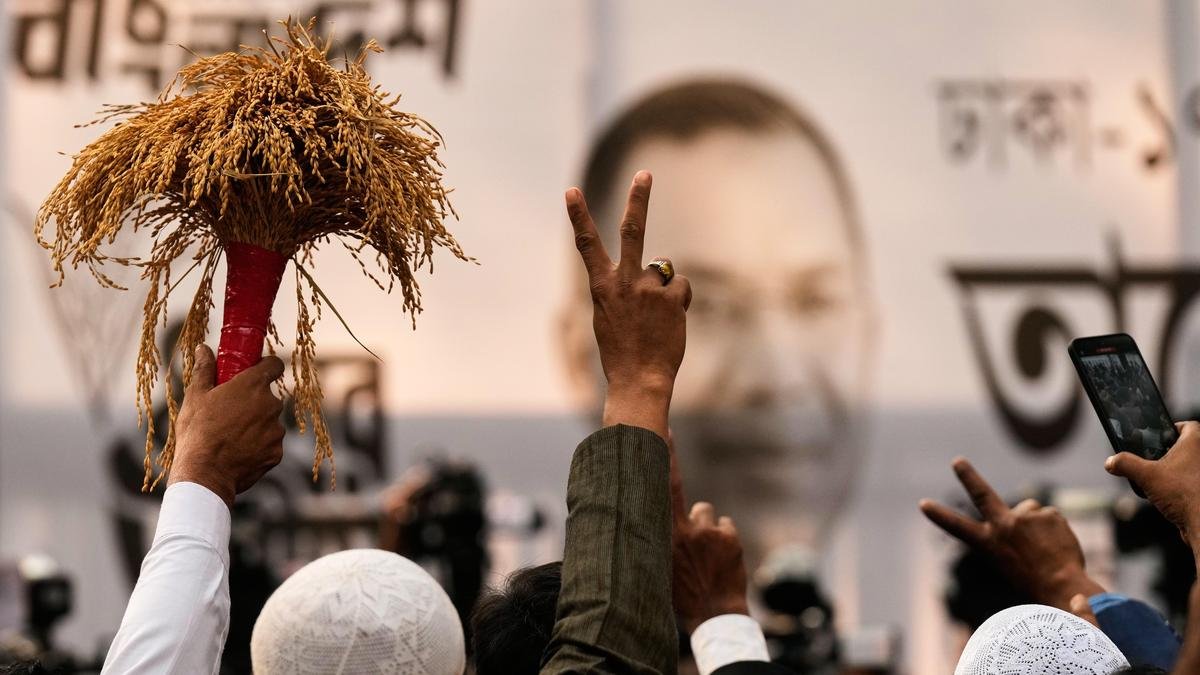
Supporters cheer near the chairman office of the Bangladesh Nationalist Party (BNP), a day after the national parliamentary election in Dhaka on February 13, 2026.
| Photo Credit: AP
Bangladesh will take a decision on the renewal of the 1996 Ganga Water Treaty based on its “national interest”, according to Humaiun Kobir, foreign affairs adviser to Tarique Rahman, chairman of the Bangladesh Nationalist Party and Bangladesh’s Prime Minister-designate following the BNP’s landslide victory in this week’s election.
Speaking to The Hindu in an exclusive interview, Mr. Kobir urged India to “break from the past”, adding that communal incidents in India are a “matter of concern” for Bangladesh.
The Ganga Water Treaty, concluded in 1996, is due for renewal by December this year. Once a BNP government is formed, renewal of the treaty is expected to be one of the first items to be featured in bilateral talks. In the past, however, Bangladesh has often been told about the interest of the Indian states that are involved in riparian agreements, Mr. Kobir said. Explaining the approach of Mr. Rahman’s incoming government, he stressed: “We will move forward in a way so that it meets our national interest.”
United stance
Mr. Kobir added that the BNP leadership has urged the outgoing interim government of Prof. Mohammed Yunus “to leave some advice” regarding some issues, so they will have some idea of the negotiations that may have taken place during its tenure, between August 2024 and February 2026.
He explained that the political environment of Bangladesh has changed as a result of the 2024 uprising. As a result, “politics cannot be as usual”, he said, noting that all sides of Bangladeshi politics will come together on issues of national interest. “The biggest achievement of the uprising is that on issues of national interest we can all unite despite our differences,” he stressed.
Communal violence, rhetoric
Mr. Kobir raised the issue of communal tensions across the border. “The thing is, communal violence in India is a concern,” he said. “People of Bangladesh feel that India is becoming an intolerant society and a lot of far-right individuals are winning in elections through highly communal rhetoric,” he said, terming this as “disturbing”.
In Bangladesh, he said, the Jamaat could not come to power because it resorted to extremist rhetoric. “Such rhetoric cannot get you electoral victory in Bangladesh ever but in India people are voting in favour of such rhetoric. India used to be a pluralist country of sorts at one point and the current trends are not good for India. We hope we can overcome these challenges,” he said.
He also highlighted the problem of Bangladeshi civilians killed by Indian border security forces. India regards these incidents as law enforcement to deal with Bangladeshi smugglers and criminals who attempt to venture across the border to cause trouble, but Mr. Kobir said that these incidents can also impact public sentiment with regard to bilateral relations.
Also read | In Dhaka, a new dawn and a gathering storm
‘Recognise political reality’
Mr. Kobir appreciated Prime Minister Narendra Modi’s congratulatory messages that came soon after the BNP won a two-thirds majority in the February 12 election. Bangladesh will invite “regional leaders” to participate at the swearing-in ceremony, he said. However, he also urged New Delhi to recognise the existing political reality in Bangladesh, saying, “We hope we can move and make a clean break from the past and India must realise that Sheikh Hasina and Awami League does not exist in Bangladesh today and the resounding victory has shown that.”
Mr. Rahman has been working on his international contacts during his years in exile in London, Mr. Kobir said. In his travels to global capitals in Europe, West Asia and the United States, the Prime Minister-designate has forged friendly ties with relevant stakeholders, he added.
Published – February 14, 2026 10:03 pm IST


