


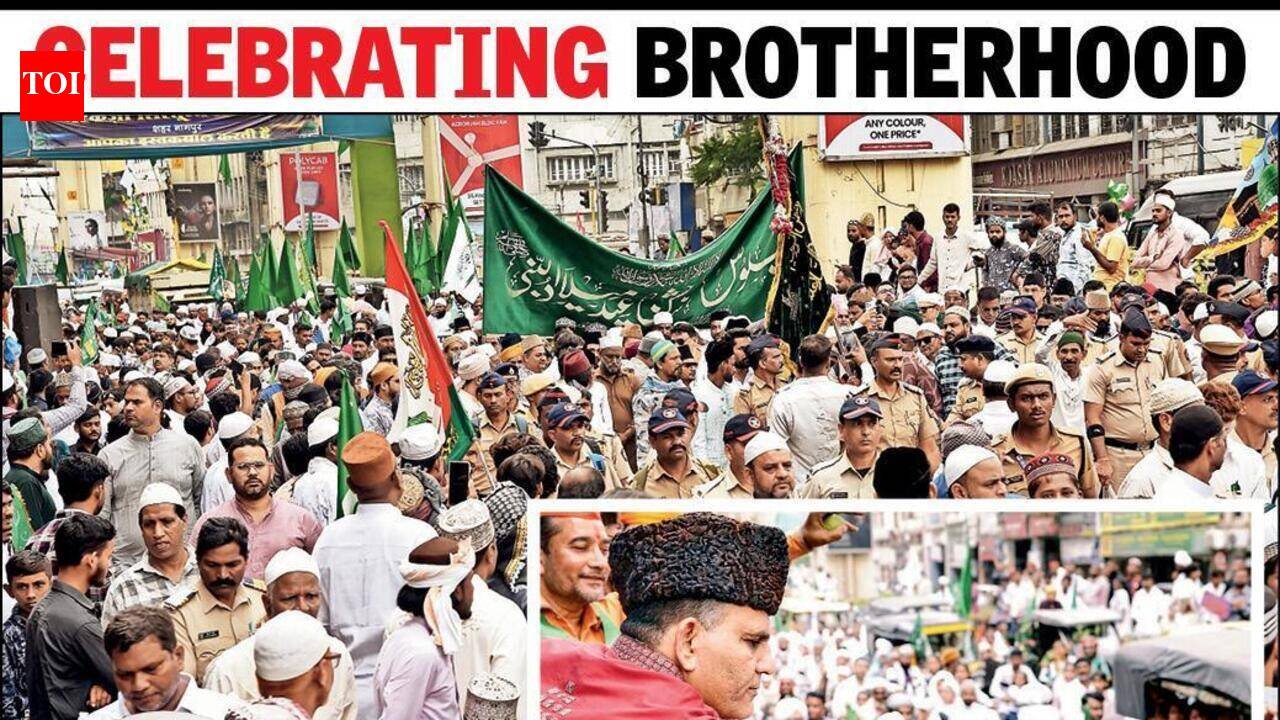
Nagpur: The Muslim community in Nagpur celebrated Eid Milad-un-Nabi (PBUH), commemorating birth anniversary of Prophet Muhammad (PBUH), with religious fervour and enthusiasm on Wednesday.A large number of children, youths and elders participated in the Eid Milad procession organised by the Markazi Seerat-un-Nabi Committee. The procession began from Gandhibagh Fawara Chowk and passed through various parts of the city, including Central Avenue and Mominpura. Participants dressed in traditional attire, with many wearing white clothes, turbans and Islamic brooches, joined the procession.A highlight of the celebrations was a gesture of communal harmony when the historic Shri Poddarreshwar Ram Temple Trust welcomed Juloos-e-Mohammadi on Central Avenue by showering flowers on the participants. Members of the temple trust showered rose petals and extended Eid-e-Milad-un-Nabi greetings, sending a message of peace, unity and mutual respect.Punit Poddar, trustee of Poddarreshwar Ram Temple Committee, Atique Qureshi, Kishor Patil, Gurdeep Singh Arora, Vipin Poddar, Bhushan Gupta, Krishna Sarda, Mukhtar Ansari, Suraj Agrawal, Sunil Jagyasi and Sunil Devarankar were among those present. Citizens appreciated the gesture, describing it as a heartwarming example of Ganga-Jamuni tehzeeb and Nagpur’s tradition of communal harmony.Faizan Ahmed Khan said the teachings of Prophet Muhammad emphasised compassion, kindness and being beneficial to others. He said the procession was an expression of gratitude to Almighty Allah and an effort to spread the Prophet’s message of peace, love and humanity.Hamed Bin Khalid Quraishi, secretary, CSRE, said, “The greatest tribute to Prophet (PBUH) on this Eid-e-Milad-un-Nabi is to follow the Quran, his Sunnah and reflect his noble character.”Khwaja Sajid, life coach and corporate trainer, said Eid-e-Milad-un-Nabi should remind people to follow example of Prophet Muhammad and his caliphs. He stressed the need to reach out to the poor and deprived, particularly those unable to seek help. He also called for charity and care for people suffering, irrespective of caste or community, instead of excessive spending on celebrations.
