



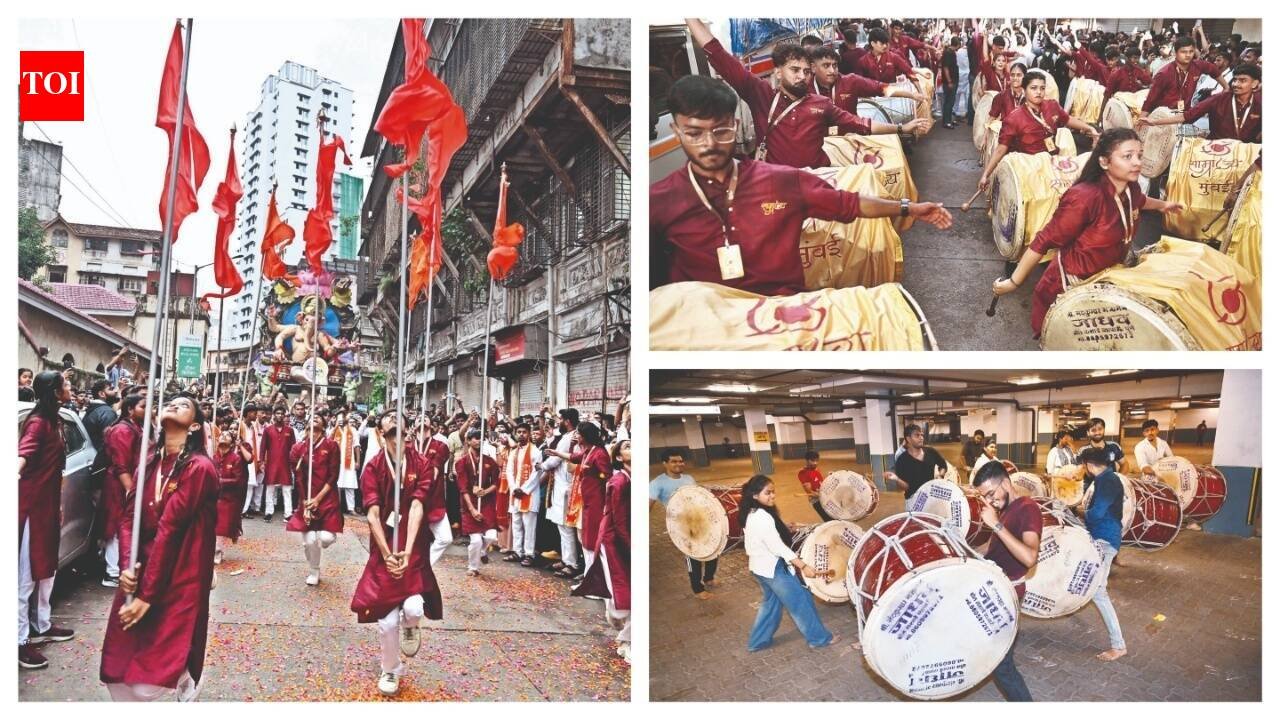
Last Sunday evening, Fort reverberated with the thunderous sound of the dhol as around 50 Mumbaikars gathered to perform at a grand ‘Aagaman’ ceremony for Ganpati. The beats were ferocious enough to rattle your chest yet calming enough to feel almost meditative. And, interstingly, the people creating this powerful sound were not professional musicians at all. As the beats rose and the players fell into a collective rhythm, designations, professions and hierarchies disappeared. A senior executive became just another member of the Pathak, following the beat, matching steps and surrendering to the collective euphoria.By day, these are production managers, vice presidents, executive assistants and engineers, navigating glass-fronted offices, meetings and client calls. But come weekends, they pick up their dhols, chasing a beat that has little to do with their day jobs, and everything to do with who they are.FROM BOARDROOMS TO THE STREETSFor Shreenath Anand Vemul, a Production Manager at an event company from Ghatkopar West, this transition has been a part of his life for nearly 12 years. “For me, Dhol Tasha is not just about playing an instrument. It’s about the emotion, the discipline, the brotherhood,” he says, describing the goosebumps that come when an entire crowd responds to the beat.And it is that ability of the dhol to bring people together that draws many professionals to it. Chembur-based Beatrice Dalgado, an Executive Assistant at a US financial firm who has been playing for nearly a decade, says, “What I love most about playing dhol is how it connects people to their roots.” For her, the instrument is “the heartbeat of our celebrations” – a way of carrying forward tradition while creating energy around her.The contrast with their weekday lives is striking. Their professional worlds may demand spreadsheets, presentations, meetings and deadlines, but once they pick up the dhol, the language changes to rhythm, coordination and collective energy.THE PASSION COMES WITH A PRICEFor Vice President at a global financial and risk advisory firm, Neelesh Vijay Bharankar, balancing his professional responsibilities, family and passion has been one of the biggest challenges. He started his Dhol Tasha Pathak around a decade ago, at a time when he was also learning the instrument himself.“In the beginning, it was definitely not easy. I had to manage my professional life, family responsibilities, and at the same time learn Dhol-Tasha myself,” he recalls. Gradually, the group learnt, improved and developed a team capable of guiding newer members.The commitment, however, meant giving up what were once leisurely weekends. “Earlier, weekends were meant for family, but later most weekends became busy with practices, events, planning, and performances,” he says. While that sometimes meant less family time, the support of his family helped him continue.His philosophy is simple: “You don’t need more time; you need to manage the time you have properly.”WHERE HIERARCHY DISAPPEARSPerhaps the most fascinating aspect of these Pathaks is the diversity of the people who make them up. Engineers, executives, managers and professionals from large companies stand shoulder to shoulder, united by the same beat.Rajat Umesh, who has been playing for several years, points out that the group has a large number of professionals. “Our team includes many professionals, most are engineers or executives at big companies,” he says. Yet, despite demanding careers, they turn up not just for performances but also for weekend practice sessions.The physical demands are considerable. The dhol is heavy, the performances can involve intense drumming and long hours, and practices require consistency. Yet, as Rajat observes, “the sheer devotion of all these people keeps them going.”THE HEARTBEAT OF CELEBRATIONFor Beatrice, the attraction lies equally in the response of the people around her. “The moment I start playing, people light up and dance,” she says, adding that she loves being able to turn “an ordinary moment into something memorable.”There is also a personal sense of discipline involved. Playing the dhol, she says, has taught her “timing, teamwork, and stamina.” But beyond the skills, “it’s my way of expressing joy.”Ganesh Chaturthi, Navratri and Gudi Padwa are among her favourite occasions to play. Each festival brings its own atmosphere, but the fundamental emotion remains the same — celebration through music.For Shreenath too, Ganeshotsav remains one of his favourite festivals to play at. And perhaps that is because the dhol finds its most powerful expression when the streets themselves become a stage — when processions move through the city, people gather around, and the rhythm becomes part of Mumbai’s collective soundscape.MORE THAN MUSICFor Neelesh, the most magical moments come when an entire Pathak plays together in perfect synchronisation. “That powerful sound, the excitement of the crowd, and the feeling that we are carrying forward our culture and tradition — it’s truly unforgettable,” he says.Over the past decade, his Pathak has evolved from being an activity he pursued alongside work into something much deeper. “It has become an emotion, a responsibility, and a part of my life,” he says.And perhaps that explains why professionals who spend their days navigating demanding careers willingly devote their precious evenings and weekends to rehearsals and performances. The dhol gives them something their professional lives cannot — an immediate, visceral connection with people, tradition and celebration.“When there is passion, dedication, and support from your family and team, even the toughest responsibilities become manageable,” Neelesh says. “And yes… it’s challenging, but every beat of the dhol makes it worth it!”


