


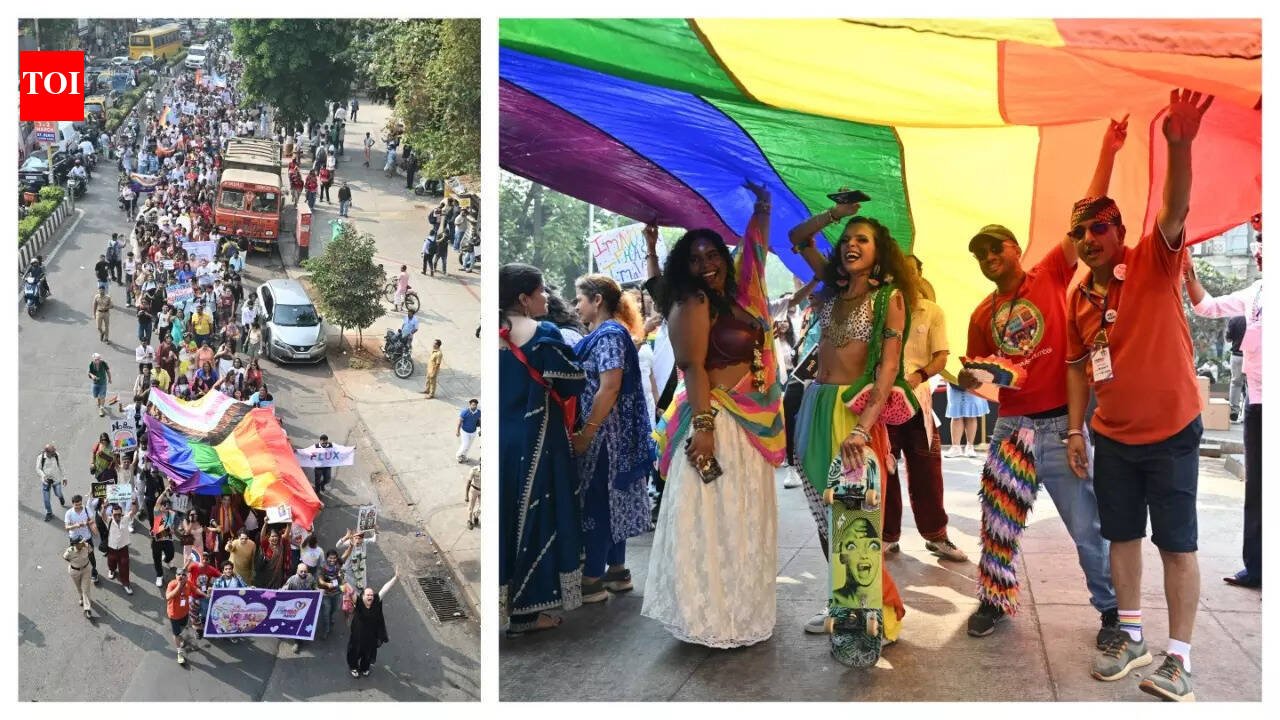
August Kranti Maidan transformed into a sea of rainbows on Friday as thousands of Mumbaikars gathered to mark the 16th anniversary of the city’s official Pride March. What began as a protest years ago continues to be one, even as the colours grow brighter, the music louder, and the embrace wider. From shimmering flags and hand-painted placards to glitter-lined faces and vibrant saris, the visual spectacle was unmistakable.
Parents marched beside their queer children, some holding ‘Proud Mom’, ‘Love has no gender’ signs, smiling and waving with pride. Volunteers moved through the crowds, reminding participants that inclusivity also means responsibility. Yet at its core, Mumbai Queer Pride 2026 remained a march of resistance. Sixteen years on, the demand is not just for visibility, but for systemic change. The Charter of Demands this year called for a comprehensive anti-discrimination law prohibiting bias in housing, healthcare and education by both state and private actors; horizontal reservation for transgender persons in education and employment; the removal of discriminatory blood donation bans; and legal recognition of unions, including financial and tax equity for domestic partners. “Pride is our bridge from the margins to the mainstream,” said Ashish Pandya (He/Him), LGBTQIA+ activist, addressing the gathering. “We are grateful to the city for its support, but the journey to full citizenship is far from over. We aren’t just seeking tolerance; we are claiming our constitutional right to belong.” For Christina Evers (She/Her), a trans activist, the conversation extended beyond policy into the social psyche. “As a trans woman, I see that the law is slowly changing, but the social soul of the country must follow. Horizontal reservation isn’t a favor—it’s a restoration of the dignity and opportunity that was stolen from us for generations,” she said. Members of the bisexual community also spoke about layered invisibility. “The bisexual community often faces double erasure, both outside and within the fold. We stand here to say that our identities are valid, our families are real, and our right to equal protection under the law is non-negotiable,” said Saurabh Bondre (He/Him), bisexual activist. One of the most powerful moments came from Harish Iyer (He/She), equal rights activist, who reminded the crowd of the legal milestones already achieved. “As a gender-fluid person of trans experience, I have moved the Supreme Court on Section 377 and marriage equality, and today the fight continues for the right to save lives through blood donation. We believe that Constitutional wisdom will always supersede every societal prejudice. Justice will prevail because our rights are not up for debate—they are enshrined in the very fabric of our democracy.” Amid the music, drums and cheers, there were also pockets of quiet reflection. The Silent Zone offered space to remember queer lives lost, to violence, discrimination, mental health struggles and societal rejection. Intersectional banners linked LGBTQIA+ rights with disability rights, climate justice, caste equity and women’s rights, underscoring that the fight for equality is shared across movements. The road from the 2018 decriminalization of Section 377 to today has been long. But as the march wound its way through the designated roads, the message remained unwavering: “We will not rest until all of us are given equal rights.” Sixteen years in, Mumbai Pride is still a protest, and still a promise. THE CHARTER OF DEMANDS: BEYOND DECRIMINALIZATION
- Comprehensive Anti-Discrimination Law: A national mandate prohibiting discrimination in housing, healthcare, and education by both state and private actors.
- Horizontal Reservation: The implementation of horizontal reservation for transgender persons in education and employment to ensure true equity.
- End to Blood Donation Bans: The immediate removal of discriminatory NBTC guidelines that defer donors based on identity rather than science-based behavior.
- Stray defenders: Many Mumbaikars held a placard pledging their support for stray dogs. Posters like ‘Discarded by hoomans, adopted by strays’ spoke about how the stray dog issue spoke volumes about giving back to the dogs.
- Financial & Marriage Equity: Legal recognition of unions and equal rights in taxation, including income tax rebates for domestic partners.
Some of the placards read:‘Self-made man – Literally’‘Proud Queer Mom’‘Love has no gender’‘Stand up for what is right’


