



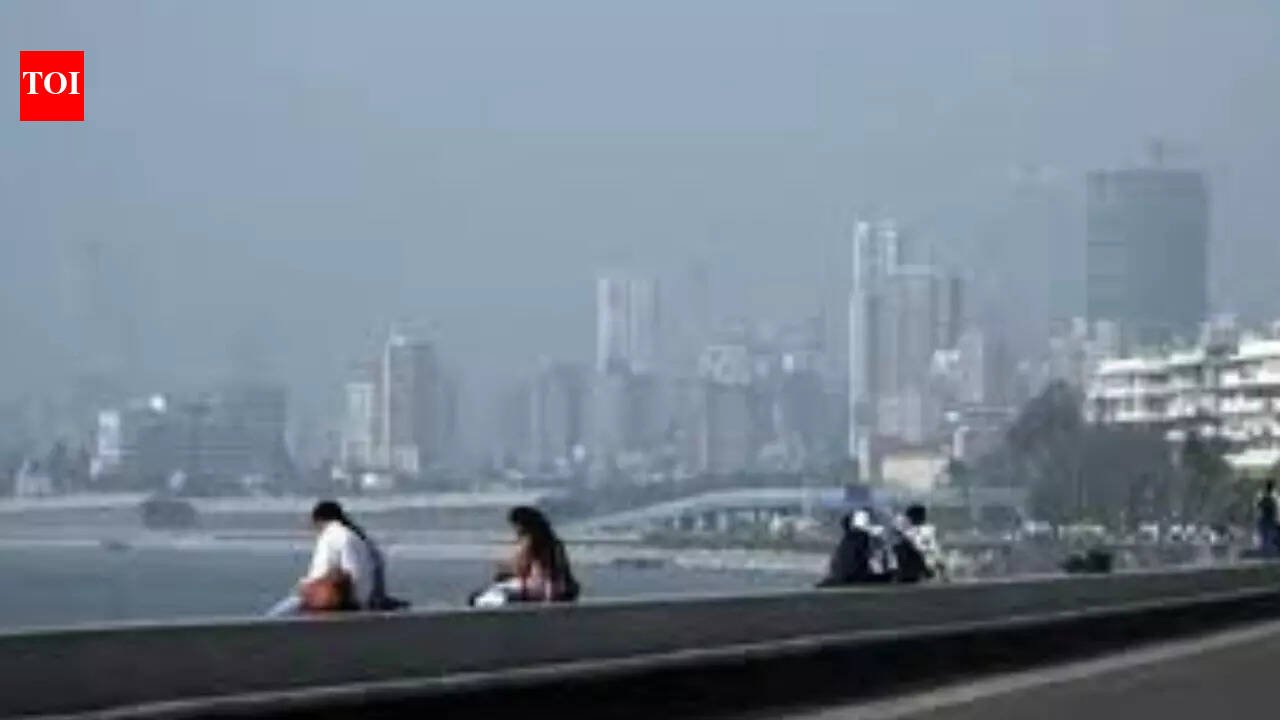
MUMBAI: From restricting private vehicles around the Taj Mahal in Agra to corridor-focused clean air interventions in Bogotá, targeted pollution-control zones are showing results globally. Urban experts say Mumbai can replicate — and even expand on — such Healthy Air Zone (HAZ) models to tackle its own rising pollution concerns. For lakhs of Mumbaikars stepping out each morning — from Churchgate to Chembur, Bandra to Bhandup — the daily commute now comes with an invisible companion: polluted air. With construction cranes dotting the skyline, traffic snarls stretching across arterial roads and waste-burning episodes reported in pockets of the city, the fight for clean air has become one of the defining urban challenges for Maharashtra and the country.Across India, air quality governance remains heavily reliant on data from Continuous Ambient Air Quality Monitoring Stations (CAAQMS). But many of these monitors are located away from dense residential pockets, markets and traffic corridors where actual human exposure is often far higher. Studies suggest that people living in tightly packed urban neighbourhoods face greater average pollution exposure than those in less dense areas — with children, pregnant women, senior citizens, those with respiratory ailments and low-income communities bearing the brunt.Urban planners and clean air advocates argue that this city-wide averaging masks hyperlocal realities. “We need to move from broad monitoring to targeted management,” say experts, pointing out that commuters stuck in traffic at Dadar or vendors operating along Crawford Market are exposed to a very different air quality profile than what a distant monitoring station might record. The call is for a paradigm shift — one that focuses on exposure reduction, not just data collection.That shift, they suggest, could come through the adoption of Healthy Air Zones (HAZs) — designated high-density urban areas where emissions are actively controlled through area-based interventions. Globally, similar ideas have taken shape as clean air or low emission zones, primarily targeting polluting vehicles. But Indian cities, including Mumbai, could broaden the scope to tackle multiple pollution sources — from construction dust and road resuspension to waste burning and small industrial clusters.Under a HAZ framework, city authorities could identify central business districts, transit hubs, busy markets and tourist hotspots — areas with both resident and floating populations — for intensive air quality management. In Mumbai’s context, this could include railway station precincts, commercial zones and major junctions where lakhs pass through daily.Transport reforms would be a key pillar. Within these zones, authorities could prioritise cleaner mobility by accelerating electric vehicle adoption, improving the frequency and reliability of public transport, and redesigning streets to make walking and cycling safer and more attractive for short trips. Entry of highly polluting freight vehicles and ageing commercial vehicles could be restricted in select corridors, especially during peak hours.Infrastructure tweaks can deliver quick gains. Edge-to-edge paving and dedicated non-motorised transport lanes help streamline traffic while reducing the resuspension of road dust — a significant contributor to particulate matter. For residents living along high-traffic corridors, such measures could translate into immediate relief.Construction dust, a persistent concern in fast-growing cities, would come under sharper scrutiny within HAZs. Mandatory on-site monitoring, water sprinkling during demolition, wheel-washing systems for trucks and proper covering of debris could prevent particulate matter from spilling into neighbouring housing colonies. In industrial pockets, cleaner fuel transitions for small-scale units could further curb emissions.Waste burning, too, can be tackled through localised management plans. By leveraging CCTV networks to identify hotspots, strengthening decentralised waste infrastructure and building community awareness, authorities could reduce open burning incidents that worsen neighbourhood air quality.Greening initiatives — from urban forests to buffer plantations between roads and residential blocks — can serve as natural filters. Strategically planned green belts could shield vulnerable populations from direct exposure to pollution sources.Crucially, the HAZ approach moves air quality management away from a purely top-down model. It encourages ward-level participation, enabling residents, local leaders and civic officials to collaborate on neighbourhood-specific solutions. Experts describe HAZs as “living laboratories” — smaller geographies where solutions can be tested, refined and eventually scaled city-wide.The conversation is now finding resonance at forums such as Mumbai Climate Week, where policymakers, experts and citizens are discussing how health-first, people-centric climate action can reshape cities in the Global South. Advocates argue that positioning clean air as a public health right — rather than merely an environmental metric — could galvanise stronger political and civic will.For Mumbai, where sea breezes can no longer be relied upon to clear the haze, the question is whether Healthy Air Zones could offer a practical, scalable pathway to reclaim breathable neighbourhoods. As the city debates its next steps on climate and urban mobility, one thing is clear: clean air is no longer a distant aspiration — it is an urgent urban necessity.


