







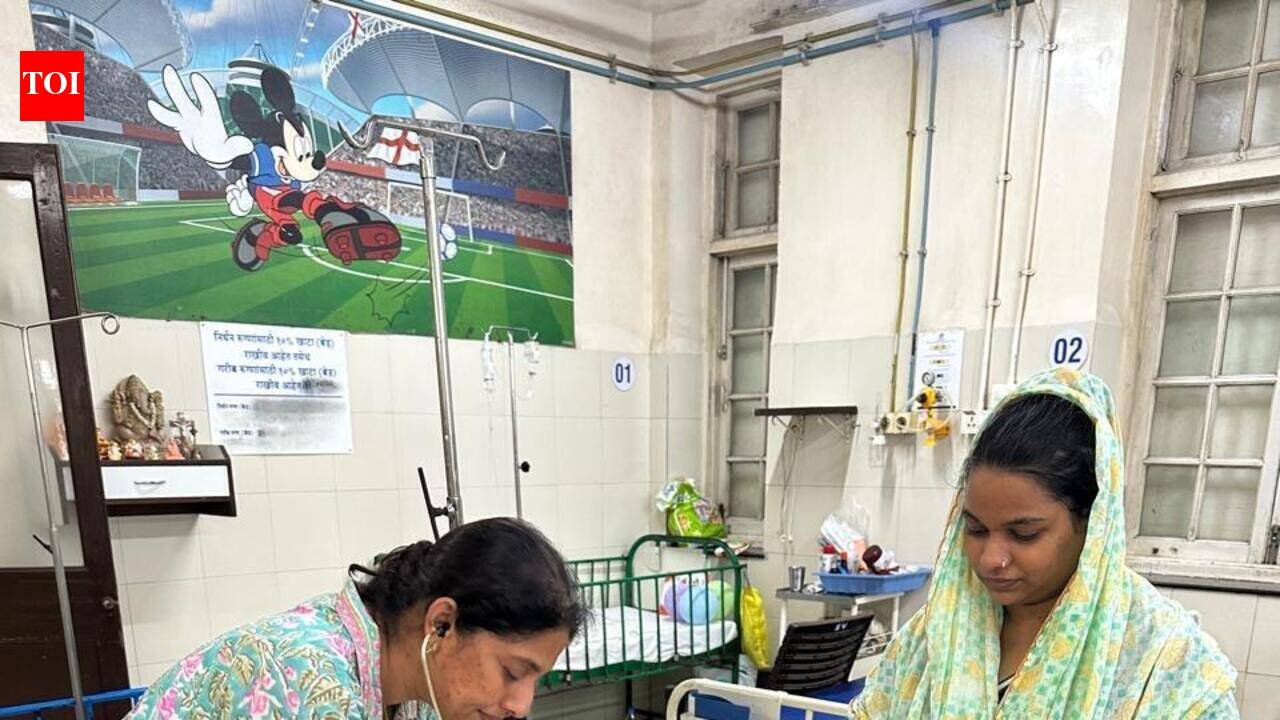
Mumbai: When doctors at Bai Jerbai Wadia Hospital in Parel drew blood from a two-and-a-half-month-old baby girl, they froze. Instead of the familiar crimson, the syringe filled with a thick, pinkish liquid.What began as an evaluation for an enlarged heart quickly turned into a race against time to save a child suffering from familial lipoprotein lipase deficiency (LPLD), a rare inherited disorder affecting fat metabolism that affects roughly one in a million.The baby, the first child of a Bandra couple after four years of marriage, was referred to Wadia Hospital on May 29 for heart problems. “They came with an X-ray that showed an unusually large heart for a two-month-old,” said paediatric cardiologist Dr Sumitra Venkatesh from Wadia Hospital. But the unusually light-coloured blood suggested something more serious.Tests revealed triglyceride levels of 42,000 mg/dL — almost 300 times the normal level. “With such high triglycerides, arteries can get clogged, triggering heart attack or stroke,” said Dr Venkatesh. Within hours, specialists from paediatric endocrinology, cardiology, intensive care, hepatology, genetics, nutrition and radiology came together to chart a treatment plan.“We came to Wadia Hospital on May 29 for an OPD consultation and never imagined our child had such a rare disorder that she would remain in hospital for a month,” said her father, a mechanic from Bandra.For the next 16 days, she was kept off oral feeds and on IV nutrition to reduce the fat circulating in her blood. “Keeping a hungry, crying infant fasting for over two weeks wasn’t easy, especially with the mother breaking down,” said Dr Venkatesh, adding that the team used a pacifier to quieten the child.Once the triglyceride levels began falling, the focus shifted to designing a safe oral diet. Mother’s milk was ruled out because of fat content. Importing a special feed from the US was expensive. “So, our nutritionist worked out a jugaad, based largely on the easily available skimmed milk powder,” said Dr Venkatesh.By the 19th day of hospitalisation, the baby’s triglyceride level dropped to 242 mg/dL, her blood regained its normal colour and heart function improved. Genetic testing confirmed LPLD, and the hospital plans to test both parents for the mutation.Wadia Hospital medical director and paediatric endocrinologist Prof Dr Sudha Rao described it as one of the most severe cases she encountered. “The child will require lifelong restriction of dietary fat,” she said, adding that she is expected to grow and develop normally.Paediatric cardiologist Dr Swati Garekar of Fortis Hospital, Mulund, said LPLD is so rare that many doctors never encounter a case during their careers. “However, with progress in medicine, we may have appropriate treatment in the near future,” she said.For the parents, the little girl’s recovery is the greatest reward. “She is mostly a happy child — except when she is hungry,” her father said with a smile.


