


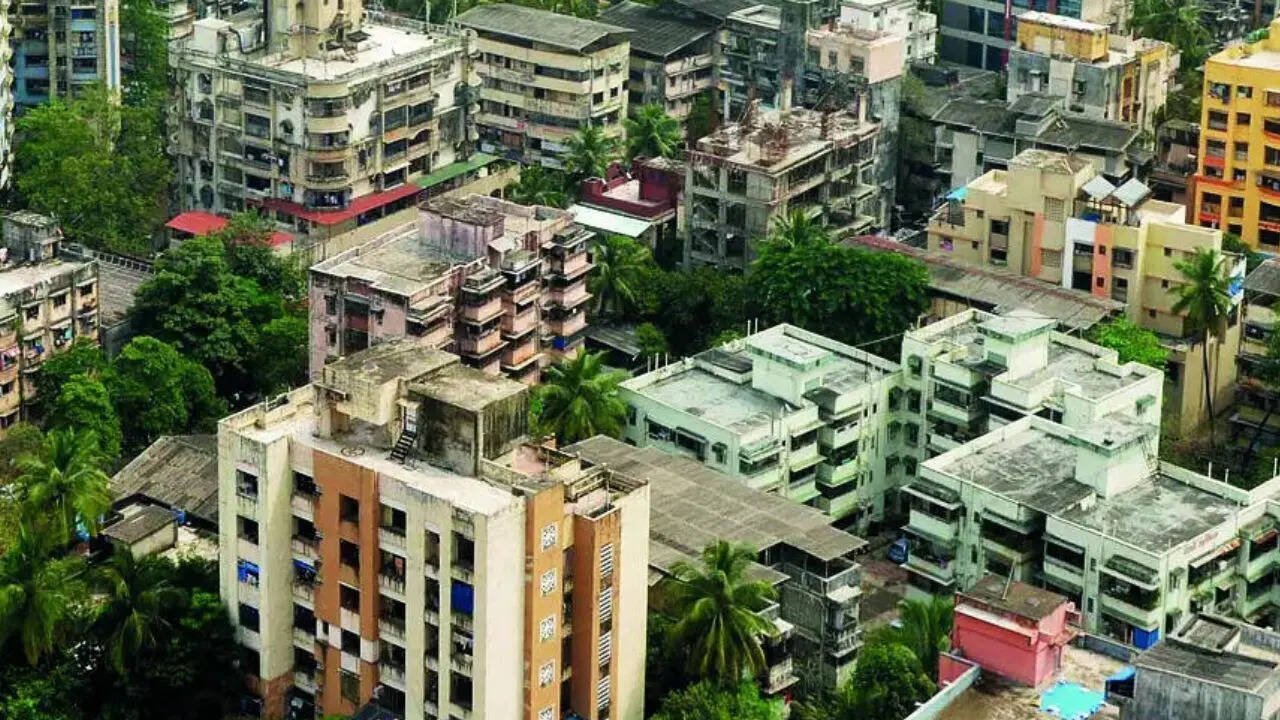
For lakhs of Mumbaikars, living in an old building is more than an inconvenience—it’s a daily safety concern. Every monsoon brings fresh fears of structural cracks, partial collapses and evacuation notices, while redevelopment projects often remain stuck in legal battles for years.Now, the Maharashtra government has taken a major legislative step that could help unlock the redevelopment of thousands of such buildings.The state legislature has passed an amendment to the Maharashtra Housing and Area Development Authority (MHADA) Act to revive the implementation of Section 79A, a provision designed to fast-track the redevelopment of dangerous buildings.The Bill has been cleared by both the Vidhan Sabha and the Vidhan Parishad and is awaiting the Governor’s assent before becoming law. However, even after that, its implementation will depend on the Supreme Court’s final decision on the validity of Sections 79A and 79B, which remains pending.
Why was the amendment needed?
The amendment aims to resolve a legal ambiguity that led the Bombay High Court to stay the implementation of Section 79A nearly a year ago.The controversy centred on who had the authority to issue notices under the provision. The earlier law referred to a “competent authority”, which became the basis of the legal challenge.The amendment replaces that wording with officers specifically empowered by MHADA, giving them explicit authority to exercise powers under Section 79A.This seemingly technical change is significant because the Bombay High Court had stayed around 935 notices issued by MHADA after observing apparent legal infirmities in the process.The Maharashtra government now hopes the amendment will strengthen its case before the Supreme Court.
What are Sections 79A and 79B?
Sections 79A and 79B were introduced in 2020 to tackle one of Mumbai’s oldest urban problems—unsafe buildings that remain trapped in redevelopment disputes.The provisions allow MHADA to intervene when landlords fail to redevelop dangerous buildings.More importantly, they also empower tenants to take the redevelopment process forward themselves, provided at least 51% of occupants consent.The objective is to prevent redevelopment from being indefinitely delayed because of disputes between landlords and tenants or prolonged litigation.
Why does this matter for Mumbai?
The amendment has implications for more than 13,000 cessed buildings across Mumbai, many of which were built before 1940.These buildings house lakhs of families and have remained caught in redevelopment delays for decades due to landlord-tenant disputes, court cases and unwillingness among some landlords to undertake redevelopment.Many of these structures are categorised as old and structurally vulnerable, making redevelopment not just an urban planning issue but also a public safety concern.
A problem written in tragedy
The push for stronger redevelopment laws has been shaped by a series of deadly building collapses.Sections 79A and 79B were introduced after several fatal incidents, including:
- Husaini Building collapse (2017): 33 people were killed.
- Dongri building collapse (2019): 14 people lost their lives.
- Fort building collapse (2020): 10 people died.
These incidents highlighted the risks posed by ageing buildings that continue to remain occupied despite their deteriorating condition.
What do the numbers show?
Official data illustrates why the issue remains urgent.According to RTI information obtained by activist Jeetendra Ghadge, Mumbai witnessed 345 complete or partial building collapses between 2021 and August 2025, resulting in eight deaths and 28 injuries, according to ET Realty.MHADA’s records paint an even grimmer long-term picture.Between 1970 and 2018, 815 people lost their lives in building collapses across Mumbai, underscoring the human cost of delayed redevelopment.
What are stakeholders saying?
Welcoming the legislature’s approval, Jeetendra Ghadge, founder of The Young Whistleblowers Foundation, said the implementation of the provision should never have been halted over what he described as a technical issue relating to the identity of the competent authority when thousands of lives are at stake, according to ET Realty.He also pointed out that litigation concerning the 100-month rent scheme has remained pending before the Supreme Court for nearly 25 years and expressed hope that the apex court would prioritise the constitutional right to life of lakhs of tenants while deciding the challenge to Sections 79A and 79B.
What happens next?
Although the legislature has passed the amendment, it is not yet in force.The Bill must first receive the Governor’s assent before becoming law.Even after that, redevelopment under Sections 79A and 79B can move ahead only after the Supreme Court delivers its final verdict on the legal challenge.If the apex court upholds the provisions, the amendment is expected to reinforce the Maharashtra government’s legal position and clear one of the biggest procedural hurdles in redeveloping Mumbai’s ageing cessed buildings.For lakhs of residents living in structurally weak buildings, the legislation does not immediately change the situation on the ground.However, it represents a significant step towards breaking years of legal deadlock and could eventually pave the way for one of Mumbai’s largest urban renewal efforts.
