



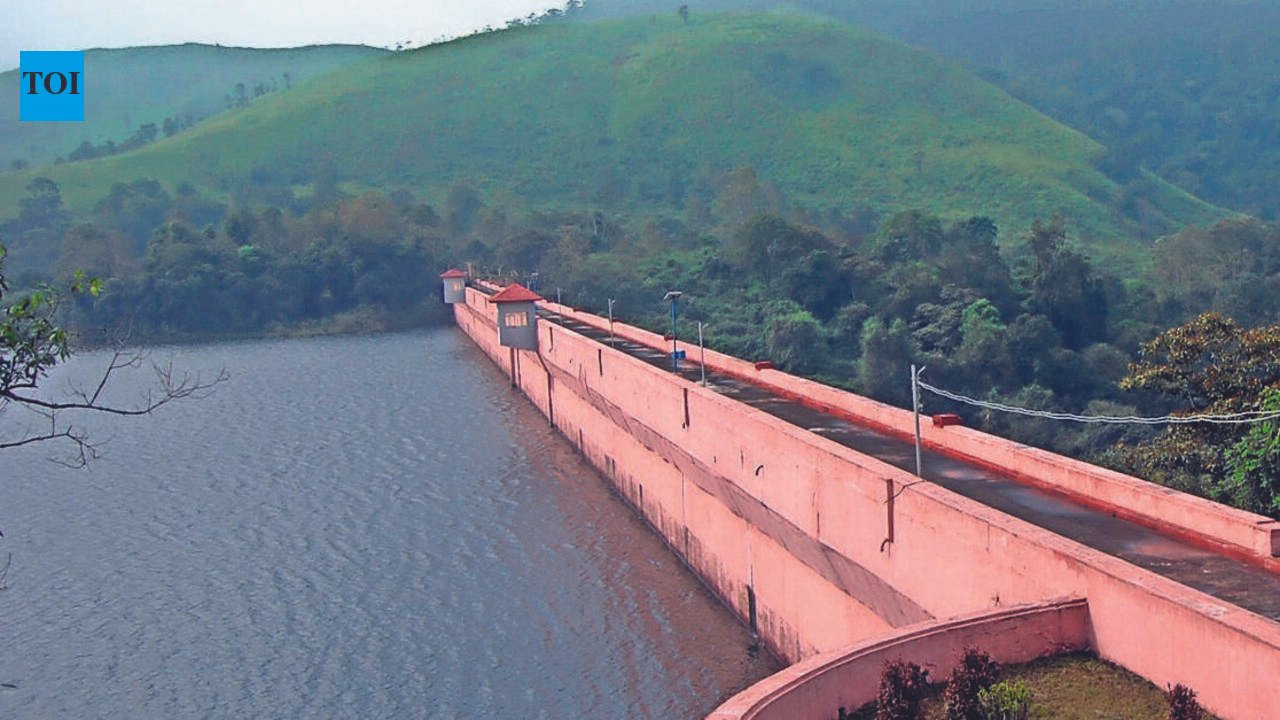
Puhazh Gandhi PEvery monsoon in South India revives India’s oldest interstate river dispute — the Mullaperiyar. Kerala seeks decommissioning of the 130-year-old masonry dam, citing the safety of nearly a crore people living downstream; Tamil Nadu maintains it remains structurally sound after repeated court-directed strengthening, and that its water sustains agriculture and drinking water for another crore across five districts. Between these two positions lies a century of dispute, and a question that has outlived every verdict on it: can fear alone, however genuine, override a right founded on law?Both states speak from genuine compulsion. Kerala’s govt owes a duty to reassure millions living downstream that their lives are not at the mercy of an ageing structure, no matter what committees have certified. Tamil Nadu’s govt owes an equally binding duty to farmers across five districts whose irrigation, drinking water and livelihood depend on a lease deed now 140 years old. This is where the asymmetry begins: Kerala’s apprehension is described as ‘safety’ and ‘precaution’, while Tamil Nadu’s dependence is reduced to ‘stubbornness’ and ‘vested interest’, as though water relied upon for five generations deserved less protection than protection from a hypothetical risk.Age by itself does not establish unsafety. The Roman-era Proserpina and Cornalvo dams in Spain remain in service after nearly 2,000 years, and Tamil Nadu’s Kallanai has regulated the Cauvery for almost as long — not because dams do not decay, but because periodic strengthening and monitoring can outlast the century mark many times over.Kerala’s apprehension cannot be waved away as irrational either. The St Francis Dam collapse in California in 1928 killed more than 400 people; the 1963 Vajont disaster in Italy showed that even a surviving dam can cause catastrophic loss of life if the surrounding geology is misjudged; the Banqiao collapse in China (1975) remains among the deadliest infrastructure failures in history; and Brumadinho in Brazil in 2019 shows ageing infrastructure needs continuing, independent oversight, not one-time certification.In its first customary address to the assembly on June 18, the TVK govt, headed by chief minister C Joseph Vijay, declared that Tamil Nadu ‘will not allow’ Kerala to construct a new dam at Mullaperiyar, and would resist the move politically and legally. The declaration drew an unusually sharp reaction across the border — Kerala was, at that moment, battling fresh monsoon floods, and Vijay’s considerable fan base there, as a pan-South Indian film star, meant a position that elsewhere might have passed as routine posturing travelled, and stung, further than intended. Yet popularity is no substitute for statesmanship: a chief minister’s duty, particularly with Vijay’s higher popularity across the border, is to weigh genuine interests, not calibrate a position by how loudly it carries beyond the state’s border. A blanket refusal, following his predecessors, is therefore the wrong instinct — borders, real or electoral, cannot decide whose lives matter more.Any resolution, including a new dam, must be negotiated between the two govts, with any replacement required to become fully operational before the existing dam is retired, ensuring the same rights under the 1886 lease, so that neither Kerala’s safety nor Tamil Nadu’s water security waits on the other.If the anxiety is over storage at Mullaperiyar’s 142ft level, a near solution lies downstream, in Tamil Nadu. The Vaigai dam, commissioned in 1959, is the principal reservoir for diverted Periyar water and has never been comprehensively desilted.A water and power consultancy services study puts the accumulated silt at 33.481 million cubic metres; Vaigai’s original capacity of about 6,878mCft has fallen to roughly 6,091mCft — a loss of 787mCft, around 12% of design capacity. Tamil Nadu need not wait on Kerala, Centre or court to recover it; desilting is enough, and offering the silt to surrounding farmers, as other reservoirs have done, would turn a technical fix into good public opinion too.Restoring Vaigai’s lost capacity would let Tamil Nadu store more of its Mullaperiyar water on its own side of the border, easing pressure to hold the maximum level behind the old dam until a new one is built. This costs Tamil Nadu nothing in law — its water rights under the 1886 lease remain intact, and its farmers lose no entitlement. What it costs is only the will to desilt, and what it buys is genuine statesmanship: addressing another’s safety concern not by conceding rights, but by using one’s own infrastructure better. Tamil Nadu can thus recover close to 787mCft without ceding an inch of what is legally its own.Ultimately, the asymmetry that must end is not between Kerala and Tamil Nadu, but in how their claims are weighed. A state’s fear for its people’s lives and a state’s dependence on water for its people’s livelihood are both, in the end, claims about survival, and neither can be subordinated merely because one is louder, older or more litigated. Unless policymakers, adjudicators and the public correct the instinct to treat one state’s anxiety as principle and the other’s need as politics, Mullaperiyar will keep returning to the court’s docket without resolution — a reminder that the ‘Idea of India’ as a Union of States, under Article 1, demands parity of concern, not a hierarchy of fear.Pact of 1886 On Oct 29, 1886, Maharaja of Travancore and British Secretary of State for India signed 999-year leaseTravancore granted 8,100 acres for a dam and reservoir to divert the west-flowing Periyar eastward into Madras Presidency’s rain-shadow regionsColonel John Pennycuick built the dam between 1887 and 1895After floods washed away the first structure in 1889 and British withdrew funding, Pennycuick reportedly sold his family property in England to complete it. Pennycuick remains revered in Tamil Nadu, where families name children after himReservoir lies entirely within Kerala’s Idukki district, while its water sustains Tamil Nadu, irrigating Theni, Madurai, Dindigul, Sivaganga and RamanathapuramThe legal battle In Narmada Bachao Andolan vs Union of India (2000) and 2004 Tehri Dam case (2004), SC held it would defer to expert bodies on engineering questions, and examine only if decisions were lawful and fair2006 and 2014 Mullaperiyar judgments followed the same principle, relying on technical expertise to assess dam safety. In 2006, Mullaperiyar Environmental Protection Forum vs Union of India, SC accepted findings that dam was safe and allowed water level to be raised from 136ft to 142ft. Kerala responded with Kerala Irrigation and Water Conservation (Amendment) Act, 2006, declaring dam “endangered”. In 2014, State of TN vs State of Kerala, bench struck down the amendment as unconstitutional, and restored level to 142ftIssue surfaced in 2025 when SC issued notice to Union govt, Tamil Nadu and Kerala on a fresh petition filed by NGO Save Kerala Brigade, seeking decommissioning of the damCauvery vs MullaperiyarThough often compared with Cauvery dispute, Mullaperiyar is legally distinct. Cracks in the ageing masonry, first reported in the 1970s, triggered decades of expert studies and litigation. Supreme Court has treated it not as a water-sharing dispute under Article 262, but as one concerning safety of an ageing structure. Tamil Nadu’s right to divert and use Periyar water under 1886 lease has not been in question. Central issue is whether the dam can safely hold water at 142ft rather than 136ft. Kerala objects not to Tamil Nadu drawing Periyar water, but to how much water can safely be stored behind the ageing masonry dam(The writer is a lawyer and political analyst)


