


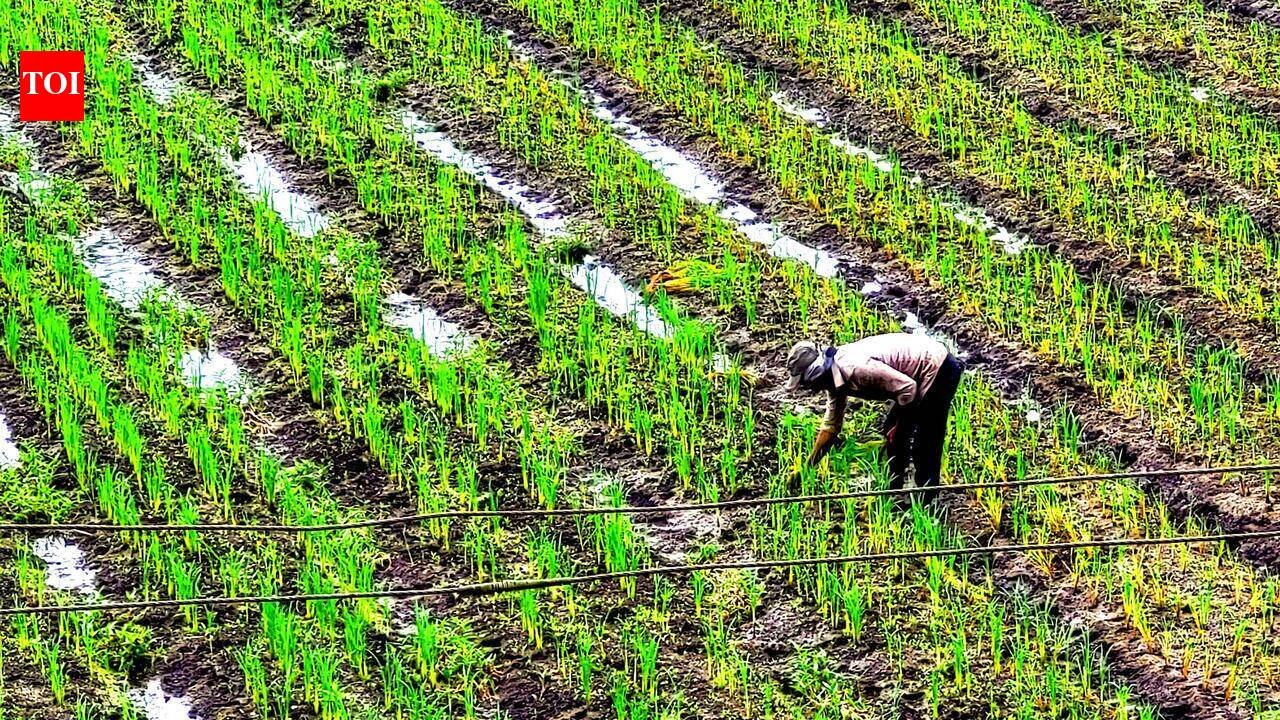
Pune: Maharashtra’s rainfall gains in July have been sharply reversed due to a prolonged monsoon break in Aug with two of the four meteorological subdivisions in the state now in water deficit.Several districts that had entered Aug with surplus water are not slipping into the deficient category.A Skymet official said, “Upcoming weather systems are unlikely to bring widespread or sufficient rainfall across Maharashtra.” The rising rainfall deficiency could increase water stress for Kharif crops, particularly across Vidarbha and Marathwada, the official added.The IMD data for June 1 to Aug 22 showed Marathwada received 320.5mm against its normal level of 425.9mm, a 25% shortfall. Vidarbha has received 552.1mm against a normal of 705mm, leaving it 22% deficient. Madhya Maharashtra has logged 585.6mm rainfall against a normal of 536.9mm, with a 9% surplus, while Konkan-Goa so far has a 5% shortfall, with 2,206.6mm rainfall against a normal of 2,319.7mm.An expert from the blog Vagaries of Weather told TOI, “The deterioration has been stark in Marathwada and Vidarbha. Marathwada, which was at 8% shortfall at the end of July, is now at 25% deficient for the season. Vidarbha has gone from a 5% shortfall at the end of July to a 22% deficit.”“Konkan-Goa has gone from a 1% surplus to a 5% rain shortfall till Aug 22. Madhya Maharashtra, which had a substantial 25% excess at the end of July, has been left with just a 9% surplus,” the expert said.Pune and Nashik were among the districts with sizeable surpluses, but even these have narrowed substantially. Pune’s surplus has fallen from 62% at the end of July to 39% till Aug 22, while Nashik’s has dropped from 88% to 64%.The deterioration was more widespread across Marathwada. Beed, Hingoli and Jalna have gone from 23%, 30% and 17% shortfalls at the July-end to 43%, 43% and 32% deficient till Aug 22, respectively.With rainfall likely to remain below normal over Maharashtra through the rest of Aug and early Sept, the concern for the agriculture sector is that the deficits in the rain-dependent belts could further widen.Milind Pachpande, a Buldhana farmer, said the prolonged dry spell had hit soybean particularly hard, as the crop needs water urgently. “Soybean was currently in the flowering stage. It urgently needed water, but there was no water available,” he said, adding that there was no irrigation source in the area to fall back on.Pachpande said the crop had also faced a difficult start after sowing as there was no rainfall for around 15-20 days. “After sowing, there was no rain for about three weeks. Later, the rain came and helped the crop recover. Now, however, the crop has matured and needed water urgently,” he said.“If we did not provide it with water, soybean yield would be zero,” Pachpande said. He explained that the crop was still flowering and pods had not yet formed. “If the flowers did not develop into pods, where would the yield come from?” he said.He said cotton could produce some yield, but it too was dependent on rainfall. “A little cotton yield would be there because some of it has already developed. We may get one or two quintals, but not much,” he said. Normally, he highlighted, cotton yields around 8-10 quintals per acre and can reach 10-12 quintals in a good monsoon season.Keshav Dhore, an Akola farmer with 15 acres under soybean during the Kharif season, said the crop was facing severe water stress because of little rain. He added that there was no practical way to irrigate the fields. “At present, there has been no rain. If it did not rain in the next few days, our crop would be finished,” Dhore said.Dhore said the crop could dry out within days if the dry spell continued. “If there were no rain for the next 15 days, nothing would remain,” he said.
