



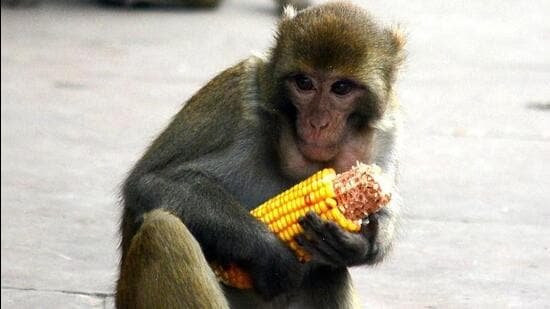
Monkeys and wild boars account for nearly 60% of crop damage caused by wild animals in Uttarakhand, the State Migration Prevention Commission has said in its latest report, highlighting the growing impact of human-wildlife conflict on rural livelihoods and migration.


The Uttarakhand government constituted the Rural Development and Migration Prevention Commission in August 2017 to examine all aspects of the problem, evolve a vision for the focused development of the state’s rural areas, and submit recommendations on how to curb migration. The commission submitted its first state-wide report on migration in 2018 and has released 26 such reports so far.
The recent report, titled “Suggestions for protecting crops from wild animals in the state,” said that damage to crops by wild animals accounts for 5.61% of all reasons contributing to migration from villages to towns and cities.
“Monkeys cause 36.7% damage, while wild boars account for 22.9% damage to crops caused by wild animals,” the report said.
It added that stray animals account for 11%, langurs 9.3%, nilgai 5.7%, porcupines 3.5%, bears 2.2%, and elephants 1.5%. Other unlisted categories of wild animals account for 7.1%.
The problem of monkeys, wild boars, and langurs is prevalent mainly in hilly districts, while nilgai, elephants, and stray animals cause more damage in the plains, it said.
The highest share of migration due to this reason was reported in Almora, where crop damage by wild animals accounted for 10.99% of all migration factors, followed by Champawat (6.65%), Nainital (6.38%), Pauri Garhwal (6.27%), and Rudraprayag (5.11%). The lowest share was recorded in Haridwar (0.82%) and Dehradun (1.65%).
However, the report said that even in the hill blocks of Dehradun and Nainital districts, migration has been higher than in development blocks in the plains. Most rural areas are affected by the problem, it added.
According to the report, wild animals not only damage crops but also reduce yields, lead to a decline in livestock numbers, and cause daily economic losses to farmers. Major crops such as wheat, maize, pulses, fruits, and vegetables are affected by wild boars, nilgai, monkeys, and elephants.
Human-wildlife conflict hits farm income, triggers rural distress
Vice-chairman of the commission SS Negi said the damage reduces farmers’ income, making their livelihoods difficult, and leads to lower production, which affects food security. “Tigers, leopards and wolves attacking livestock cause huge losses to the crop owners,” he said, adding that the problem also leads to mental stress among farmers due to repeated losses, and they eventually migrate to cities, leaving farming and animal husbandry.
This overall impact is on the rural economy of the state, Negi added.
Incidents of crop damage by wild animals increased from 760 in 2021 to 772 in 2023, while the affected area rose from 283.8 hectares to 314.3 hectares, the report said.
An analysis of gram panchayat data showed that from 2019–20 to 2023–24, about 63,291 hectares of land were classified as barren, indicating a growing trend of agricultural land abandonment, Negi said. He cited migration, human-wildlife conflict, lack of irrigation, and declining farm profitability as the main reasons.
Farmers primarily protect their crops through community surveillance, adopted in 2,443 villages, involving day-and-night vigil, salaried chowkidars, rotation-based duties, group efforts to drive away animals, and the use of pet dogs.
They also use physical measures such as wire and solar fencing, trenches, and scarecrows, along with deterrents like firecrackers, flickering lights, and sound devices. Chemical methods include chilli and smoke sprays, as well as bee fencing.
The commission suggested a mix of preventive and structural measures to protect crops from wild animals, including subsidised electric and chain-link fencing, promotion of community-based protection systems, and the use of modern techniques such as solar fencing and surveillance.
It also emphasised crop diversification, adoption of less palatable crops, and improved irrigation and land management practices, along with farmer awareness programmes and better coordination between forest and agriculture departments.
Timely compensation for crop loss and improved monitoring of wildlife movement were also recommended to reduce conflict and safeguard rural livelihoods.


