







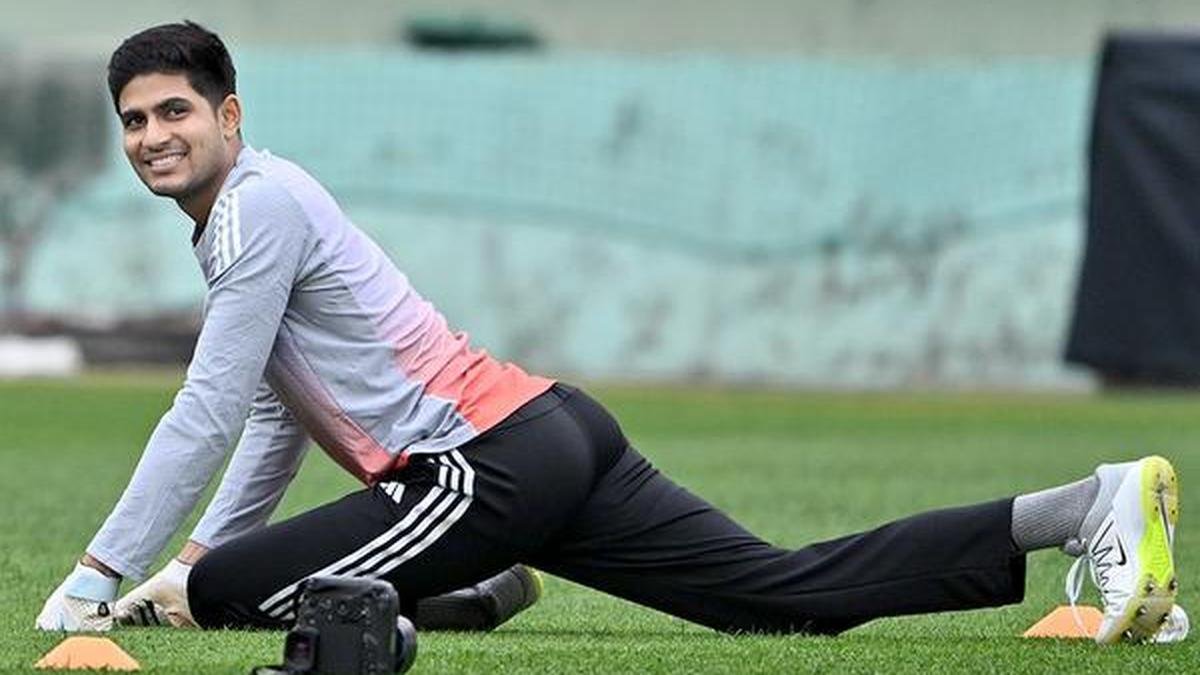
Test captaincy has sat agreeably on Shubman Gill’s slender shoulders thus far, but his biggest examinations lie ahead of him. Starting with the first of two Tests against Sri Lanka, at the picturesque Galle International Stadium. Gill wasn’t a surprise choice as skipper when Rohit Sharma announced his Test retirement in May last year. Yes, Jasprit Bumrah had captained in Rohit’s absence in England in 2022, and was his deputy on the tour of Australia, leading the country in the first Test in Perth which Rohit missed as he was away on paternity leave, as well as in the fifth and final Test in Sydney from which the Mumbaikar sat himself out on grounds of poor form.
But Bumrah’s protesting body, primarily courtesy a unique action that puts tremendous strain on various parts, meant he had to be handled with care, if not kid gloves. It will be impossible for Bumrah to be available for every Test from here on — in fact, he is not even in Sri Lanka, recovering from an impact injury to his left knee — and India’s selectors under Ajit Agarkar read the writing on the wall, aware that they would be short-changing Bumrah, as well as his colleagues, if they bestowed the captaincy on the pace spearhead.
There was K.L. Rahul, already an all-format captain even if only in a stand-in capacity, but Agarkar’s panel chose to go with a younger man, clearly identifying Gill as the one would take the team deep into the future. At the time, ahead of the five-Test tour of England, Gill didn’t have a great deal of experience when it came to leadership at the First Class level, though he was an established captain at Gujarat Titans. But in a smart punt that will yield results in due course, the decision-makers entrusted the responsibility to Gill, and the right-handed stylist responded in spectacular style.
Losing a Test, not the heart
The runs flowed from his scything willow in torrents in England as he finished with a remarkable 754 runs from the five games, courtesy four centuries in 10 innings. Then 25, Gill kicked off the series with a statement-making 147 in the first innings of the series opener in Leeds, and even though India lost the game despite being in control at various stages, Gill didn’t lose heart.
In the next Test in Birmingham, with Bumrah sitting out the game in a pre-arranged workload management plan, Gill was at his imperious best, decimating England almost single-handedly. In the first innings, he uncorked a magnificent 269, scoring at a fabulous rate, and then backed it up with 161 in the second innings at the staggering strike-rate of 99.38 with India pushing for a declaration.
His 430 runs at Edgbaston were the second most a batter had struck in a single Test, behind only Graham Gooch’s 456 (333 and 123) against India at Lord’s in 1990. Clearly, far from being cowed down by the ‘burden’ of captaincy, Gill was positively thriving in the leadership role.
After a slight three-innings lull (how cruel and demanding can we get?), Gill was back to doing Gill things in Manchester, in a Test India could not afford to lose if they entertained hopes of squaring the series. Down 1-2 after going down at Lord’s, India faced a monumental task in their bid to draw the Test. England declared after opening up a lead of 311, asking India to bat out more than five sessions to come away unscathed. A stalemate appeared the least likely proposition when India lost left-handers Yashasvi Jaiswal and Sai Sudharsan in the first over from Chris Woakes, with not a run on the board.
Fortunately, they had a quartet of stonewallers on whom they rode piggyback to frustrate England into submission, with their inspirational captain leading the way. After his Birmingham exploits, Gill hit a small trough which brought him a mere 34 runs from three outings.
Immovable object
But with his team pushed to a corner, the No. 4 responded superbly in the company of the experienced, accomplished and exceptionally composed Rahul. In direct contrast to his gung-ho annihilation of the opposition bowling, Gill ground out a fantastic hundred marked by patience, impeccable shot-selection and a great awareness of where his off-stump was. For more than six hours, he was the immovable object until he chased an innocuous ball from Jofra Archer just before lunch on the final day and was caught behind.
India still had plenty of work ahead of them if they were to build on the 188-run stand between Rahul and Gill. Ravindra Jadeja and Washington Sundar took it upon themselves to carry forward the act of defiance, both striking unbeaten centuries in an unseparated fifth-wicket stand of 203 that allowed India to entertain hopes of pulling off a series-levelling victory at the Oval.
Gill’s batting wasn’t special in the English capital for the second time on the tour, but he led his side excellently, especially in the climactic final moments when India rallied in grand style after Harry Brook and Joe Root seemed to have put the hosts inexorably on the path to victory. Gill used the lion-hearted pace duo of Mohammed Siraj and Prasidh Krishna judiciously; hamstrung by the absence of Bumrah and the wayward ineffectiveness of Akash Deep, he had little choice but to rely on Siraj, the leader of the pace pack now, and Prasidh, a rookie who rose to the occasion brilliantly. Perhaps it helped that both pacers had worked with and under Gill at the Gujarat franchise. Gill showed exemplary confidence and faith in his two wreckers-in-chief and they responded to the urgings with nine wickets between them to bowl their side to a sensational six-run heist.
Productive forays
The 2-2 scoreline, the manner in which it was achieved and Gill’s own productive forays with the bat justified the selectors’ move to go with their instincts and back the Punjab batter. In the intervening 12 months, Gill has played only four further Tests, leading the team to three victories and playing no more than a very, very fringe role in a demoralising defeat in Kolkata against South Africa, the defending World Test champions.
Gill extended his red-hot form with efforts of 50 and 129 not out against West Indies in two Tests in Ahmedabad and Delhi respectively last October, both of which India won with some degree of ease. Then came the Eden heartbreak; a fourth-innings target of 124 on a raging turner was well beyond the hosts, who capitulated by 30 runs, but more alarmingly for them, Gill faced only three undefeated balls in the entire Test. By the time of the Eden misadventure, Gill already had had issues with his neck that had compelled him to miss the debacle against New Zealand in October 2024 when India were rolled over for 46. In Kolkata, after he swept a four, Gill’s neck acted up again and he had to be escorted off the park, never to return again. The literal pain in the neck, courtesy a soft-tissue issue, is an affliction that will grab hold of Gill from time to time but there’s little the captain can do about it other than grin and bear it, and hope that advancement in medical technology allows him to extend the gap between severe injuries.
With Gill ruled out of the final Test in Guwahati, Rishabh Pant took the captaincy reins and had a match to forget. Not only did he helm India’s abject surrender – their 408-run loss is their heaviest margin by runs – but also produced a stroke of terrible thinking and execution in the first dig with India already staring deep down the barrel.
Having gone more than a decade without losing a series at home, India were suddenly vulnerable and hesitant in their backyard, having surrendered two of their last series without so much as a fight. It is against this backdrop that India resume their WTC campaign after an eight-and-a-half-month hiatus. They did play and crush Afghanistan in a one-off Test outside the ambit of the WTC and Gill brought up a customary century – his sixth in nine games in charge – but that was no more than a dress rehearsal for one of India’s toughest challenges in recent times, a challenge they must ace if they are not to crash out of the race for a place in the final of the WTC for a second edition in succession. The 0-2 loss to South Africa has left India languishing mid-table, with just four wins from nine matches. They must win seven of their nine remaining games – two each away in Sri Lanka and New Zealand, and five early next year at home against the Aussies – to move into the finals under their own steam, a tall order at the best of times.
India have bossed the exchanges over Sri Lanka in the last several years, winning the last two series and not having lost a series here since 2008. But this tour is different in the sense that only Jadeja, vice-captain Rahul and Kuldeep Yadav have played a Test in this part of the world previously. Gill will be without a strong core group – Bumrah, Sai Sudharsan, Washington, Nitish Kumar and Harshit Rana, all missing through injuries – and therefore will need to conjure magic both through his own willow and by lifting his colleagues if India’s remaining WTC fixtures don’t degenerate into a formality.
Gill himself hasn’t played a Test in the Emerald Isle. For all the outwardly resemblance to Indian pitches, surfaces in Sri Lanka play differently. The bounce is lesser and in Galle especially, the ball turns square as early as on day one. Now that Sri Lanka are aware, like the rest, that the turning ball is India’s kryptonite, they will expect their multiple spin-options to offer a potent threat.
For Gill, this is the first real moment of reckoning. In some ways, he finds himself in a no-win situation but that is scant consolation. Having said that, he has shown himself in the past to respond to crises with poise and precision, and those two traits will need to be on full view over the next fortnight. There is an effort from certain quarters to cast the WTC challenge aside for the time being – perhaps a tacit admission that that ship has sailed – and focus on the 50-over World Cup, for which too India will line up under the Punjabi. But Gill will have none of it, and rightly so; his riposte could be quick and on-point. It so easily could.


