






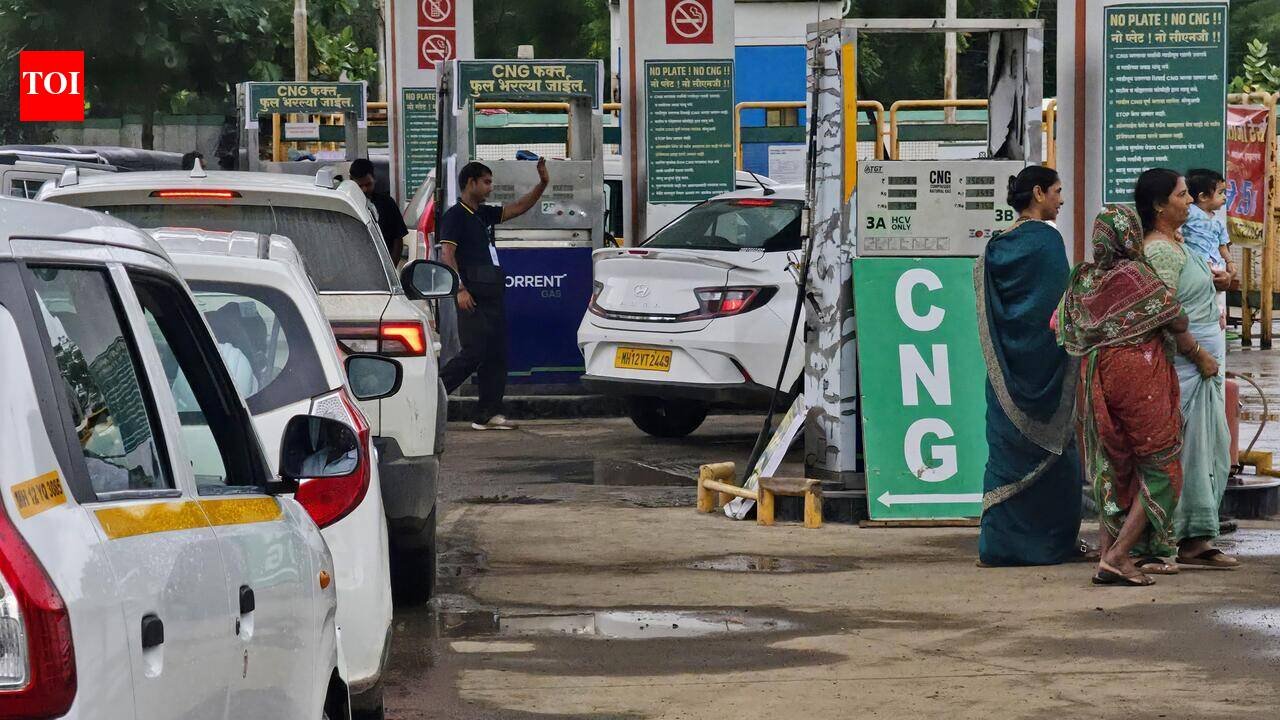
Pune: Maharashtra Natural Gas Limited (MNGL) has upgraded its Talegaon unit to supply compressed natural gas (CNG) to filling stations. It can resolve the low-pressure refilling problem that hundreds of autorickshaw and car drivers face.The enhancement was completed last week, wherein GAIL and MNGL scaled up the gas handling capacity from 75,000 SCMD (Standard Cubic Meters per Day) to 7 lakh SCMD.Subsequently, the pipeline looping work at the Talegaon unit has also been completed, which will help provide the gas from the unit to the city’s gas distribution network without hassles.MNGL has been working on strengthening the CNG and Piped Natural Gas (PNG) network in Pune, Pimpri Chinchwad and surrounding areas. A comprehensive and time-bound network augmentation programme has been launched with a focus on enhancing gas supply capacity and improving network pressure.Officials said three main areas were in focus: pipeline looping at Talegaon, Talegaon skid upgradation to 7 lakh SCMD and pipeline upgradation through hot tapping at Talegaon from 4 inches to 8 inches. Among these three, the pipeline looping at Talegaon was completed in Aug, while the capacity upgrade was completed last week. Pipeline upgradation to 8 inches remains underway at full strength and is scheduled for completion by Dec-end.CNG vehicle users in the city said they have been facing challenges in refilling the gas at the stations. They claimed that the gas pressure remained inconsistent and erratic, and hence it has been hampering the overall refilling process.Ananda Shinde, an autorickshaw driver from the Tadiwala Road area, said, “Automen were spending at least half an hour to one hour in queues at the refilling points. We were constantly demanding an upgrade to the CNG supply amid the growing number of CNG-run autorickshaws and CNG kit-fitted cars. We hope that the MNGL’s latest efforts would boost the supply.”MNGL said strengthening pipeline infrastructure and establishing alternative gas supply connections to ensure greater reliability of CNG supply, particularly during peak demand periods, have been its priorities.


