



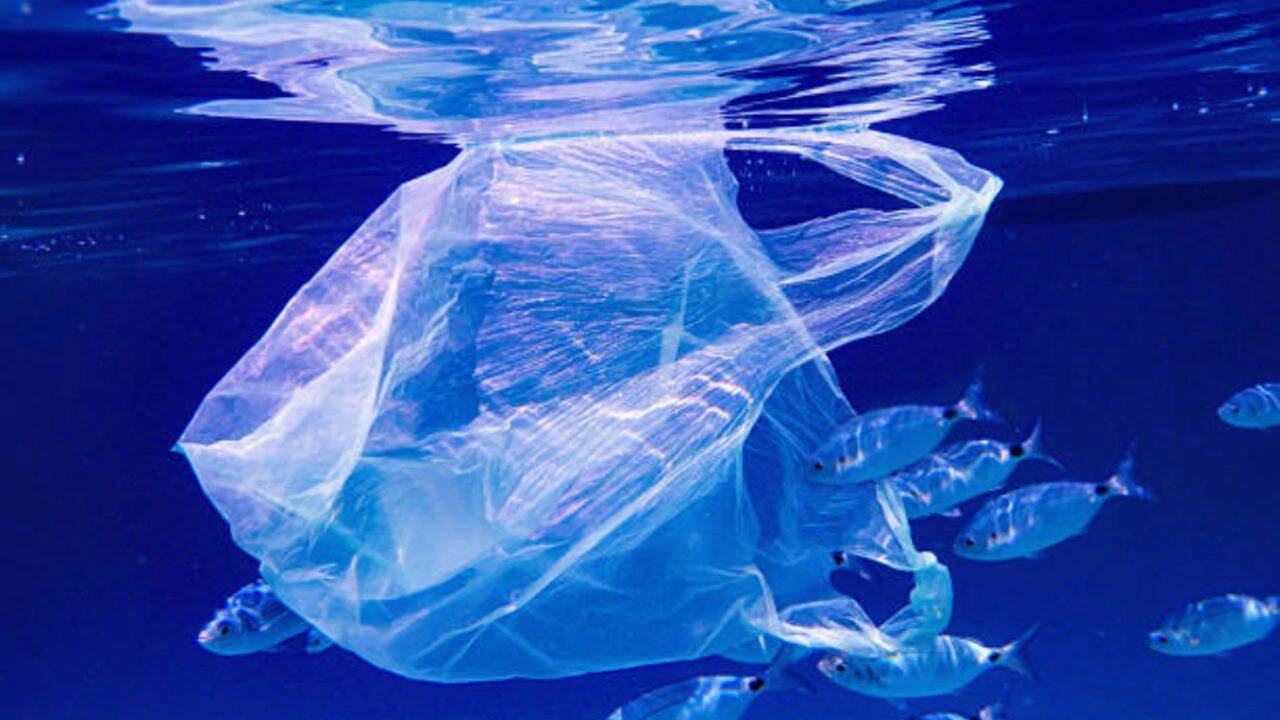
Life on Earth isn’t just about the flora and fauna anymore, microplastics have entered the equation deep enough to reach the surface levels of vast oceans that no human has ever seen. Plastic pollution has become a global environmental crisis with an estimated 11 million tons of plastic entering the oceans annually. As larger plastic debris breaks down into microplastics, these tiny particles are spread throughout the marine ecosystem by ocean currents, threatening not only marine life but also the human food chain.The matter has risen in effect enough to make scientists study the effects of microplastic contamination actively in all surface areas of the planet. While numerous studies have documented this in coastal waters and surface oceans, little is known about its presence in the deep sea, which accounts for nearly 90% of the world’s marine environment. In particular, hydrothermal vent ecosystems, unique deep-sea habitats that support diverse life despite the absence of sunlight have remained largely unexplored in relation to microplastic pollution.Recently, a research team led by Dr Se-Joo Kim and Dr Jinyoung Jeong at the Korea Research Institute of Bioscience and Biotechnology (KRIBB) in collaboration with researchers from the Korea Institute of Ocean Science and Technology (KIOST) conducted the world’s first comparative study to reveal how microplastics accumulate in animals inhabiting hydrothermal vents in two different oceans. The study was published in the journal Water Research.The researchers analysed deep-sea snails and mussels collected by KIOST from hydrothermal vents located more than 2,000 metres below the surface in the North Fiji Basin of the southwest Pacific Ocean and the Central Indian Ridge in the Indian Ocean. Then, KRIBB researchers performed detailed microplastic analyses and ecological interpretations of the collected specimens.
Not so micro, microplastics
The study detected microplastics in 92% of all animals examined, with an average of 3.42 particles per individualImage credit: Getty
The study detected microplastics in 92% of all animals examined, with an average of 3.42 particles per individual, demonstrating that even remote deep-sea hydrothermal vent ecosystems are already contaminated by plastic pollution.Among the detected polymers, polystyrene, widely used in consumer products and packaging materials, was the most abundant. Moreover, researchers further discovered that feeding behaviour plays a major role in determining where microplastics accumulate within the body. In grazing snails that feed on microbial mats covering the seafloor, microplastics were concentrated primarily in the digestive organs. By contrast, filter-feeding mussels exhibited a relatively even distribution of microplastics throughout their tissues.The difference also lay in the two ocean basins. Animals collected from the Indian Ocean contained significantly higher concentrations of microplastics than those from the southwestern Pacific. After normalising for body weight, Indian Ocean specimens contained up to 14.7 times higher microplastic concentrations. As per researchers, the differences in surrounding human activities, riverine plastic inputs and large-scale ocean circulation likely contributed to these regional variations.
Human future in blur?
Microplastics can reach even 2,000 meters below to one of Earth’s most remote, extreme and vital marine ecosystems.
The findings provide the first scientific evidence that plastic pollution generated at the ocean surface can reach even 2,000 meters below to one of Earth’s most remote, extreme and vital marine ecosystems. “Plastic pollution has now spread even to deep-sea hydrothermal vent ecosystems that were once considered among the most isolated environments on Earth,” said Kim, one of the corresponding authors of the study. “Our findings provide important scientific evidence for establishing future deep-sea environmental monitoring systems and conservation policies.”


