


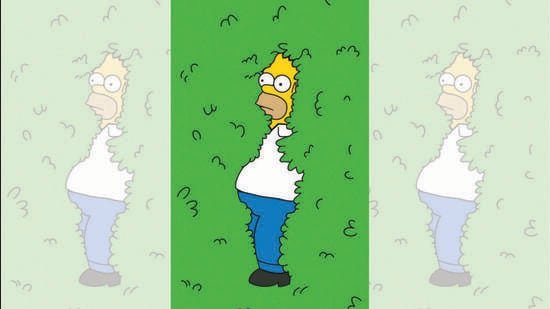
Who categorised memes as Brain Rot? I just want to talk. This is a 21st century art form, born of pop-culture references, shared by a generation that built its tribe online and designed for a three-second attention span – if you get it, great; if you don’t, scroll on. It’s perfect.
But to dismiss it as low-effort and disposable, just because it’s effortless to consume? To think of it as the intellectual equivalent of junk food? That simply means that somewhere a Boomer is missing the point. The meme is the moment. The brevity is the point. And a well-crafted one will lend itself to thousands of iterations, as long as someone’s willing to overlay new text on the photo.
The term dates back to 1976. Richard Dawkins unleashed it upon the world with a whisper in his book The Selfish Gene, as he tried to explain how aspects of culture replicate, mutate, and evolve. Already, the world was getting closer, quicker. But things really took off after an internet connection was added to the mix.
A good meme template begins mid-emotion, when you’re already laughing, already cringing, already tired of something you haven’t fully named yet. They riff on the familiar to point to the new. To write that off as merely fast and funny is to miss the point. It’s a genius way of understanding an idea in its most stripped-down form.
Memes don’t need an instruction manual; they arrive already finished. Think of that image of Homer Simpson backing into the bushes. You may not have seen the episode it’s from (S5, E16, 1994 – who even remembers that far back?), but you know enough about Homer to know he’s panicked and slinking away. That’s enough for two lines of text from the present moment to work: “Me when they start talking about college exam scores”, “When the Tinder date says they worship Breaking Bad”.
Or the Disappointed Cricket Fan imagery. Pakistani spectator Muhammad Sarim Akhtar was wearing his emotions on his face at that 2019 match. But the expression is now a universal code for collective disappointment. We use it when election results spell more doom, when all the good stuff was already sold out on Day 1 of the Zara sale, when we watched Mission Impossible: Final Reckoning.
Of course, we’ve been doing it long before the internet. Long before cartoon-caption contests and subversive graffiti even. Humans have always relied on shortcuts for emotions. We compress anger into a face, grief into posture, distance into scale, and humour into contrast. What are cave paintings if not memes rendered on rock with pigments? The imagery is easy to understand – hunting scenes, animals, the world the artist saw and recorded, with everyone drawing from it what they needed. No translation needed.
It trickles down to Egyptian murals inside the pyramids. The figures follow strict conventions (scale, posture, and placement) which makes hierarchy and roles easy to follow – no one confuses the gods and kings for the janitors. The murals at Ajanta may well be the great-great grandparents of memes too. It’s easy to tell what’s happening from the cluster of monks, the peaceful eyes of a Bodhisattva, the laughing and weeping characters in the corners.
In the present time, the rockface is the phone screen. The pigment is pixels. We’re doing the same thing. Sharing it with our peers as always. And our peers instinctively understand and pass it on. A pharaoh may not know who Homer is, or what cricket is, but he doesn’t need to. He’ll glean enough from the visual to understand. He’ll cheer Success Kid, he’ll empathise with the This Is Fine dog grinning in a room on fire. As for Wojak, aka Feels Guy, aka the line-drawing sketch of the wistful bald man? He’ll probably recognise him as a first cousin.
That’s the power of a meme. It’s not junk food, it’s what future humans will see, and say, “Gosh they were just like us, hahahahah.”
From HT Brunch, April 18, 2026
Follow us on www.instagram.com/htbrunch
