


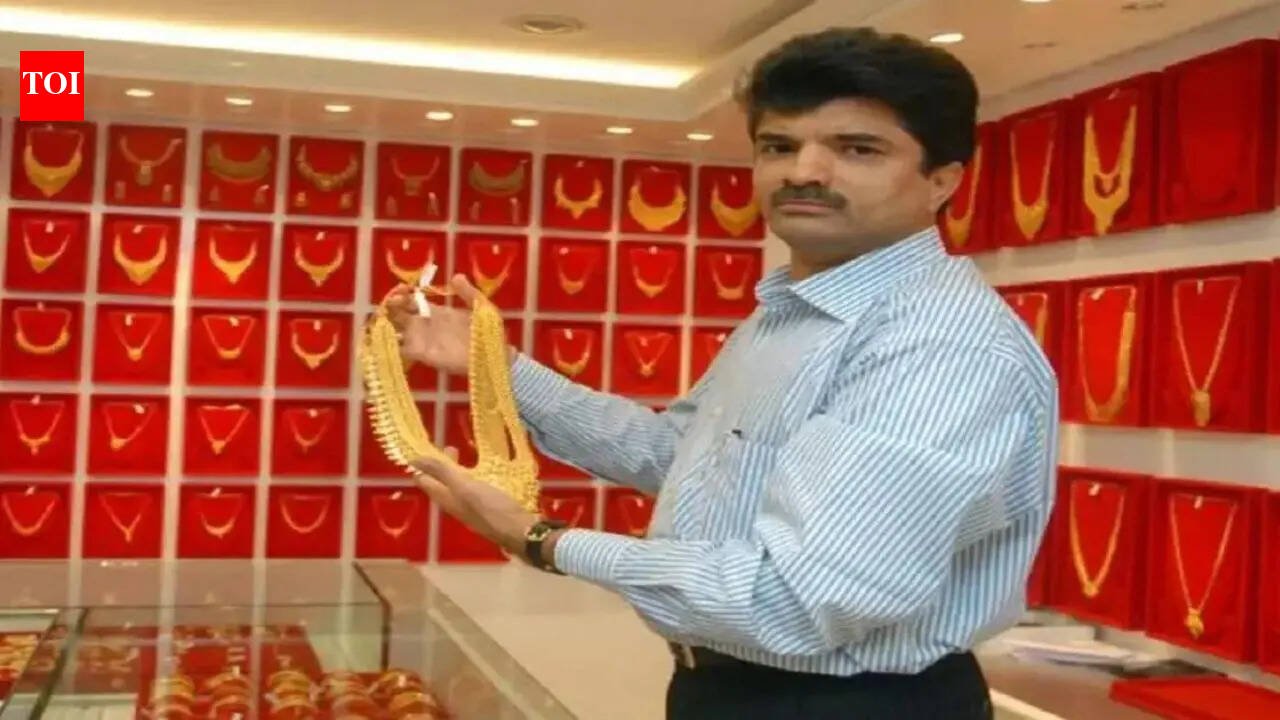
BENGALURU/MUMBAI: A day after markets regulator Sebi banned Rajesh Mehta, the chief of Bengaluru-based gold refiner Rajesh Exports, for inflating the company’s revenues over several years to induce investors to invest in the stock, the company said there was communication gap with Sebi that led to the regulatory decision. Mehta also stood by the company’s consolidated revenue figure of Rs 7.8 lakh crore for FY26, Rs 4.2 lakh crore for FY25 and of the earlier years.The Sebi investigation was initiated after a shareholder of the company complained to the regulator, alleging potential financial misrepresentation in the company’s books.On Thursday, the stock price of Rajesh Exports closed at the 5% lower circuit levels on BSE and NSE. On the BSE, the stock closed at Rs 104.6 and on the NSE it was at Rs 103.9.On June 3, Sebi in its interim order said that investigations showed between FY21 and FY25, Rajesh Exports had manipulated its revenues to show the group’s consolidated aggregate number at Rs 15.2 lakh crore, for these years. In its 109-page order, Sebi said that over these five years, it misrepresented 99.8% of the total consolidated revenue.The order showed that a major chunk of the group’s revenues over these years originated in Valcambi SA, its fully-owned Switzerland subsidiary, held through step-down arms. Valcambi SA is the world’s largest refiner of precious metals like gold, silver and platinum.When Sebi investigating officers and forensic auditors tried to verify the books of group companies, they found major discrepancies. The order also said that investigators and auditors couldn’t find proof about the group’s claim of buying gold mines in Africa. It also alleged that Mehta had traded in gold derivatives products on MCX in his personal account but the revenues were treated as that of the company’s.Mehta told TOI that allegations of such discrepancies were the result of confusion. “The revenues stated by the company in its periodic filings to the stock exchanges are perfectly correct. Instead of considering revenues, Sebi has, by mistake, considered EBITDA and concluded there is a large discrepancy. That is not the case. The revenues reported by the company are correct,” Mehta said.For FY26, the group’s consolidated revenue was Rs 7.8 lakh crore while its India operations, Rajesh Exports, reported a revenue of nearly Rs 9,200 crore. According to Mehta, the standalone revenue is generated in India while the remaining revenue reflected in the consolidated number comes from its Swiss subsidiary, Valcambi, “Valcambi buys dore gold (a semi-pure, unrefined alloy of gold and silver) and other forms of unrefined gold, refines it into pure gold and sells it globally to banks, central banks, bullion dealers and others. Asked about its consolidated net profit to be a tiny percentage of its huge revenue, Mehta said Sebi missed that gold refining is a very low-margin business. “When you refine and sell gold bullion, net profit margins are typically below 1%. EBITDA is usually around 1-1.5%. This is the standard trend globally. Sebi has not understood how a global gold refinery functions.”
