



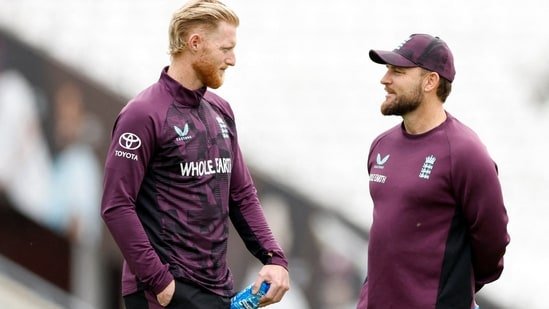
England and Wales Cricket Board (ECB) chief executive Richard Gould has explained why they have decided to retain head coach Brendon McCullum despite an ignominious Ashes defeat earlier this year.
McCullum’s Bazball has been under fire for some time now. Batting aggressively at all stages of a Test, Bazball is a term given by the English media. Last year, it had backfired at home too against India. That series ended in a 2-2 draw, but with a little bit of luck, the tourists could have won the series in England for the first time in so many years.
Anyway, the Ashes tour was also very controversial, with reports doing the rounds that Test captain Ben Stokes and McCullum were not on the same page. Some of the players were reported to have had too much beer in Noosa, a popular holiday destination, partying when the team was in the doldrums as far as their Ashes campaign was concerned.
A probe was launched into the team’s performance, with many predicting the endgame for the New Zealander. Then, earlier this month, when the English team was sent packing in the semifinals of the T20 World Cup by eventual champions India, it appeared all over bar the shouting for the former Kiwi opener.
ECB not big on chop and change!
But then the ECB surprised with the retention of McCullum. Not just him, but also Stokes and director of cricket Rob Key were retained. And Gould explained the decision at Lord’s on Monday. Key was also there with him.
“I’ve seen the driving ambition and determination that we’re lucky enough to have within our leadership group to take the lessons from the Ashes and move forward,” said Gould.
“These are all individuals that have got other things that they can do in their lives. They are all committed to doing the best for England and to learning the lessons that are evident.”
Gould, son of former Wales and Wimbledon football manager Bobby, has also served as the chief executive of Bristol City Football Club. Of course, he understands how these things should be dealt. The volatility and uncertainty are too much in football compared to cricket.
“My old man was a football manager,” he said. “Sacking was part of the job and it wasn’t necessarily the right thing. Moving people on can sometimes be the easy thing to do. That’s not the route that we’re going to take,” he added.


