






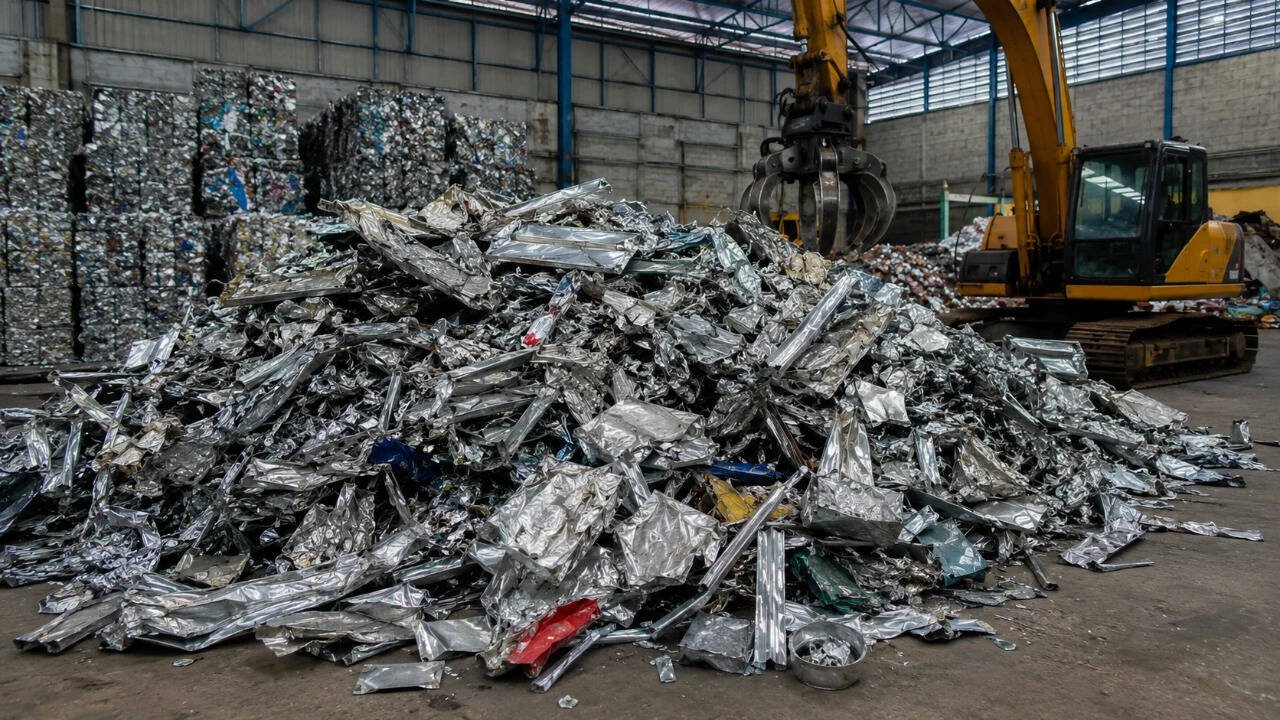
MUMBAI: The Material Recycling Association of India (MRAI) has urged the Prime Minister’s Office to abolish the 2.5% Basic Customs Duty (BCD) on imported aluminium scrap, arguing that the levy is raising input costs for recyclers and downstream manufacturers at a time when India depends on imports for nearly 80-85% of its aluminium scrap requirement.In a representation to the PMO, the industry body said removing the duty would strengthen thousands of micro, small and medium enterprises (MSMEs), improve the competitiveness of Indian manufacturers, create employment and support the country’s transition towards low-carbon manufacturing.MRAI said India’s secondary aluminium production has expanded from about 0.85 million tonnes in FY16 to nearly 2.2 million tonnes in FY26 and now accounts for around 35% of domestic aluminium consumption.The sector supports nearly seven lakh direct and indirect jobs, with women making up about 46% of the skilled workforce engaged in sorting, segregation and processing of scrap.The association pointed out that aluminium scrap remains the only major non-ferrous metal scrap attracting import duty, while copper, zinc and lead scrap have already been exempted.It also noted that countries such as Thailand, Malaysia, Indonesia, Japan and South Korea allow duty-free imports of aluminium scrap, giving their recycling industries a cost advantage over Indian manufacturers.MRAI president Sanjay Mehta said aluminium scrap should be treated as a strategic industrial raw material rather than as waste.According to him, removing the import duty would improve raw material security, lower production costs and help India emerge as a global hub for aluminium recycling and advanced material recovery.The association maintained that imported aluminium scrap undergoes processing, including sorting, smelting and alloying, to produce alloy ingots, billets, castings and other value-added products that comply with domestic BIS and international quality standards. These products are widely used by sectors such as automobiles, engineering, steel and packaging.Industry representatives also highlighted emerging supply risks. Senior vice-president Dhawal Shah said several aluminium scrap-exporting regions, including the European Union, the US, GCC countries and parts of Africa, are increasingly adopting policies to retain scrap for domestic value addition, making uninterrupted access to imported scrap critical for India’s manufacturing sector.MRAI said the ministry of mines had constituted a Joint Working Group comprising representatives of primary aluminium producers and the recycling industry to examine the issue.According to the association, the group, at its June 17 meeting, agreed that removal of the 2.5% duty should be considered in the larger national interest.The industry body argued that eliminating the duty would also help India achieve its environmental goals. It cited estimates that recycled aluminium consumes up to 95% less energy and generates up to 90% lower carbon dioxide emissions than primary aluminium production.It also referred to NITI Aayog’s aluminium sector decarbonisation roadmap, which projects secondary aluminium could account for nearly 45% of the country’s aluminium demand by 2028.Industry executives said retaining the duty creates an inverted duty structure, allowing competing countries to import aluminium scrap duty-free, undertake value addition and export finished aluminium products to India under preferential tariff arrangements.MRAI has sought a meeting with the PMO to present its recommendations, stating that removal of the duty on aluminium scrap (HSN 7602) would improve raw material availability, enhance MSME competitiveness, attract investment into recycling and strengthen India’s manufacturing and sustainability objectives.


