


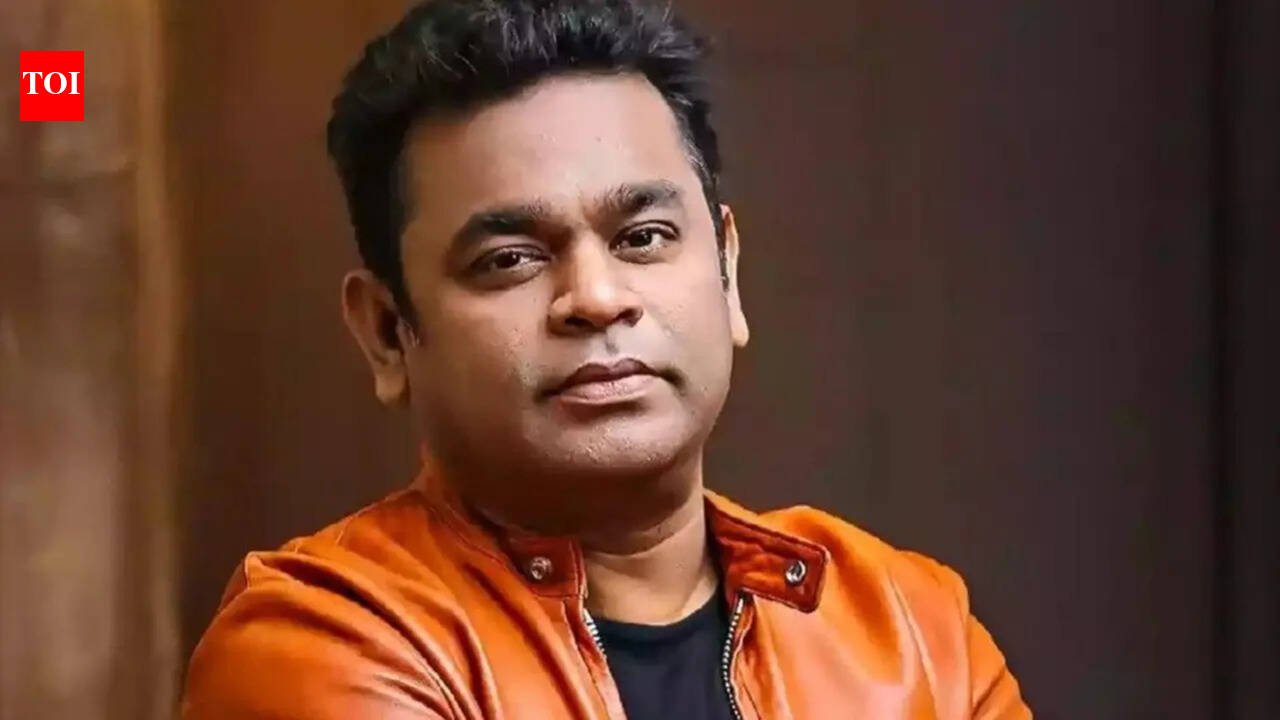
Filmmaker Shekhar Kapur is returning to one of his most celebrated stories with ‘Masoom: The Next Generation’, but the upcoming film is not designed as a nostalgia-driven revisit. Instead, Kapur is attempting to build a deeply emotional story around migration, fractured families, identity, and the search for belonging in a constantly shifting world. The project has now gained another major creative collaborator. Oscar-winning composer A.R. Rahman has officially come on board not just to compose the music, but also to co-produce the film.
A.R. Rahman’s take on co-producing the classic
According to Variety India, Shekhar Kapur revealed that Rahman’s involvement evolved unexpectedly after the music legend listened to the script and instantly connected with the story. “I am going to shoot it this year. I have cast it, I have written it. A.R. Rahman is co-producing the film with me. He heard the script and asked me, ‘Can I co-produce it?’ and we said, ‘Let’s do it.’ So we have already recorded one song, we are on to the second,” Kapur shared.Rahman’s association instantly elevates the project, considering his legacy of creating unforgettable music for films like ‘Roja’, ‘Bombay’, ‘Lagaan’, ‘Rockstar’, and ‘Slumdog Millionaire’.For Kapur, the collaboration became far more meaningful once Rahman decided to become creatively invested beyond music. “When Rahman said he would produce it, it felt fantastic. To have a producer who is one of the greatest musicians of our time,” he said.
Why music remains central to Shekhar Kapur’s storytelling
The director also opened up about the emotional role music plays in his cinema, admitting that songs and scores are often what draw him toward filmmaking in the first place. “I love music. I think one of the reasons I love making films is because I love not just songs but also the background score,” Kapur explained.
‘Masoom’ returns, but with a different emotional lens
Released in the 1980s, ‘Masoom’ became one of Indian cinema’s most loved family dramas. Adapted from Erich Segal’s ‘Man, Woman and Child’, the film featured Naseeruddin Shah and Shabana Azmi and explored how a family reacts when a man introduces his son from an extramarital relationship into their lives. The film’s emotional honesty, combined with memorable tracks like “Tujhse Naraz Nahi Zindagi,” made it a timeless classic. The new film is expected to bring Shah and Azmi back together while introducing Manoj Bajpayee, Nithya Menen, and Kaveri Kapur in important roles.Kapur clarified that ‘Masoom: The Next Generation’ is not a conventional sequel, but rather an extension of emotional themes that continue to feel relevant today. “My next film is the sequel to, more or less, what I call a sequel to ‘Masoom.’ But for every film, I have to find my source,” he said.According to the filmmaker, the inspiration came from observing how migration has shaped countless Indian families over generations. “Ninety per cent of India has moved; we are largely immigrants in one way or another. My parents are migrants. They were uprooted during the Partition. Everybody has moved from here to there,” Kapur reflected. He compared this emotional displacement to the imagery of turtles carrying their homes wherever they go.“So the question is, have we become like turtles? Some went from a rural landscape to an urban setup. Some from urban cities went overseas. Then we crawl into our shell and make it a home,” he added. The filmmaker explained that the heart of the story lies in examining what people truly mean when they talk about “home.” The emotional conflict, according to Kapur, grows from the way families slowly become disconnected while fighting over property, inheritance, and identity.“When does your home become home? And when does your house become a property and when does that property turn into real estate? It is a story of home and what it means,” he said. Kapur also linked these themes to classics like ‘Deewar’, noting how uprooted lives often shape the strongest emotional narratives. “In a way, it was also explored by Salim-Javed in ‘Deewar.’ Who are you when you are uprooted?” he remarked.
Shekhar Kapur’s innocence as a filmmaker
While revisiting a beloved classic comes with expectations, Kapur admitted his real struggle has been reconnecting with the innocence he had while making the original film decades ago. “It is the same cast and it is the same me, but my struggle in writing is how do I become naive again? Naive again to rediscover this story without being Shekhar Kapur, this well-known director. I had no idea ‘Masoom’ would become this big,” he confessed.The director concluded by speaking about his deep emotional bond with actors and how that relationship shapes his storytelling process. “I think the ability I have is to be able to love actors. I think it is my love for my actors that creates my films. Which is why I am scared of working with actors who are unwilling to fall in love with what they are doing,” Kapur shared.With ‘Masoom: The Next Generation’, Shekhar Kapur appears less interested in recreating a classic and more focused on revisiting timeless questions about family, roots, and emotional belonging.
