



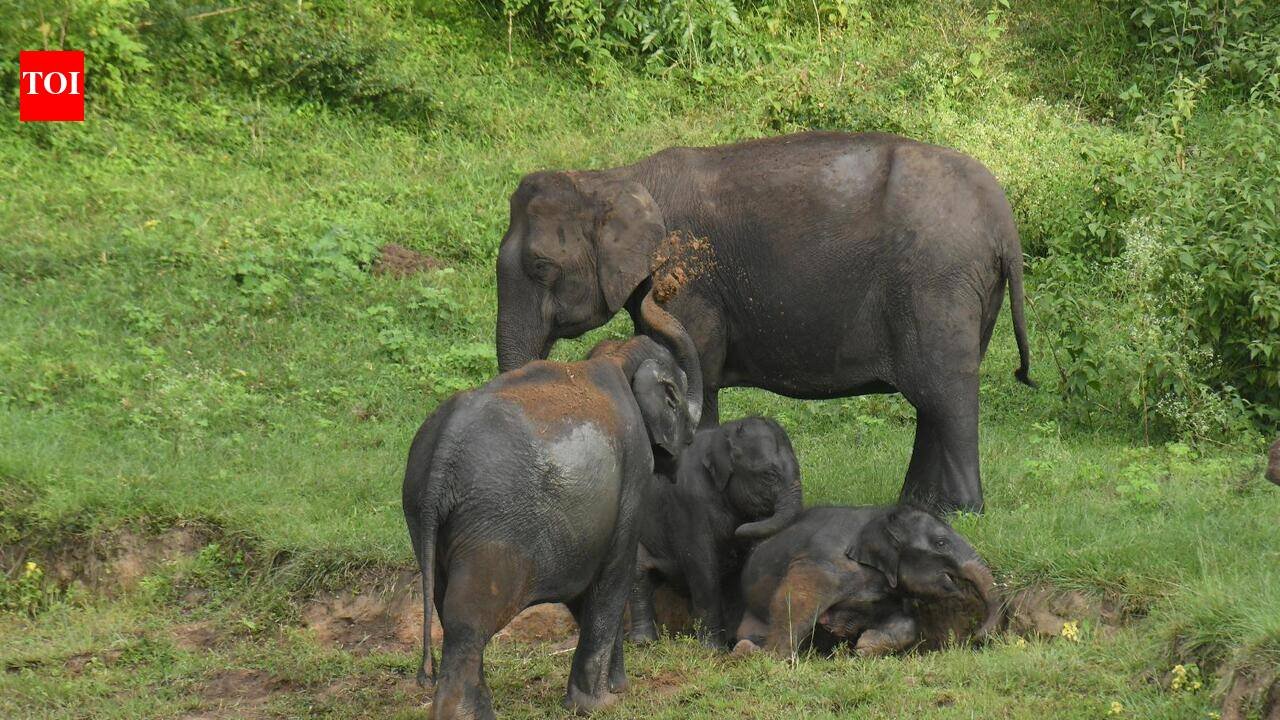
Chikkamagaluru: On World Elephant Day, farmers across the Malnad region are reminiscing about a time when the arrival of elephants in paddy fields was considered a blessing rather than a threat.Five to six decades ago, farmers in Hassan and Chikkamagaluru districts would offer puja to elephant footprints if the animals ventured into their farmlands. An elephant’s visit was a matter of pride, drawing neighbours eager to catch a glimpse of the footprints.“I still remember my grandmother saying, ‘Rajru Bandru’ (the king has arrived) whenever the dogs in our village began barking in a distinct tone. Their bark would turn deeper, continuous and alert.,” recalled Krishnamurthy, a farmer from Malnad. “That was how we knew elephants were nearby. We never saw them as a danger. We saw them as the kings of the forest visiting our land.”Elephants were regarded as Aranya Daiva (forest deities) and Gaja Raja (kings of the forest). While this belief has faded amid rising human-elephant conflicts, many in Malnad still affectionately refer to elephants as Rajru.There was also a widely held belief that an elephant’s visit brought prosperity. Farmers believed it would strengthen the household and double crop yields that season. The animal was seen as a symbol of good fortune and fertility. “We used to touch elephant footprints and pray. Elders told us that Goddess Lakshmi herself walks where elephants walk,” recalled Vijay Gowda, 80, of Narasimharajapura taluk.There was a strong belief that an elephant’s visit would bring prosperity. Farmers believed the person would become stronger and that their crop yield would double that season. The animal was considered a symbol of good fortune and fertility.Conflict zone due to loss of corridorsWriter and environmentalist Kalkuli Vittal Hegde said elephants occasionally wandered far from their forest habitats during the mating season, often entering plantations and other forest-like landscapes in search of food. “The elephants used to visit agricultural fields for food and would return without causing significant damage to crops,” he said.According to Hegde, many of the elephants seen near human settlements in the past were captive elephants that were released into the wild. Truly wild elephants, he said, generally remained wary of humans and rarely ventured close to habitations.The situation, however, has changed dramatically over the years. Loss of wildlife corridors, habitat fragmentation and repeated crop raids have altered public perceptions, with farmers now attempting to drive away elephants as soon as they enter fields.Night watches, solar fencing and forest patrols have replaced traditional rituals. Crop losses, damage to houses and concerns over human safety have caused fear to outweigh faith.Forest officials say this shift reflects the growing pressure on both people and elephants. On World Elephant Day, conservationists are urging renewed effort towards coexistence through habitat protection, early warning systems and timely compensation to farmers affected by elephant-related damage.


