



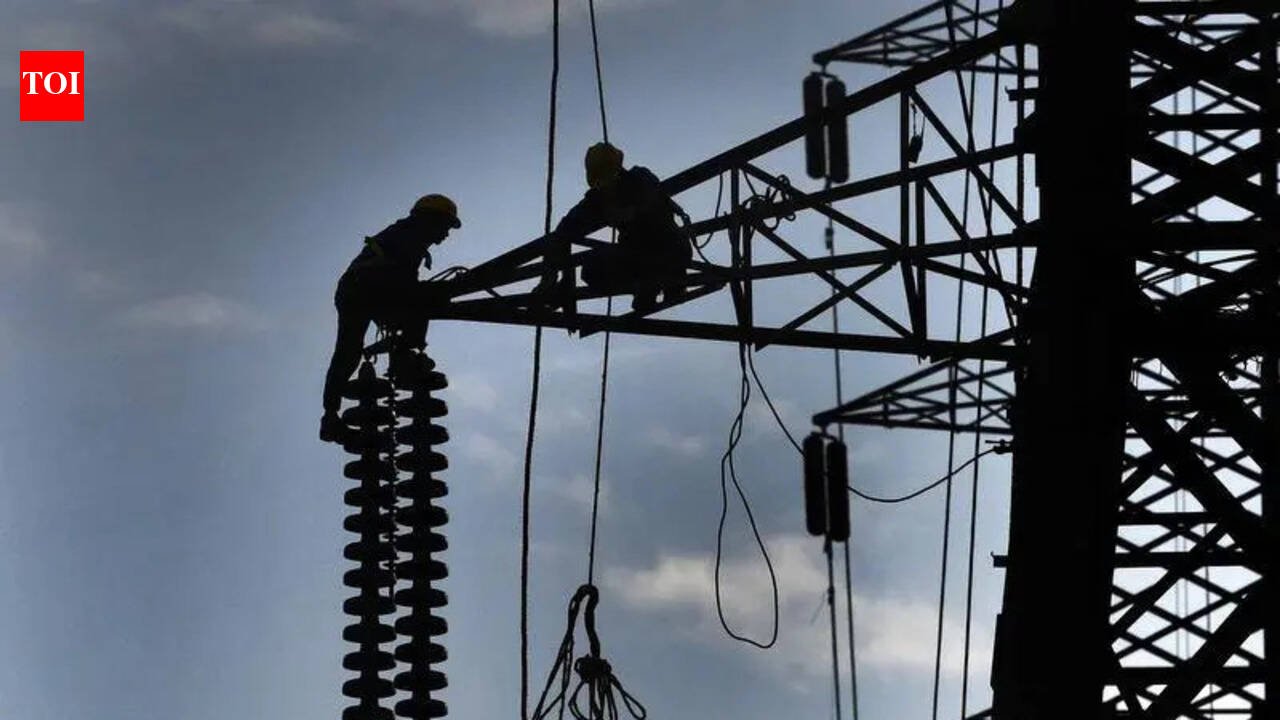
Mumbai: The Maharashtra State Electricity Transmission Company Limited (Mahatransco) on Thursday commissioned the Babhaleshwar–Kudus 400 kV double-circuit transmission line, strengthening power infrastructure in the Mumbai Metropolitan Region (MMR).The newly operational line is expected to enhance the stability, reliability and efficiency of power supply across Mumbai, Thane, Palghar and Ahilyanagar districts.It is also expected to reduce transmission losses by approximately 5MW and improve voltage levels across the region, a senior official said.The line enabled an additional power transfer capacity of up to 3,000 MW to help manage rising electricity demand in the fast-growing MMR.Originally approved in 2010 and targeted for completion by 2013, the project faced multiple delays due to technical and administrative challenges, but it was completed in March 2026. Kalpataru Projects International Limited carried out the execution. The project involved installation of 715 transmission towers across a total line length of approximately 228 km. Of these, 485 towers and 304 circuit km of stringing work were completed under the Nashik division, while 230 towers and 152 circuit km were completed under the Vashi division, an official said.A spokesperson from Mahatransco said execution posed challenges including obtaining special permissions for passing through the vicinity of the Giant Metrewave Radio Telescope in Pune district. Other hurdles included land compensation issues, forest clearances, right-of-way constraints and logistical challenges in transporting materials. In forested areas, materials had to be transported manually, while in certain sections work was completed using advanced hotline stringing techniques.He further said commissioning of the line reduced the load on the existing Padghe–Babhaleshwar transmission lines and improved overall grid reliability. It also provided an additional power source to the Kudus substation to meet increasing electricity demand in the Mumbai region.Mahatransco credited the success of the project to cooperation and support from local public representatives, revenue authorities, police, and forest departments.


