



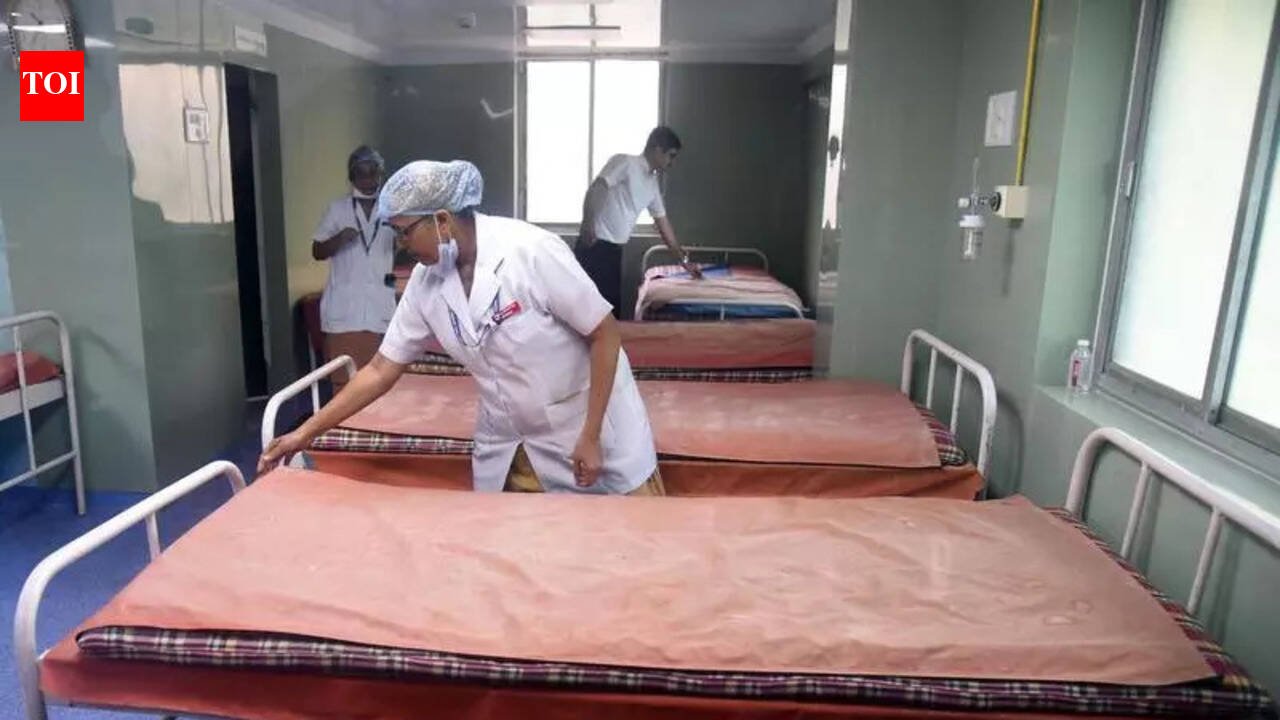
Mumbai: Maharashtra’s public health seems to be taking a beating. Cases of malaria, dengue, tuberculosis and HIV keep increasing with every passing year, but the number of beds per lakh population is dipping.According to data published in the state economic survey on Thursday, the state had 108 beds per lakh population in 2014, but the number dropped to 65 beds in 2025.The economic survey also showed a rising graph of infectious diseases across the state, especially malaria, in the last 3 years.In 2023, public hospitals registered 16,760 malaria cases and 23 deaths, and the numbers increased to 20,640 and 26 respectively in 2024. From June to December 2025, the malaria caseload increased to 20,735 with 27 deaths.Over half a lakh cases of dengue were reported between January 2023 and December 2025, with 106 deaths, according to the economic survey. The number of suspected TB patients per lakh population increased from 2,027 in 2023 to 3,475 in 2025.The HIV positivity rate in Maharashtra increased from 0.24 (10,690 cases) in 2023 to 0.25 (10,830 cases) in 2025.Despite the growing burden of diseases, the state health infrastructure seems to be inadequate. For example, the hospital bed to population ratio was 102 in 2020, but dropped to 59 in 2021. It increased to 73 in 2024 before dropping to 65 in 2025.A health official, however, said that the discrepancy could be explained by a change in the computing of beds. “Till 2020, our calculation of total beds included those in the state’s govt, municipal, and charity trust-run hospitals. We only excluded private or corporate hospitals,” he said.However, from 2020, the state public health department stopped including charity trust-run hospital beds in the calculation, leading to a drop in the bed-to-population ratio.When contacted, health economist and Jan Swasthya Abhiyan member Dr Ravi Duggal said that 65 beds per lakh population seems to be an underestimation or a calculation error. “We talk about Digital India, but we seem to be getting basic data wrong,” said Dr Duggal.A state govt official said the public health department runs 20 district hospitals, 71 sub-district hospitals with 100 beds, and another 374 sub-district hospitals with 50 beds each. “In all, we operate 609 hospitals of various types and sizes across the state, which works out to 29,364 beds,” he said.The state department of medical education also runs 35 medical colleges with over 500 beds each. “There are adequate beds in the public hospitals,” added the official.


