


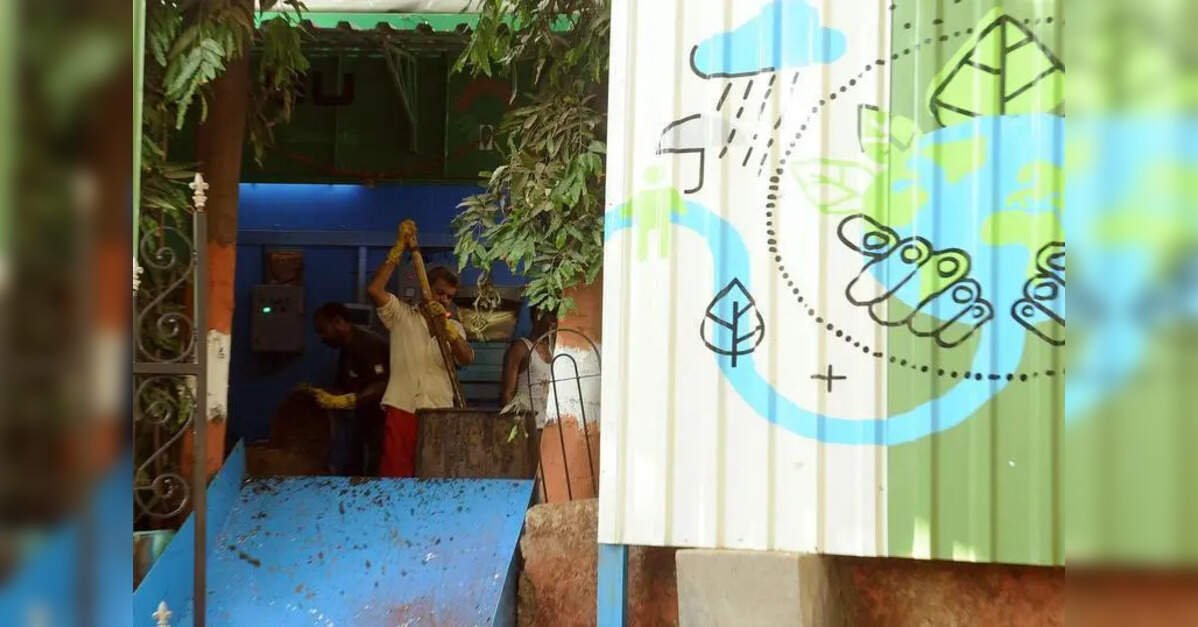
Mumbai, The Maharashtra cabinet on Wednesday approved the implementation of the Maharashtra State Compressed Biogas Policy, 2026 which is aimed at facilitating eco-friendly disposal of urban waste and generation of clean energy and fertilizer.
Chief Minister Devendra Fadnavis, who chaired the cabinet meeting, said the policy will tackle multiple urban challenges including waste accumulation and pollution of water sources.
A provision of Rs 500 crore was made for the implementation of the policy in the current fiscal. Approval has also been granted to set up projects to produce usable compressed biogas, the CM said.
A steering committee will be formed under the chief secretary to oversee the implementation and projects will be executed on PPP and hybrid annuity models.
Another objective of the biogas policy is to empower local bodies to handle segregation, collection, processing, and conversion of waste into clean energy which will promote integration of compressed biogas production with solid waste management systems, the official statement said.
This will reduce pressure on landfills, improve public health, lower greenhouse gas emissions and improve environmental quality, it added.
“This policy will reduce energy imports, lower dependence on fossil fuels, cut carbon emissions, and provide clean fuel alternatives for transport, industrial and domestic use,” said the chief minister.
The biogas policy will also curb burning of organic waste such as crop residue and livestock waste and promote circular economy through waste-to-energy and organic fertilizer production, the statement said.
CBG projects under the policy must have a minimum capacity of 200 tonnes per day and can be developed by local bodies, PSUs, private developers, and oil and gas companies.
Cluster-based projects will be allowed where waste availability is low, including aggregation of agricultural waste via farmer producer organisations.
A digital platform will be developed for coordination between raw material suppliers, developers and collection agencies.
Land for projects will be provided on long-term lease, along with single-window clearance, fast approvals and infrastructure support.
In another decision, the cabinet approved a proposal to provide basic pay as per UGC norms to teachers in seven model colleges established under a central scheme in districts with low enrolment.
They will also receive dearness allowance and additional 10 marks in recruitment under the Higher and Technical Education Department.
The model colleges are located in Jalna, Buldhana, Raigad, Hingoli, Gadchiroli, Ratnagiri and Sindhudurg, and offer 43 courses. As many as 2,510 students are enrolled in these institutions with 134 teachers working on hourly basis and 61 non-teaching staff.
Following court petitions by staff seeking regularisation, the government proposed granting UGC basic pay plus DA, along with recruitment benefits to these teachers.
The cabinet also sanctioned appointment of principal and honorary professors in each college.
Approval was given to the allocation of 42.55 hectares of land at Nagewadi in Satara district to the Maharashtra Industrial Development Corporation (MIDC) for an IT park.
The land will be provided at agricultural land rates.
The cabinet also approved amendments to the Maharashtra Agricultural Lands (Ceiling on Holdings) Act, 1961, and cleared draft rules for conversion of Class II land to Class I.
The decision will benefit 1,09,868 beneficiaries covering 1,73,560.4 hectares of land. These lands were distributed 40 to 50 years ago to landless persons, Ex-servicemen and weaker sections (SC/ST).
Earlier such land could not be used for non-agricultural purposes and its transfer required the Collector’s approval besides payment of 50 to 75 percent unearned income.
Now, the amendments allow their conversion to Class I, making land use and transfer easier.
Cases with a market value of up to Rs 50 lakh will be handled at Collector level while those above Rs 50 lakh will require prior government approval.
