



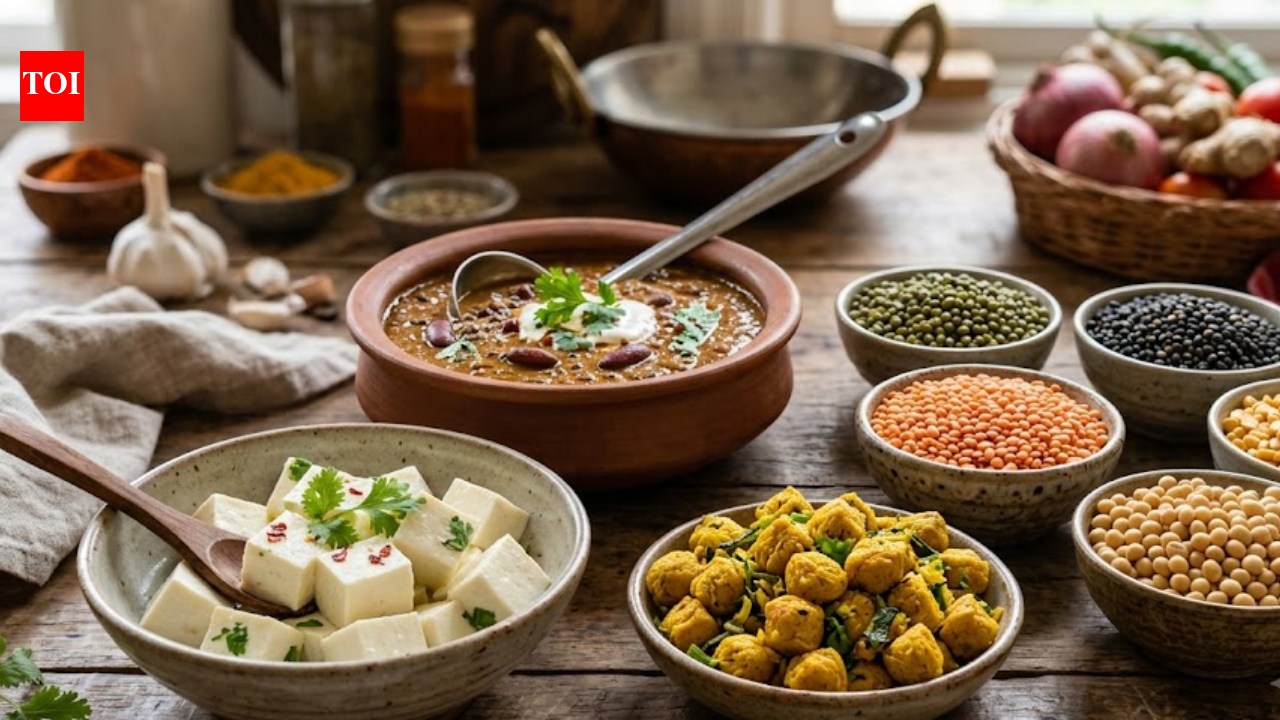
LUCKNOW: Two days after banning the cooking and serving of non-vegetarian food in hostel messes, King George’s Medical University (KGMU) has directed mess officials to strengthen the vegetarian menu by adding more protein-rich items to prevent any nutritional deficiency among hostel residents.KGMU spokesperson Prof KK Singh said the daily protein requirement for an adult is around 100 gm and can be met through a properly planned vegetarian diet. The university has asked hostel messes to incorporate soy chunks, paneer, tofu, cooked chickpeas or black chana, rajma, yoghurt or hung curd, and a wider range of lentils into routine meals. Milk, peanuts, pumpkin seeds and other vegetarian sources of protein will also be added, officials said, with an emphasis on ensuring students meet daily protein needs despite the new restriction.
The university administration on Monday prohibited the preparation of non-vegetarian food across all 18 hostel messes, following remarks made by governor Anandiben Patel during KGMU’s convocation ceremony.Patel said a team from the Jan Bhawan secretariat found non-vegetarian food being prepared in three hostels during an inspection of university buildings. Although she did not issue a direct order to stop non-vegetarian cooking, the university moved to ban its preparation and serving in messes after her comments.University officials said the revised vegetarian menu is being designed to provide balanced nutrition while complying with the new policy, and that implementation instructions have been issued to mess managers.The decision has triggered debate among nutrition experts and sections of the student community. Critics argue that concerns about food hygiene should be addressed through stricter monitoring of procurement, storage and cooking practices rather than banning an entire category of food. Others contend that the policy limits students’ freedom to choose their diet, particularly in hostel settings where mess food is a primary option.A nutrition expert from KGMU, speaking on condition of anonymity, said a well-planned vegetarian diet can meet most nutritional needs but requires careful planning.The expert pointed to vitamin B12, which is naturally found mainly in animal-source foods, meaning strict vegetarians may need fortified foods or supplements. Long-chain omega-3 fatty acids such as EPA and DHA, commonly obtained from fish, are also not readily available in vegetarian diets.The expert added that while plant-based proteins from pulses, legumes and cereals are nutritious, many are individually lower in one or more essential amino acids, making variety important. Soy products and dairy are considered complete or near-complete protein sources.Some faculty members have alleged the move reflects ideological preferences that view non-vegetarian food as undesirable. KGMU authorities rejected the claim, saying the decision was taken on grounds of hygiene, food safety and more effective hostel mess management.


