



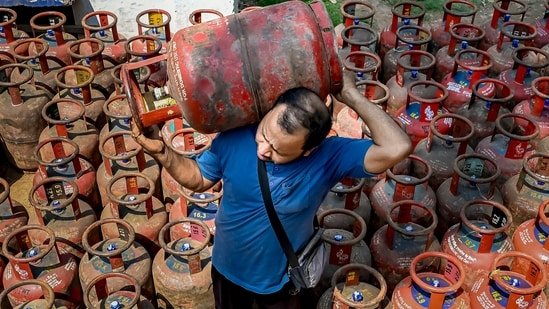
Fears over LPG availability have intensified in several parts of India amid the US–Israel–Iran war, raising concerns about potential disruptions in global energy supply chains. Real estate brokers say that while a piped natural gas (PNG) connection has so far not been a major requirement for tenants or a deal breaker in property decisions, the situation could change if the current crisis persists. Going forward, homes with a PNG connection may command a premium among both buyers and tenants, potentially leading to moderately higher rents and property values.


Real estate brokers say that at present, it is still too early to call PNG availability a decisive factor in real estate decisions. Renting or buying a home typically depends on broader considerations such as location, connectivity, budget and overall infrastructure. But if supply disruptions persist for a longer period and LPG availability becomes a sustained concern, brokers say PNG connections could begin to emerge as an added advantage for residential properties.
Brokers in Noida note that, so far, a PNG connection has rarely been a deal-breaker in rental negotiations. Apartments typically do not command higher rents solely on this basis, as tenants have traditionally prioritised factors such as whether the home is furnished or semi-furnished, its location within the society, and other preferences like sun-facing units, views of the main gate or park, or apartments on the ground floor.
“Even if tenants request a PNG connection, landlords can install one relatively easily, usually at a cost of around ₹6,000 and within about a week. Given the low installation cost, it only adds incremental value to the property,” said Nitin Jain of Prudential Realtors, a Noida-based real estate broker.
However, real estate brokers believe the situation may change if concerns over LPG supply persist. Builder floors and independent apartments without PNG connections could begin to command lower demand, while housing societies developed by builders, which typically already have piped gas infrastructure, may gain an advantage in the rental market unless landlords of builder floors decide to upgrade to the facility.
“While this is not a major priority at the moment, as tenants usually enquire about how and where they can procure an LPG cylinder, the situation could change if the shortage persists. Apartments with a PNG connection may emerge as a unique selling point for landlords and could command a moderate premium because of the amenity,” said Sunil Singh, a real estate broker based in Bengaluru.
“Right now, we are seeing some early consumer curiosity around whether a property has piped natural gas (PNG), largely driven by concerns around LPG availability. However, it is still too early to call this a decisive factor in real estate decisions. Typically, renting or buying a home depends on larger considerations such as location, connectivity, budget, and overall infrastructure,” explains Saurabh Garg, co-founder and CBO of NoBroker.
“That said, if supply disruptions continue over a longer period and LPG availability becomes a persistent issue, PNG connectivity could start emerging as an added advantage for properties, particularly in urban markets where piped gas networks already exist. In the immediate term, we expect more of a knee-jerk reaction in buyer and tenant queries rather than a structural shift in demand,” he added.
LPG vs PNG: What’s the difference?
To prevent a potential domestic energy crisis, the Centre has invoked the Essential Commodities Act, 1955, allowing it to override existing commercial gas supply contracts. Under the order, Priority Sector I—which includes domestic piped natural gas (PNG) for households and compressed natural gas (CNG) used in transport—will be assured 100% of its average consumption over the past six months. This means that if gas is operationally available in the national grid, supplies must first be directed to household kitchen pipelines before being diverted to industries such as factories or power plants.
The key difference between Liquefied Petroleum Gas (LPG) and Piped Natural Gas (PNG) lies in their composition and method of supply. LPG is a mixture of propane and butane derived during crude oil refining and is delivered to households in pressurised cylinders that need periodic replacement. PNG, by contrast, is natural gas, primarily methane, supplied directly to homes through underground pipelines by city gas distribution networks, ensuring a continuous flow without the need for storage cylinders. PNG is produced by regasifying Liquefied Natural Gas (LNG), which India imports largely from countries such as Qatar, United Arab Emirates, the United States and Oman, as per media reports.
Data from the Petroleum Planning and Analysis Cell (PPAC) show that India consumed about 31.3 million tonnes of LPG in FY2024–25. However, PNG penetration remains relatively limited. As of late 2024, India had around 1.36 crore domestic PNG connections, compared with about 33.2 crore LPG connections nationwide, media reports said.
In the national capital, a large section of households already use PNG supplied by Indraprastha Gas Limited (IGL), particularly in housing societies. According to figures from the Government of Delhi, the city had 17.23 lakh PNG connections as of 2025.
On March 14, the Ministry of Petroleum and Natural Gas announced a change in supply rules stating that households with PNG connections will no longer be allowed to keep, obtain or refill domestic LPG cylinders. The move aims to streamline gas allocation and ensure LPG supplies reach households without access to piped gas infrastructure.


