



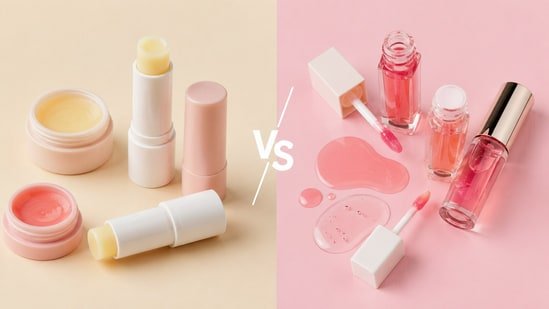
When it comes to soft and nourished lips, there can be a confusion about whether to use lip balms or lip oils. While they may seem similar, they serve different purposes depending on your lip care needs. However, as a matter of fact, both these lip essentials are crucial for your lip health.


So, whether to go for lip balms or lip oils depends largely on your requirements and lip concerns. Let’s break down the uses and benefits of both products, making it easier for you to pick one or both of them, as per your requirements or choice.
What are lip balms?
Lip balms are designed primarily to protect and heal dry or chapped lips. Most lip balms usually contain ingredients like beeswax, shea butter, and petrolatum that create a protective barrier to lock in moisture. Lip balms are ideal for daily hydration, especially during harsh weather conditions.
Benefits of lip balms
- Prevents dryness and cracking: The skin of the lips is thinner than the rest of the face and loses moisture quickly. Lip balms create a protective layer that helps keep moisture in.
- Soothes chapped or irritated lips: Ingredients like shea butter, beeswax, cocoa butter, aloe vera, or petrolatum can calm irritation and reduce peeling.
- Protects against weather damage: Wind, sun, cold air, and indoor AC can dry out lips. A balm acts as a barrier against these environmental stressors.
- Provides sun protection: Some lip balms contain SPF, which helps protect lips from UV damage and pigmentation. This is especially useful in sunny climates like Delhi.
- Helps lips heal faster: Hydrating ingredients support recovery from minor cracks, dryness, or lip biting.
- Improves lip appearance: Well-moisturised lips usually look smoother, softer, and less flaky. Some balms also add shine or tint.
- Can prepare lips for lipstick: Applying balm before lipstick can help makeup go on more evenly and prevent a dry appearance.
What are lip oils?
Lip oils, on the other hand, combine skincare with beauty benefits. Formulated with nourishing oils such as jojoba, almond, or coconut oil, they deeply hydrate the lips while adding a glossy finish. Lip oils feel lightweight and are perfect for people looking for hydration without the heaviness of traditional balms.
Benefits of lip oils
Hydration: Many lip oils contain nourishing oils like jojoba, coconut, rosehip, or squalane that help reduce dryness and keep lips feeling soft.
Lightweight feel: Compared with thicker balms or sticky glosses, lip oils usually feel thinner and more comfortable.
Adds shine: They give lips a glossy, healthy look without the heavy texture of traditional lip gloss.
Helps with flaky lips: Oils can soften rough patches and improve the appearance of chapped lips over time.
Can support the lip barrier: Ingredients such as vitamin E or ceramides may help protect lips from moisture loss.
Tint options: Many lip oils add a subtle wash of colour while still feeling skincare-focused.
Good for daily wear: They’re easy to reapply and work well alone or over lipstick.
Key differences between a lip balm and lip oil
How to choose between a lip oil and balm?
Choosing between the two depends on your preference and lip concerns. If your lips are severely dry or cracked, a lip balm may offer better protection and repair. If you want hydration with a shiny, non-sticky look, lip oil is a great choice. Many people even use both together for maximum nourishment and softness.
Similar articles for you
Liquid vs powder blush: Which to pick according to your skin type?
Hoodies, sneakers, and a moisturiser: Abhishek Sharma breaks down his style playbook
From skinimalism to smart skincare: Dermatologists predict the biggest skincare trends of 2026
At Hindustan Times, we help you stay up-to-date with the latest trends and products. Hindustan Times has an affiliate partnership, so we may get a part of the revenue when you make a purchase. We shall not be liable for any claim under applicable laws, including but not limited to the Consumer Protection Act, 2019, with respect to the products. The products listed in this article are in no particular order of priority.


