


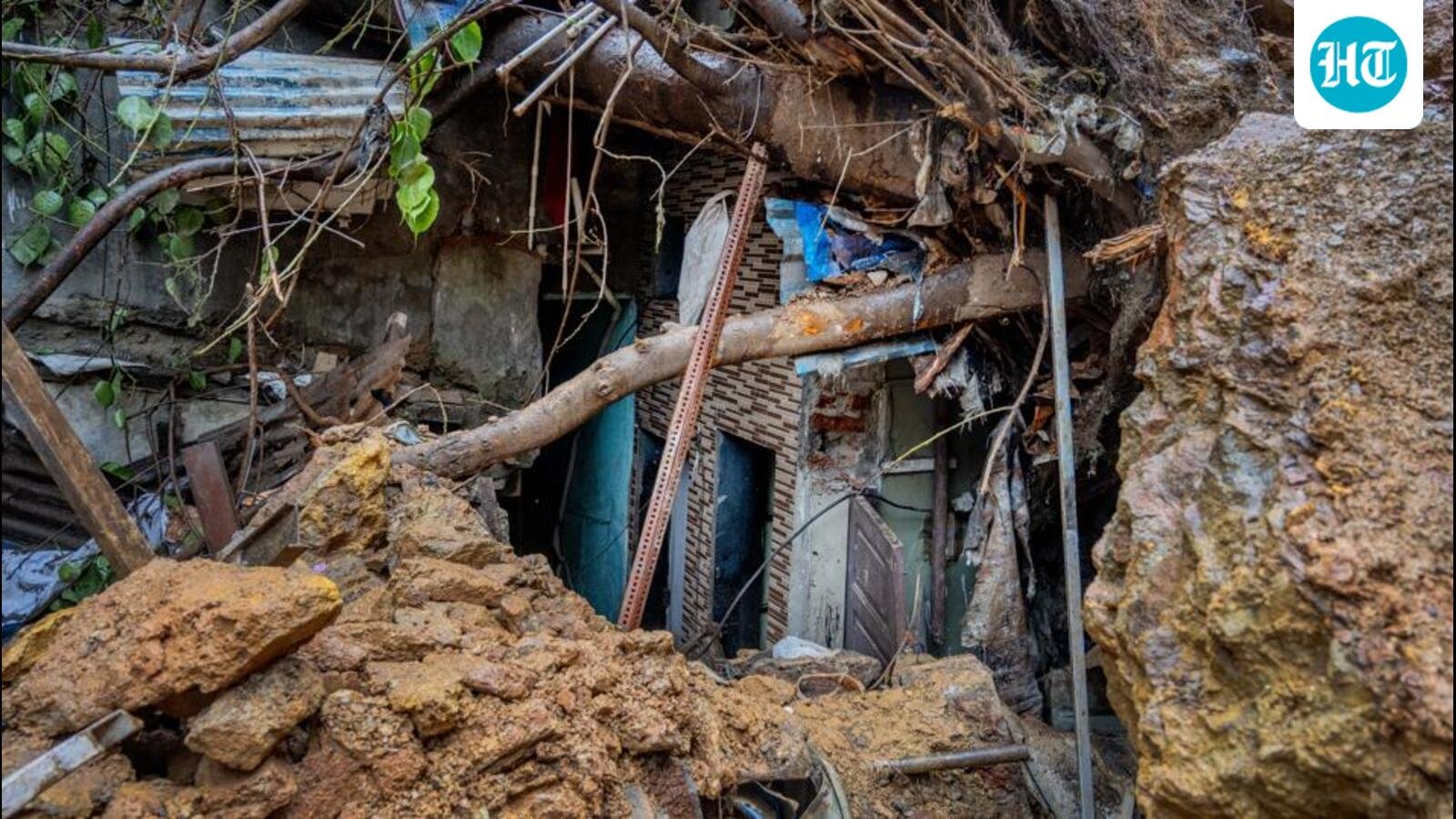
MUMBAI: The death toll in Wednesday’s landslide at Chirag Nagar in Kurla went up to eight, after rescuers recovered the body of Saddam Hussain Khan, 28, at around 12:30pm on Thursday. Khan was pulled out of the debris more than 31 hours after the hillside collapsed at 3:48am on Wednesday.
Khan had lived in the area for nearly two decades and ran a general store that his father had operated before returning to their native Sultanpur in Uttar Pradesh. He lived alone in a unit adjoining the shop, while his wife and three-year-old son lived with his parents in Sultanpur.
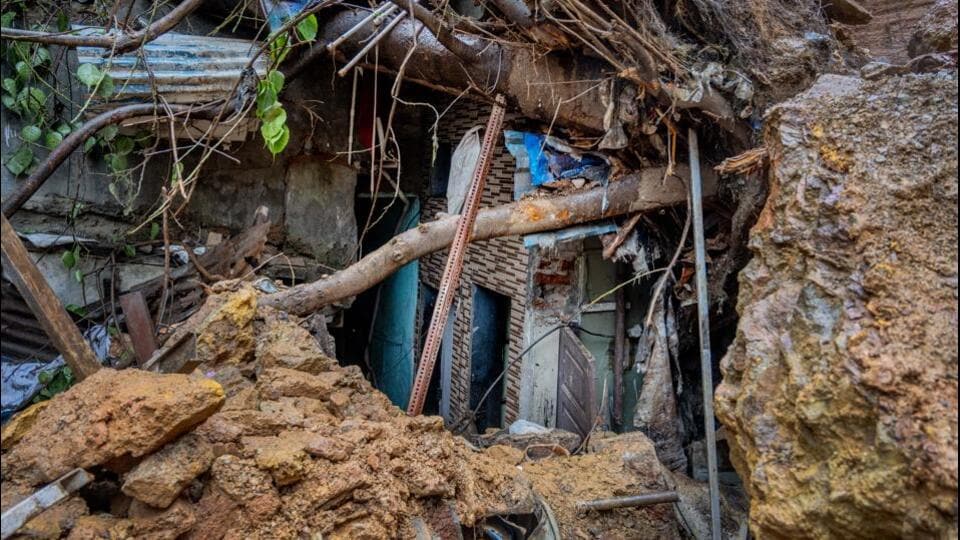
Trapped beneath rubble beyond the reach of rescuers, crushed under a boulder 10 feet tall, and a mother clawing through mud and debris to find her children – this is what the aftermath of the landslide in Kurla looked like after a portion of a hill slope came crashing down on Wednesday.
Eight residents of Gaushiya Chawl in Chirag Nagar died, while seven others were injured in the crash, with the search and rescue operation taking 31 hours before the National Disaster Response Force (NDRF) called it off on Thursday afternoon..
Rescuers say the usual methods couldn’t be deployed – the slum settlement was choc-a-bloc with homes, the lanes were too narrow to allow earthmovers and other equipment to get to the crash site, and mud and other debris that had slid down obstructed their path.
As a result, rescuers used their bare hands and other manual means to find survivors and victims while simultaneously clearing the debris. The 35-member team was divided into three groups — one excavating, another getting the debris out and the third taking it away. The rescuers also formed a human ‘bucket brigade’ – a line of rescuers who pass items from one to the other to move them across a distance – to hasten the removal of debris, said the NDRF team’s commander inspector Hanumant Namba.
The first major rescue effort focused on the house where four people were believed to be trapped. The breakthrough came at 9:00am – five hours after the landslide – when all four were rescued. ”I saw a woman trying to save her children. We rescued her two kids from her embrace,” said Namba.
The operation became more difficult when the team reached Vikret Yadav’s house. “We started excavating vertically,” he said. Yadav’s body was trapped beneath a boulder 10 feet tall. “We first broke the boulder and dug deep before we found a mobile phone and some traces of a human being. Finally, we pulled him out,” Namba said.
The operation then entered its most difficult phase, taking 12 hours to break two boulders larger than the previous ones. These had trapped Saddam Hussain Khan, 28, whose body was recovered on Thursday.
“The problem was, whenever the boulder on top of the other one was broken, it would start shaking. It took us around 12 hours to remove the first boulder and break the second one,” he said. After the team confirmed that all the victims and survivors had been accounted for, they called off the operation, he added.
Namba said he had received the call about the landslide from assistant commandant Saranga Kurve at around 4.30am. It took 15 minutes to assemble specialised equipment and to keep the canine squad, Jassi, a two-year-old Labrador, ready. “The On-Wheel vehicle includes equipment that can detect life under rubble.,” he said.
The team first rescued four people from the surface, then gathered information from residents about those missing, where they lived and where they could potentially be trapped. They also identified another major danger — the possibility of a second landslide. “We stationed a team to alert us about any unusual movement,” said Namba.
While looking for survivors, the team first shouted out for anyone who was trapped, asking them to strike a solid object with a stone three times, or call out loudly. This was followed by a search using equipment that can indicate whether a person is alive beneath the rubble. The final phase was roping in Jassi. While none of the three exercises elicited a response, Namba said rescuers used manual excavation to get to survivors and the deceased.
