



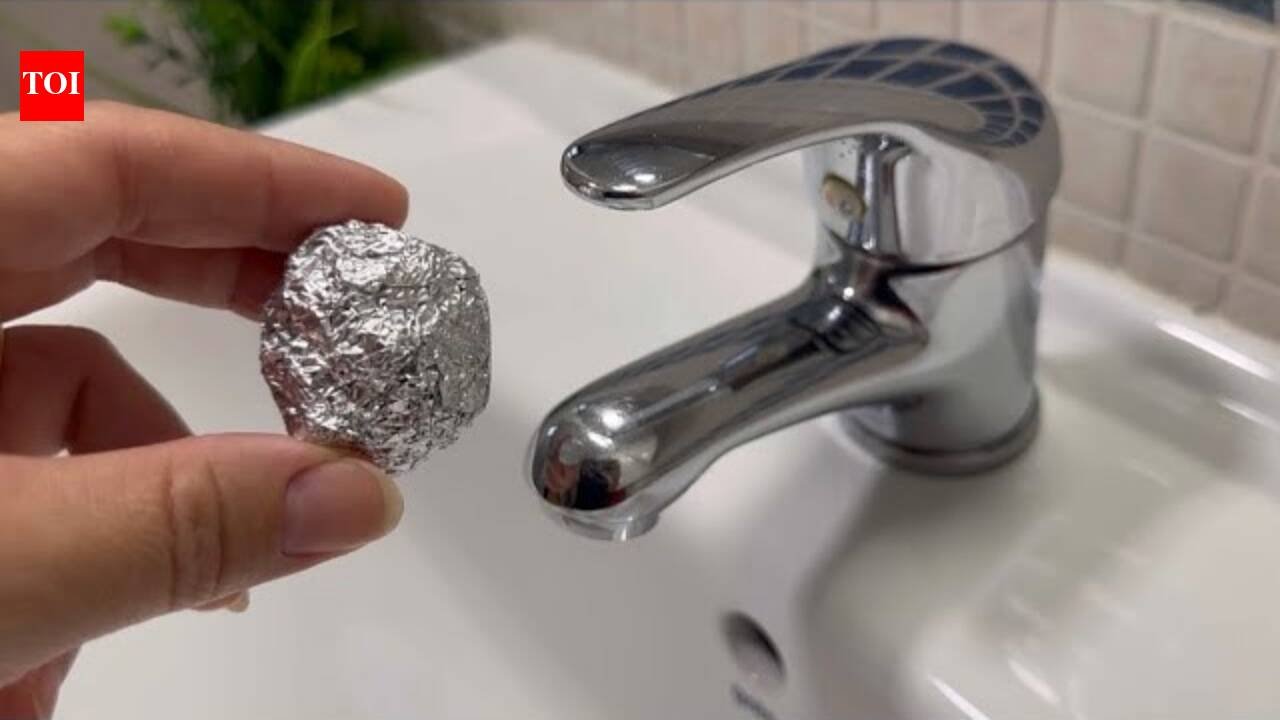
Dull, water-spotted taps have a way of making even a spotless bathroom look neglected, those cloudy mineral marks and faint orange rust streaks somehow surviving through cleaning routine after cleaning routine. A trick that’s been doing the rounds on social media claims to fix this with nothing more than a scrunched-up piece of kitchen foil, no spray bottles, no harsh chemicals, just something already sitting in a drawer. It sounds almost too simple to actually work, but multiple cleaning experts and more than a few skeptical journalists have put it to the test, and the results have genuinely held up.
What the trick actually involves
The method itself takes barely a minute to set up. Tear off a small piece of aluminium foil and crumple it loosely into a ball, deliberately avoiding pressing it into a tight, smooth lump, since it’s the crinkled ridges and edges that do the actual work. Dip the ball briefly in plain water, then rub it gently over the stained or dulled areas of the tap using small circular motions. Within seconds, cloudy water spots and light surface marks typically start to fade, and a final rinse followed by a dry wipe with a microfiber cloth finishes the job.
The real science: Two different reactions depending on the stain
There’s genuine chemistry behind this, though it works slightly differently depending on what you’re actually trying to remove. For true rust stains, specifically, the reaction is electrochemical: rubbing aluminium against rust causes the aluminium to lose electrons while the iron oxide gains them, effectively converting the rust back into plain metal in the process. For the more common cloudy water spots and light mineral film that dull most taps, the effect is more mechanical than chemical, the foil’s slightly rough, crumpled texture acts as an extremely fine abrasive, gentle enough not to scratch most chrome finishes but firm enough to lift the buildup clean off.
Adding vinegar for extra cleaning power
For stains that don’t fully clear with plain water alone, dipping the foil ball in a small amount of white vinegar before scrubbing gives the trick an extra boost. Vinegar’s mild acidity helps loosen mineral deposits and soap scum on its own, and combining that acid with the foil’s gentle abrasive texture tends to clear tougher marks faster than either method would manage alone. It’s a small addition, but one that consistently comes up across different accounts of people trying this hack for themselves.
Which taps this works best on, and which to avoid
This is the part worth paying real attention to before trying it on your own fixtures. The trick works reliably on standard chrome and polished stainless steel finishes, the kind found on most everyday kitchen and bathroom taps. Brushed, matte, or specialty finishes are a different story entirely, these surfaces scratch far more easily, and the same gentle abrasion that polishes a chrome tap can leave visible marks on a matte one. If you’re not certain what finish your tap has, testing the foil on a small, inconspicuous spot first is a genuinely worthwhile precaution before working across the whole fixture.
What it won’t fix
It’s worth being realistic about the limits here too. This trick handles surface-level staining well, water spots, light mineral film, and rust that hasn’t gone beyond the surface, but it isn’t a repair tool. If rust has progressed to actual corrosion, leaving pitting or small holes in the metal underneath, no amount of foil rubbing will fill those gaps back in, since at that point the damage has already happened at a structural level, not just a cosmetic one.
A genuinely useful trick, used the right way
What makes this hack stand out from a lot of viral cleaning tips is that it isn’t pure internet folklore, there’s real chemistry and simple physics behind why it works, and enough independent people have tested it with consistent results to make it worth trying. Used carefully, on the right kind of finish, and with a bit of patience, a scrunched-up piece of foil can genuinely take a dull, spotty tap back to looking properly clean again.
Disclaimer:
This article is intended for general informational purposes only. Test on a small, inconspicuous area first, especially on brushed, matt, or speciality tap finishes, as aluminium foil can scratch delicate surfaces. This method is best suited to light surface staining and may not remove deeper corrosion or pitting.


