



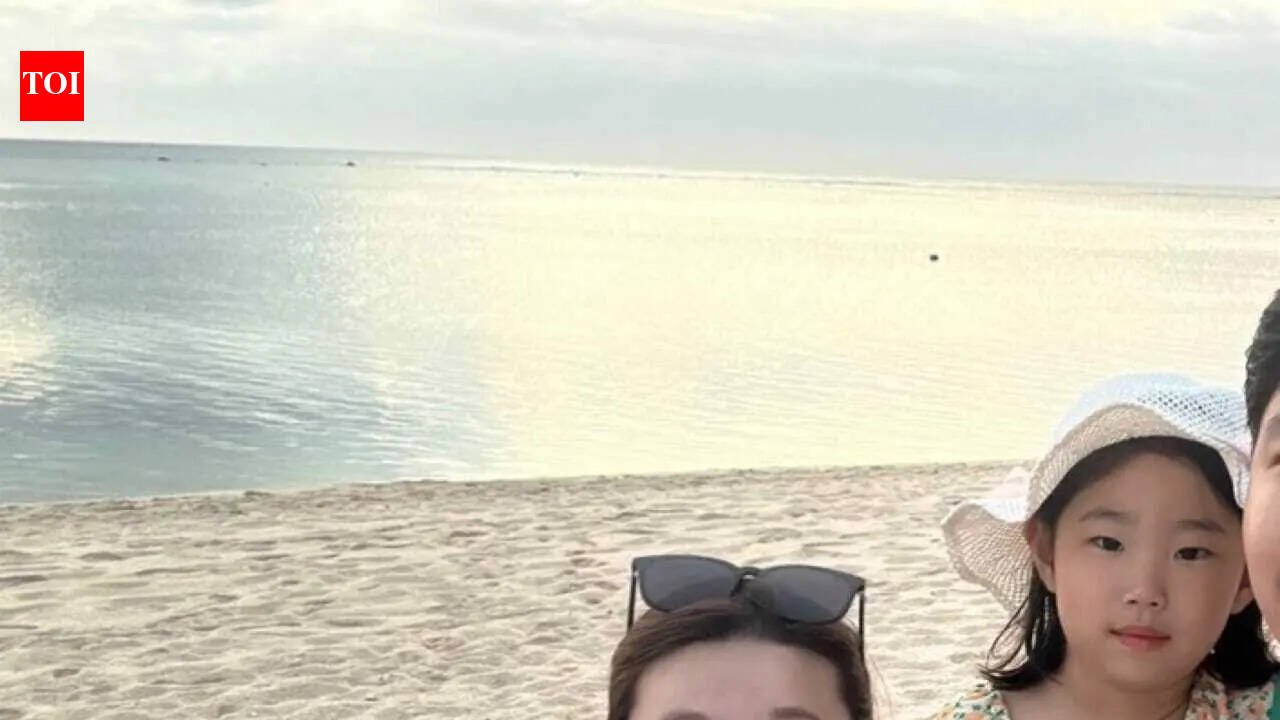
Seo Kyong-nam, a Korean expat, counts her blessings every day. The 47-year-old who lives in Zenith Apartment in Karle Town, moved to Bengaluru 20 years ago. Her life in the city, she says, has been shaped by the warmth and kindness of Bengalureans.Seo’s first few months here, however, were not easy, as she adapted to the new social environment. “Shopkeepers would sometimes tell me to come tomorrow. It took me some time to learn that ‘tomorrow’ did not always mean the next day. Often it indicated a near future,” recalls Seo, who is the director of education at Korean Association in Bengaluru and Andhra Pradesh (KABA), a community of Korean expats.Another shock, she says, was when a little girl pinched her cheeks, saying “Oh! So cute,” something that would be unthinkable in her culture, which strictly follows the concept of seniority by age.Bengaluru is now home to over 1,000 Koreans, many employed by major companies like Kia, Samsung, and LG. Most families settle in the north of the city, drawn by growing Korean networks, international schools and gated communities.As adults adapt to life in Bengaluru, children face challenges in learning English. Despite Korean parents’ intense focus on providing English education for their children, many struggle with conversational fluency, due to the Korean curriculum prioritising reading and writing over speaking. Korean expats use their Bengaluru stint to actively pursue tutoring and international schooling to improve their children’s English proficiency for future success.“Some students initially require additional support in English language fluency, and we address this through our dedicated EAL/ESL support programmes, differentiated instruction, and individualised learning support. With the right guidance and immersive classroom environment, students adapt and thrive confidently,” says Brian Irving, head of school at Trio World Academy, adding that many Korean students demonstrate strong aptitude in mathematics and analytical learning.A City Where Life Is An Endless PartyBengaluru’s propensity for grand celebrations has charmed families like that of Park Sang-chul, a Busan native who works for a company that makes body parts for Kia Motors.His sons, Eun-woo and Ji-woo, initially struggled with English after the family moved to Bengaluru three years ago. However, they are doing well now, in school and outside.They often get invited to their friends’ grand birthday parties, says Park, who adds that birthday parties in Korea are an intimate affair, mostly celebrated with close family members.“Koreans traditionally celebrate their children’s 1st birthday. Then they celebrate major milestones such as 60, 70 or 80 years only, unlike Bengalureans,” says the mechanical engineering graduate from the University of Ulsan in South Korea.Bengaluru’s vibrant social scene is a hit with expats like Bae Seounghee, a former Korean govt official, who enjoys lively gatherings twice weekly with her newfound Indian and Korean friends. She says the turnout often reflects the growing Indian interest in Korean culture driven by K-pop, K-dramas and cuisine.Bae organises potluck-style events, featuring her homemade Korean delicacies, including kimchi dumplings, red meat dishes and wine, accompanied by shared laughter, andkaraoke sessions.For Bae, 38, these gatherings are a source of immense happiness and vital connection.Korean expats in Bengaluru actively engage with Indian culture and celebrate Seollal (Korean New Year) and Chuseok (autumn harvest festival) as well as local festivals withtheir Indian friends and they serve as a platform for cultural exchanges.When Two Cultures Unite Over FoodSeo’s son, You Byeong-chan, a hotel management student and aspiring chef, creatively blends Indian and Korean cuisines. He recently created a ‘butter chicken tteokbokki’by combining ingredients from Seela Mart, from where he procures Korean ingredients. “Thetteokbokki was just lightly boiled, and the fusion dish was incredibly delicious,” says You, who is currently interning at ITC Gardenia. He also experiments with innovative fusion desserts.Language Help For Korean ExpatsIn Sahakarnagar, Indoin is actively building bridges between India and Korea. The academy offers Korean language and cultural education to Indians, while also providing Englishclasses for Korean students and employees in India. Many Korean students, like 9th grader Jeon Hyun-joon, attend Bengaluru’s international schools, supplementing their education with INDOIN’s English lessons which help ease their settlement.This initiative significantly strengthens bilateral connections and makes life easier for Korean expats.That Homeland Feel Through TreksKorean diaspora in India finds solace by recreating cherished homeland experiences.Ko Chan-gyu, 56, who lives in Phoenix One Apartment in Yeshwantpur, treks through local hills like Nandi and Savandurga, recalling mountain treks in Suwon with his son, who is currently in the US.“Mountains calm you down,” says Ko who lives alone in Bengaluru.He also visits coastal areas in Chennai, Goa, and Udupi for seafood, particularly crab preparations and fish fry, reminiscing about his peninsula home and finding comfort far away.VOICE BOXWe have a local cook who makes Korean and Indian dishes for us. Butter naan and dal makhani have become a comforting staple for us, thanks to him.Seo Kyong-nam, 47 | DIRECTOR OF EDUCATION, KOREAN ASSOCIATION IN BENGALURU AND ANDHRA PRADESH (KABA)


